Takezaki Suenaga was recognized for his merits in the Bun’ei Campaign and, in October of Kenji 1 (1275), was appointed jitō (land steward) over four coastal districts (kaidō yon-gun), corresponding roughly to the present-day area of Uki City, Kumamoto Prefecture.
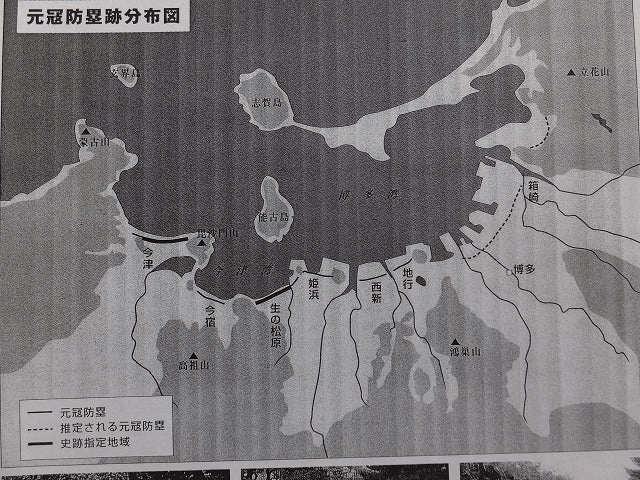
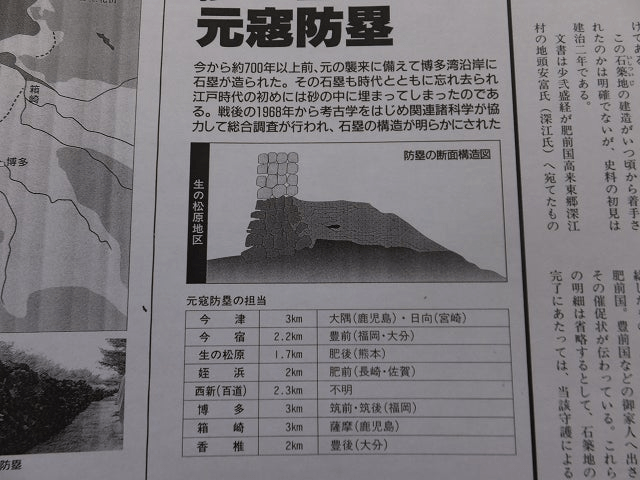
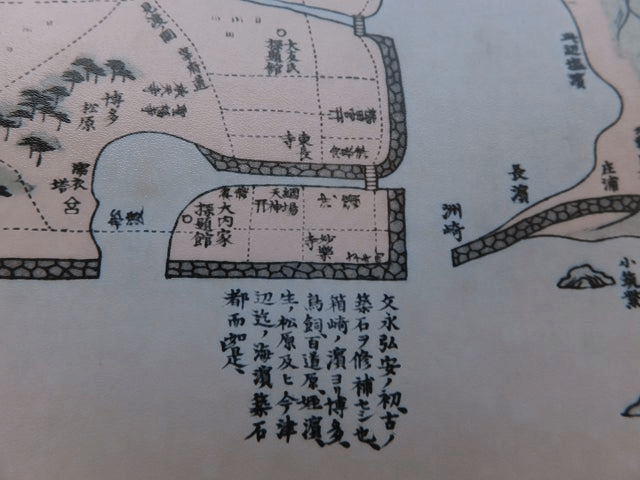
In March of Kenji 2 (1276), for defensive purposes, the shogunate mobilized provincial governors (shugo), land stewards (jitō), and local warriors (jizamurai) from the western provinces of Kyushu to begin construction of stone defensive walls (ishitsukiji). The total length reached approximately 20 kilometers, and construction was completed in August. (The wall extended from Kashii in Fukuoka City through Hakozaki, Hakata, Momochihara, Ikinomatsubara, and Imajuku to Imazu-Ōhara.)
Ikinomatsubara Area: On the seaward side, stones were stacked to form the wall, while the rear was reinforced by compacted earth and sand. The stone wall stands at approximately 2.5 meters in height. Behind the crest, the structure steps down to form a passageway, and further behind, the ground slopes southward. The stone materials used on the front face vary by section: giant-crystal granite was used from the central area westward, while sandstone was used to the east.
(This indicates that governors, land stewards, and local warriors from the provinces of Ōsumi, Hyūga, Buzen, Higo, Hizen, Chikuzen, Chikugo, Satsuma, and Bungo were mobilized.)
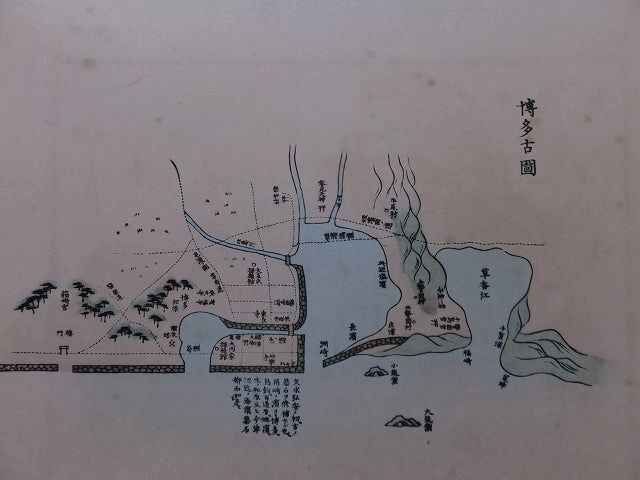
Ancient Illustrated Map of the Mongol Invasion Defense Line at Hakata (Contains descriptions consistent with the above)
On June 6 of Kōan 4 (1281), the Mongol forces again invaded Japan with 40,000 soldiers and 900 ships from the Eastern Route Army, and 100,000 soldiers and 3,500 ships from the Southern (Jiangnan) Army.
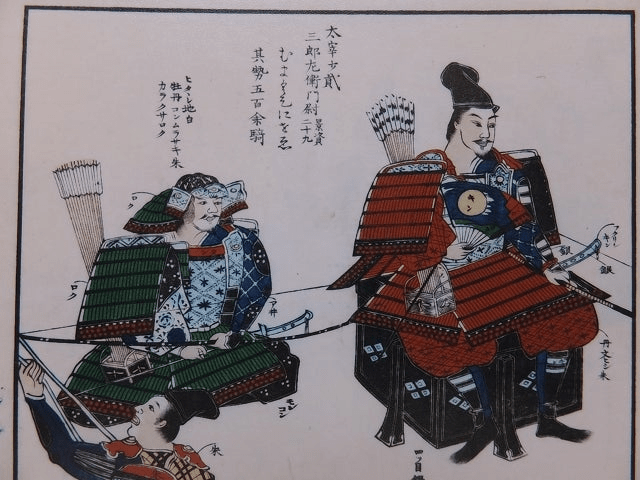
With Dazaifu Vice-Governor Saburōzaemon-no-jō Kagesuke as commander-in-chief, approximately 65,000 Japanese troops repelled the invasion.
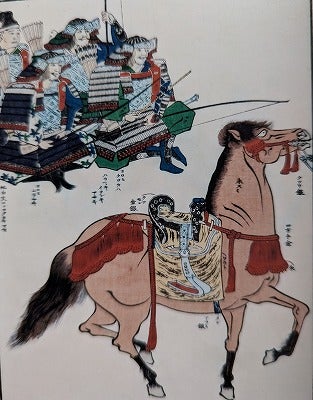
The phrase “uma gusoku ni oe” appears in the scrolls, but its precise meaning is unclear to me. It may indicate that preparations of armor suitable for mounted combat had been completed.
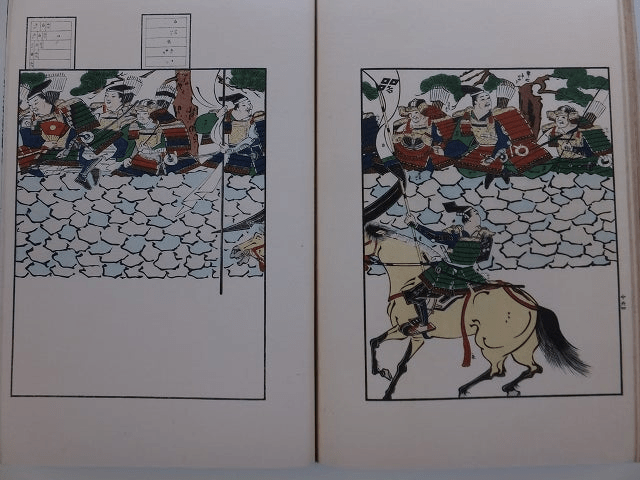
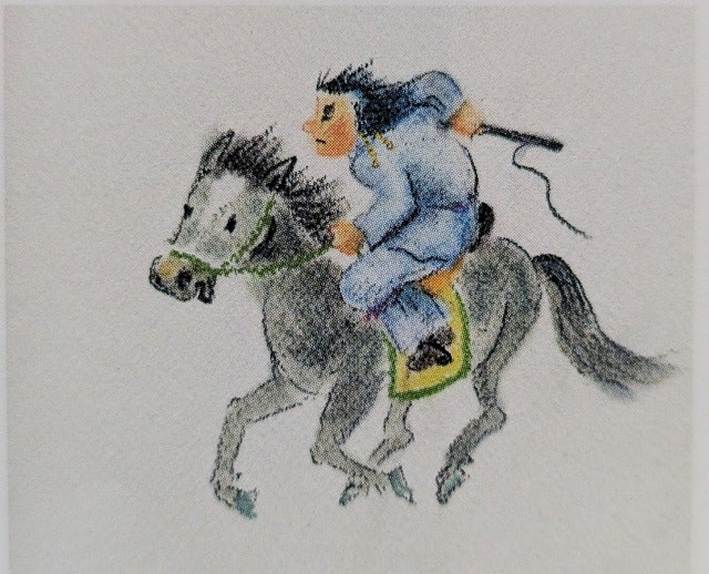
Warlords stationed along the stone defenses and mounted warriors riding into battle
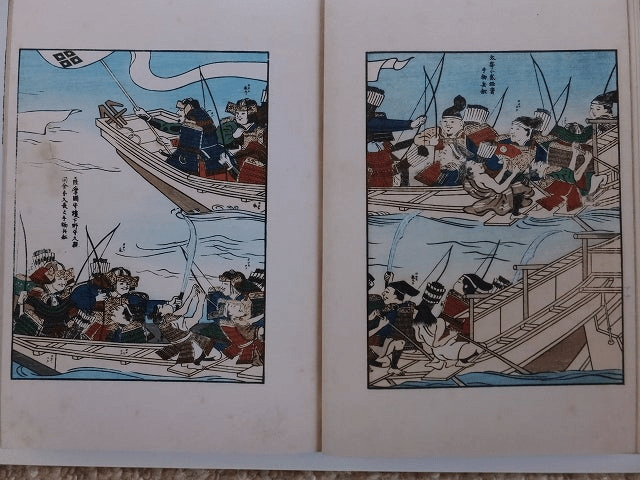
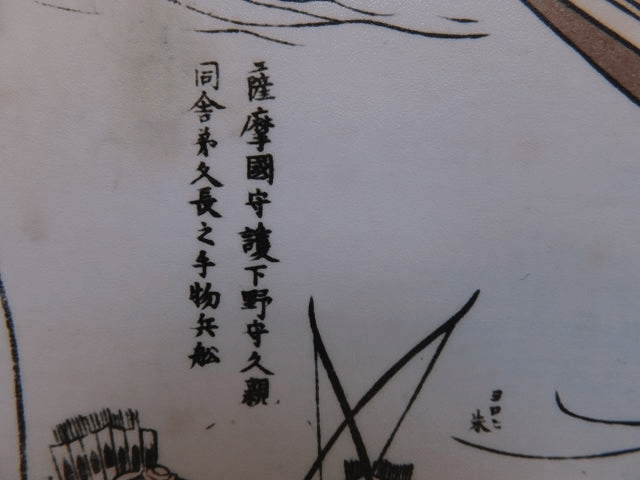
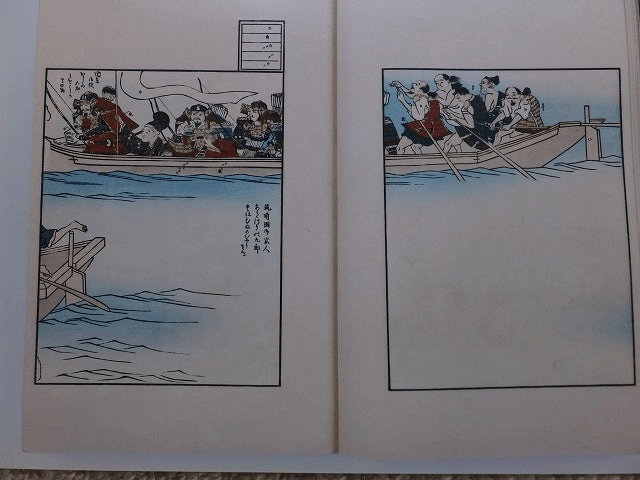
The names of Shimotsuke-no-kami Hisachika, governor of Satsuma Province, and his younger brother Hisanaga appear among those boarding military vessels.
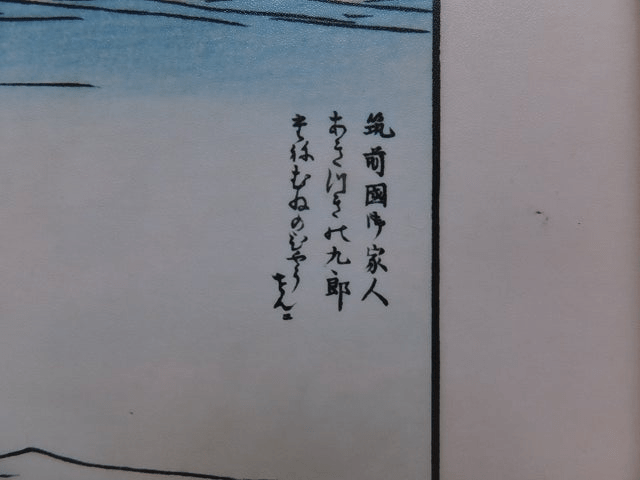
Among the Kyushu warriors boarding the warships is the name “Akizuki Kurō, retainer of Chikuzen Province.”
Mongol forces encamped at Kashima
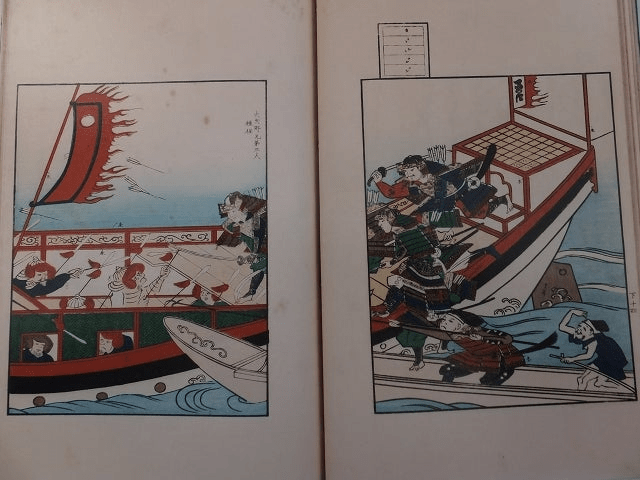
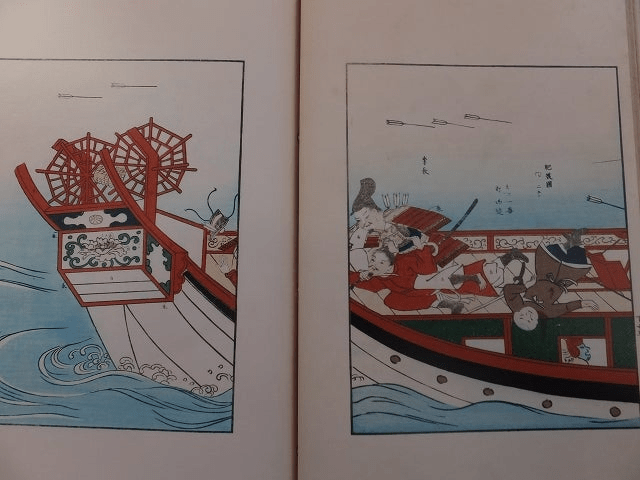
Mongol forces firing arrows at military vessels
The three Ōyano brothers boarding a Mongol warship
Suenaga taking the head of a Mongol commander
Although victory was achieved again over the Mongol forces in this battle, the gokenin (vassals) who fought received no rewards from the Kamakura shogunate. Under normal circumstances, the system of mutual obligation (go-on to hōkō) would grant land (issho-kenmei) as a reward. However, as the enemy was foreign, there was no land to distribute.
As a result, many gokenin were forced to divide their own holdings among their children and retainers. It would not be an exaggeration to say that this situation was a principal cause of the eventual downfall of the Kamakura shogunate.
“Where Horses Live The Romantic Winds Crossing Tokara Tokara Horses on Nakanoshima, Toshima Village, Kagoshima Prefecture (Tokara Islands)”
I encourage readers to compare this article with my book Japanese Native Horses: Past, Present, and Future (sold out as of the end of May).
The Tokara Horse
The history of the Tokara horse traces back to around 1902 (Meiji 35), when small native horses were introduced from Kikaijima Island in the former Ōshima District of Kagoshima Prefecture to Takarajima Island in Toshima Village. Because these horses lived on remote southern islands, their bloodlines remained unmixed with other breeds for more than fifty years, surviving in relative obscurity. They were later named “Tokara horses” after the Tokara Archipelago. In July 1953, forty-three horses were confirmed, and in the same year, Kagoshima Prefecture designated them a Natural Monument and began protective measures.
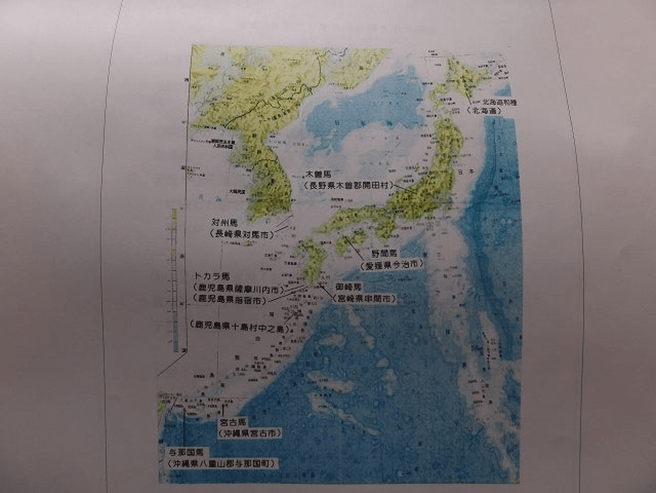
At present, Tokara horses are kept in the following three locations, each maintaining a distinct ecological system.
1. Iriki Farm, Kagoshima University (Feral Horses)
This farm primarily exists to study cattle. Horses are kept for the purpose of preserving animal genetic resources and managing pastureland. Human intervention occurs only during testing for equine infectious anemia. The horses are fed only on pasture grass left uneaten by cattle, and no processed feed is given. They form groups of five to six. When the author accompanied the farm manager by car to take photographs, the horses sensed human presence and fled all at once. Even when staff attempted to drive them back, they escaped at remarkable speed. These are truly feral horses.
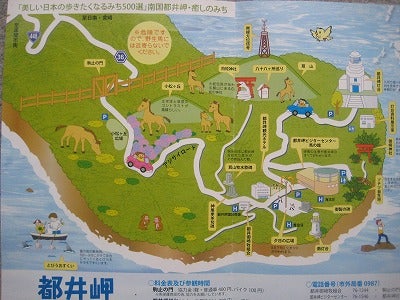
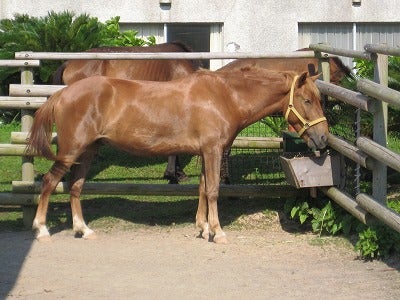
2. Kaimondake Foothills Nature Park (Semi-Feral Horses)
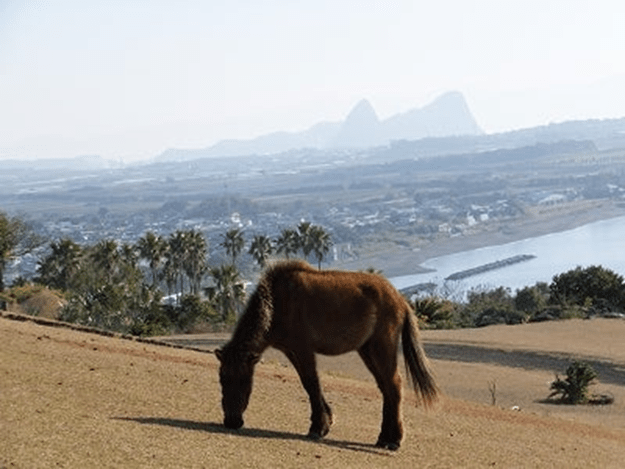
The horses grazing on the gentle slopes show no wariness toward humans, focusing entirely on eating grass and remaining unmoved even when cameras are pointed at them. They form four groups, along with several solitary stallions, but no harems are formed. From 5:00 p.m. to 8:00 a.m., they are enclosed within fenced areas. Pasture grass alone is insufficient, and processed feed costing several million yen annually is required.
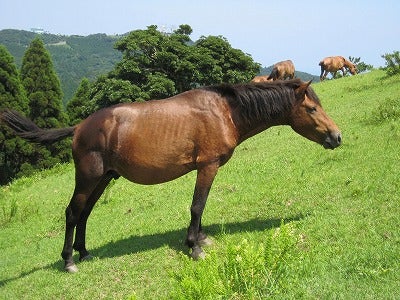
3. Nakanoshima Island, Toshima Village (Feral Horses)
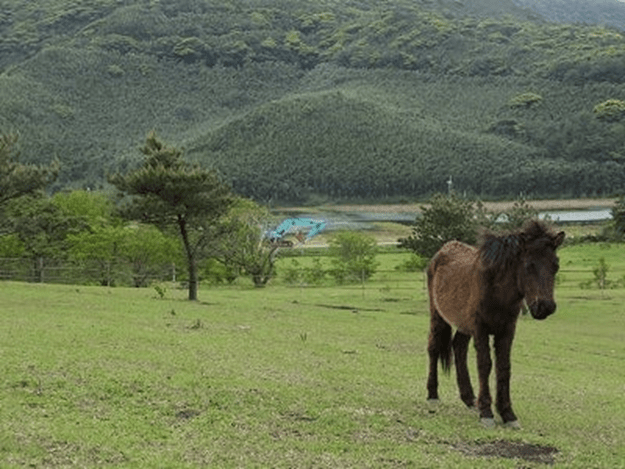
I traveled to a pasture located at an elevation of 250 meters. Reaching Nakanoshima requires a nine-hour ferry ride from Kagoshima Port aboard the Toshima Maru. After a short walk from the port, I rested at a natural hot spring, then walked approximately 2.3 kilometers uphill. What surprised me upon reaching the top was that the area about one meter below the road on the right (the lower pasture) formed a pond, continuing into wetlands and grazing land where eight mares were kept. On the left (the upper pasture), Mount Ontake rises to 979 meters, with forest-lined grazing land housing twelve stallions. The horses were friendly and approached whenever a camera was raised; some even rubbed their heads against people. Unfortunately, during heavy rain, water flowing down from Mount Ontake turns the upper pasture into a river, flooding the lower pasture. Veterinarians visiting to conduct equine infectious anemia testing have pointed out deterioration of the horses’ hooves as a result. While processed feed is provided in addition to pasture grass, the horses appear slightly thinner compared to those at Kaimondake Nature Park, which is concerning.
There is a discussion of relocating one confirmed pregnant mare to Kikaijima Island.
Notes
Tokara horses are designated Natural Monuments of Kagoshima Prefecture. Ownership is held by the following entities:
Kagoshima University
Iwasaki Group Co., Ltd.
Toshima Village
In December 2017, hair loss was observed in a pregnant Tokara horse on Nakanoshima, prompting caretaker Mr. Honda to request an investigation by the author. He explained that in February 2015, during a particularly cold winter with snowfall, a one-year-old mare exhibited hair loss that did not spread to other horses but progressively worsened. After reporting the situation to the Toshima Village Office and consulting twice with a professor at Kagoshima University’s Faculty of Veterinary Medicine, no action was taken. The horse lost all hair within about a month and died, with the cause recorded as unknown. In the 2017 case, the village office responded in the same manner, and the professor could not be contacted due to relocation.
The author immediately consulted a veterinarian from the Japanese Society of Equine Science, who stated that despite more than twenty years of work with the Japan Racing Association, he had never seen or heard of such a case and recommended immediate examination and blood testing.
The author first reported the facts to Professor O of Kagoshima University, head of the Tokara Horse Preservation Society (specialist in avian ecology). However, as it became clear that the professor was unaware of the three distinct Tokara horse populations, the author requested that the preservation society formally record the incident. Subsequently, the author reported all details to the Natural Monuments Division of the Kagoshima Prefectural Board of Education. They promptly contacted the Toshima Village Office and initiated a field investigation.
As a result, village officials conducted a serious examination and determined that mites were the cause. After changing the feed and monitoring the horse, winter hair began growing back in mid-January 2018, and the horse regained vitality, as reported on February 7. At the same time, the author was informed by email that future abnormalities should be reported directly to the Board of Education, that Mr. Honda’s three-year contract had been renewed without issue, and that an increase in feed budget had been approved.
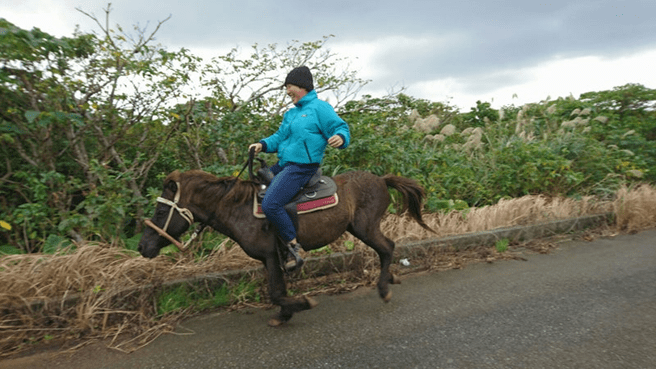
Mr. Fukutaro Inoue, Representative of Kumejima Horse Ranch on Kumejima Island, Okinawa Prefecture, is the only individual who operates Tokara horses as riding horses. He received one mare on loan from Kagoshima University seven years ago and stated that training took three years. There is no rider weight limit.
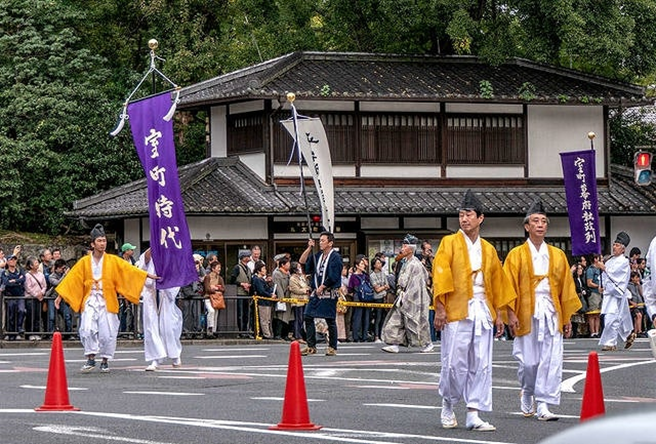
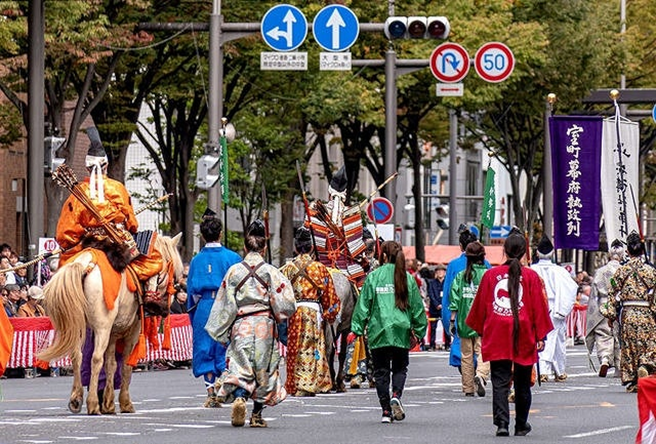
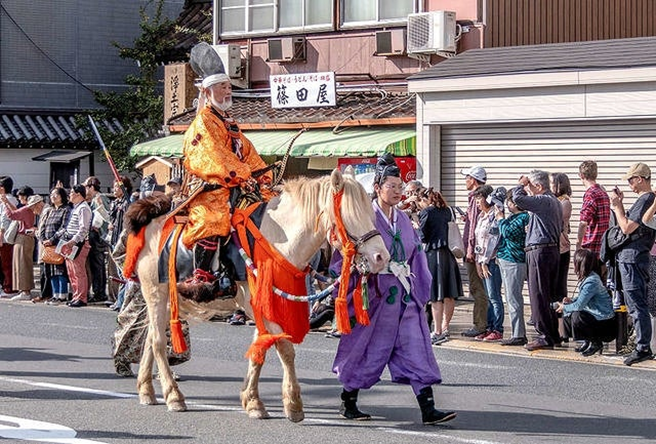
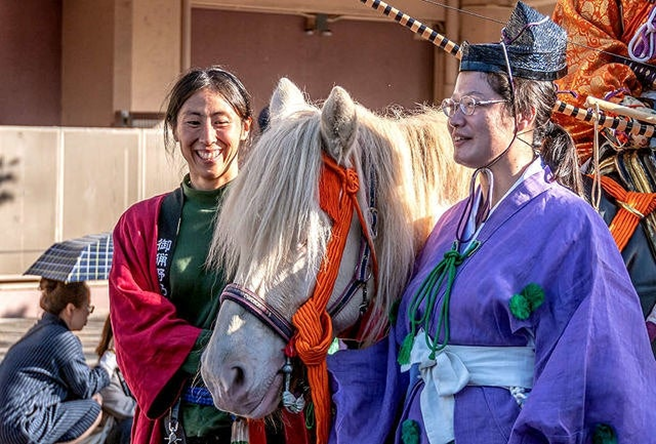
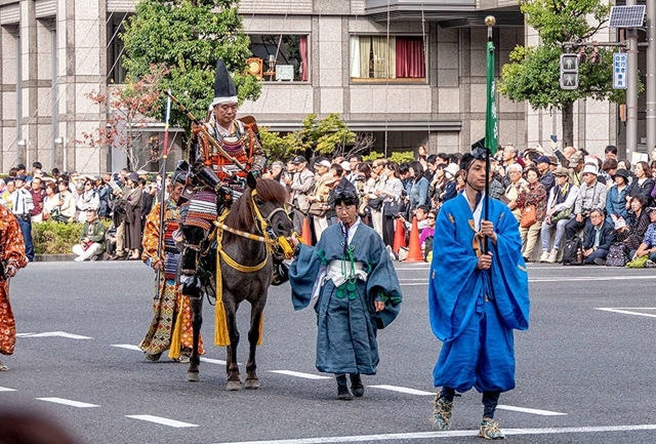
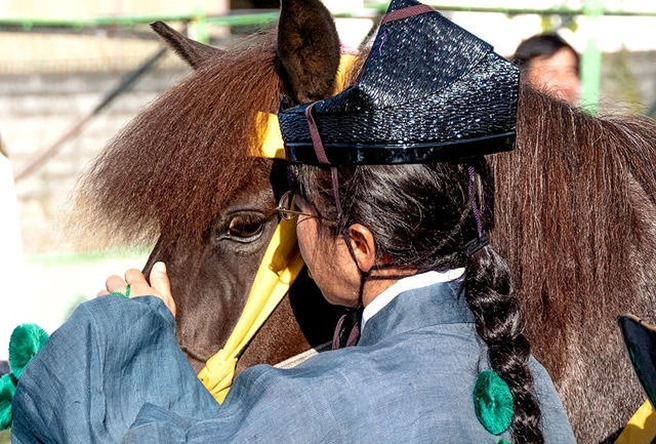
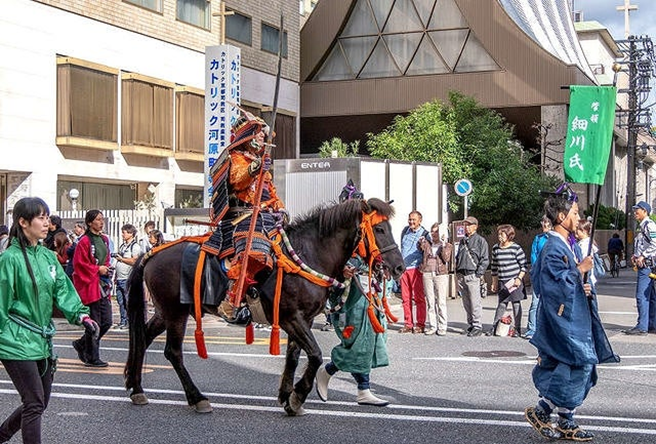
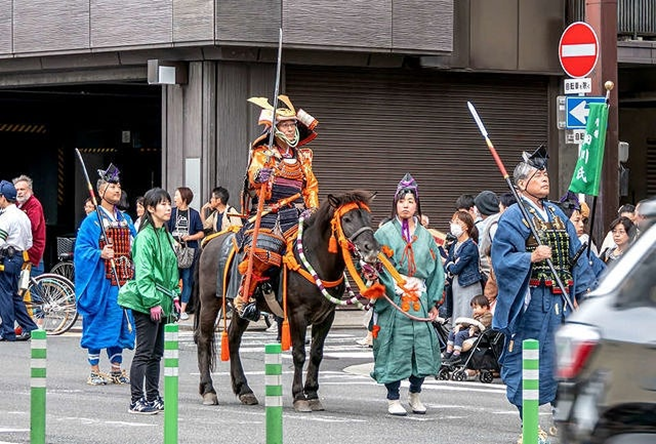
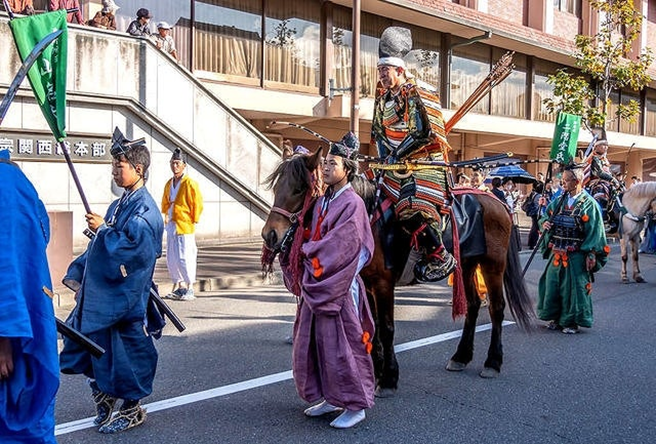
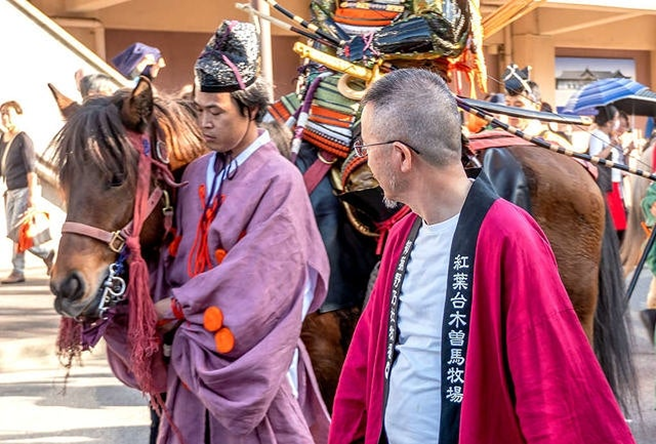
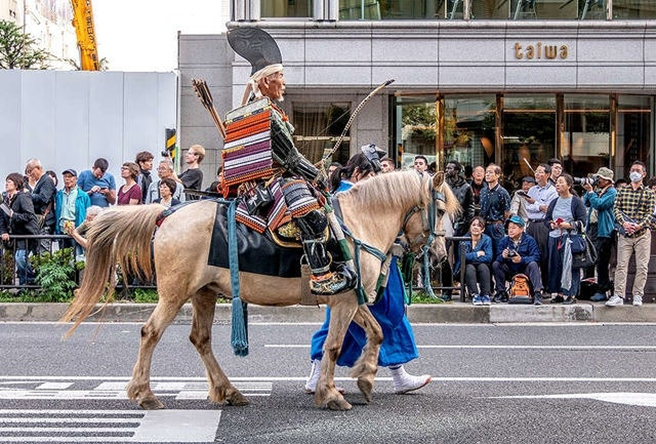
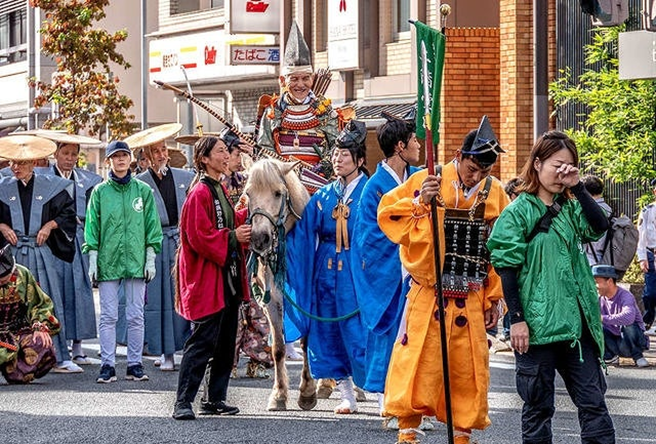
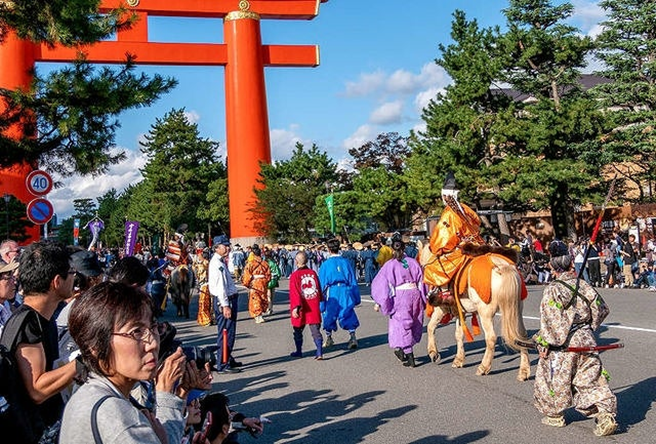
On Saturday, October 26, I participated in the Kyoto Jidai Matsuri. From Koyodai Kiso Horse Ranch (Narusawa Village, Minamitsuru District, Yamanashi Prefecture), two Hokkaido native horses and one Kiso-line Japanese native horse took part. In addition, two Hokkaido native horses came from “Japan’s Horses – Mikarino-no-Mori Ranch” (Kamo Town, Ōmihachiman City, Shiga Prefecture). A total of five horses paraded through the thousand-year-old city of Kyoto, ridden by representatives portraying five Muromachi-period clans: the ninth shogun, Ashikaga Yoshihisa, as well as the Ise, Yamana, Hosokawa, and Nikaidō clans.
The Ninth Shogun: Ashikaga Yoshihisa
The Ise Clan
The Hosokawa Clan
The Yamana Clan
The Nikaidō Clan
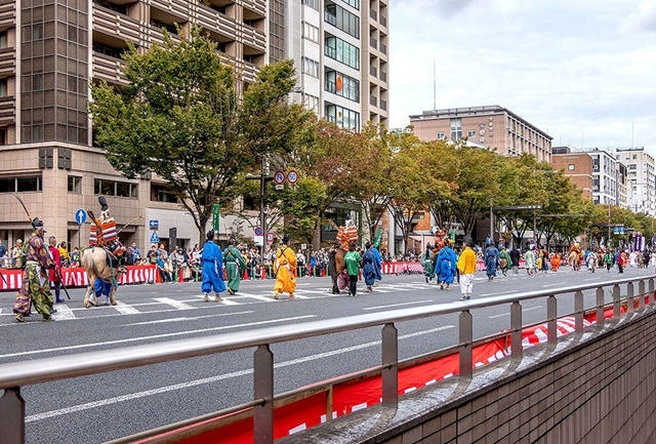
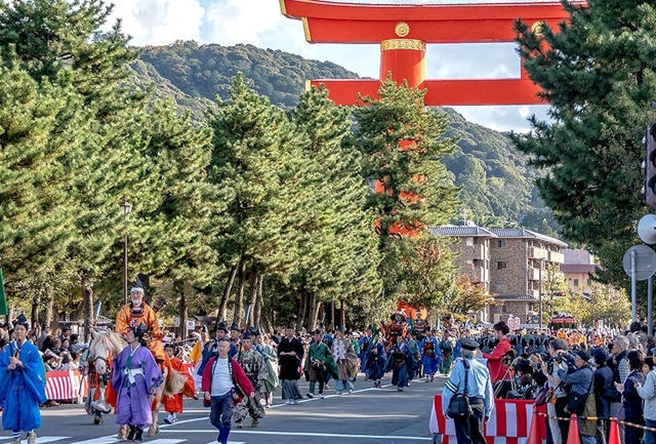
Parade procession
Below is a concise explanation of Heian Shrine and the Jidai Matsuri, based on the pamphlet purchased (500 yen).
Kyoto was founded approximately 1,200 years ago when Emperor Kanmu, the 50th emperor, transferred the capital from Nagaoka-kyō to this site in Enryaku 13 (794). From then until the early Meiji period, Kyoto flourished for more than a millennium as the imperial capital and the political, economic, and cultural center of Japan, laying the foundation for the prosperity it enjoys today. In Meiji 28 (1895), Heian Shrine was established to enshrine Emperor Kanmu. Later, in Shōwa 15 (1940), Emperor Kōmei, the 121st emperor, was also enshrined.
The shrine buildings are modeled after the Daigokuden, the central hall of the Chōdō-in of ancient Heian-kyō, where the most important state ceremonies were held. Their grand and magnificent beauty, together with the surrounding gardens, has earned worldwide renown. Visitors from Japan and abroad, in all four seasons, inevitably make their way to this site, with annual attendance said to exceed ten million, beginning with New Year’s visits.
The principal festival of Heian Shrine is held on April 15 and is designated an imperial festival. In contrast, the autumn festival celebrated as a civic event is the Jidai Matsuri. Established at the time of the shrine’s founding, it is held every year on October 22 to commemorate the relocation of the capital to Heian-kyō. Organized by the Heian Kōsha, an association formed by worshippers from across the city, it is a grand procession festival. Beginning with the Heian period and continuing through the Meiji Restoration, more than 1,000 men and women wear period costumes or armor and parade in a graceful procession stretching approximately two kilometers. The sight is like an unfolding picture scroll, resplendent and magnificent.
In the divine procession, the spirits of the shrine’s enshrined deities, Emperor Kanmu and Emperor Kōmei, are carried in sacred palanquins (hōren). Through this, the deities are invited to witness the prosperity of Kyoto, while citizens experience great joy through communion with their divine virtue.
Kyoto is divided into eleven wards, containing more than 190 elementary school districts. Each procession group in the Jidai Matsuri is assigned responsibility to specific districts, and the entire city participates in rotation. Festival expenses are funded primarily through contributions collected from households. This system has been maintained as a long-standing tradition for over 120 years.
Participation in the Jidai Matsuri has long been regarded by Kyoto citizens as both an act of gratitude toward their ancestors and a source of honor. This sentiment is clearly expressed in the solemn procession of participants wearing kamishimo attire at the end of each group. Including attendants, the total number of participants reaches approximately 2,000, along with more than 70 horses and cattle. With a total length exceeding two kilometers, the scale of the procession is likely unparalleled in Japan.
Initially, the festival was an official municipal event under the direct supervision of the mayor of Kyoto, with all honorary city officials participating in formal attire. Today, responsibility has been transferred to the leadership of the Heian Kōsha, but the spirit remains unchanged. Honorary magistrates leading the procession still include the Governor of Kyoto Prefecture, the Mayor of Kyoto City, the chairs and vice-chairs of the prefectural and city assemblies, the chair of the Jidai Matsuri Support Association, and the president of the Chamber of Commerce.
Until Shōwa 36 (1961), the procession route included Shijō Street and Kawaramachi Street in central Kyoto. Due to traffic conditions, the route has since been changed to Ōike Street.
Particularly noteworthy are the costumes and equipment used in the procession. Their vast number reflects decades of careful research and verification by leading authorities in the field. These items are regarded as invaluable resources for the study of customs and textile arts and hold significant academic importance.
Order of the Procession
Honorary Magistrates: Governor, Mayor, Chairs and Vice-Chairs of Prefectural and City Assemblies, President of the Chamber of Commerce, Chair of the Jidai Matsuri Support Association; Jidai Matsuri Flag; Chief Magistrate
Meiji Restoration Period: Imperial Loyalist Units and Restoration Patriots
Edo Period: Tokugawa Castle Envoys to Kyoto; Edo-period Women’s Procession
Azuchi–Momoyama Period: Toyotomi’s Court Visit Procession; Oda’s Entry into Kyoto
Muromachi Period: Muromachi Shogunate Administrative Procession; Muromachi Urban Life Procession
Yoshino Period: Kusunoki Masashige’s Procession to Kyoto; Medieval Women; Ōharame and Katsurame
Kamakura Period: Jōnan Yabusame Procession
Fujiwara Period: Fujiwara Courtiers’ Court Visit; Heian-period Women
Enryaku Period: Military Officials’ March; Civil Officials’ Court Visit
Every year on May 5, Kurabe-uma (traditional horse racing), which traces its origins back to 1093 (the 7th year of the Kanji era), is conducted in accordance with ancient rites at Kamigamo Shrine in Kyoto. (For details, see my book Japanese Native Horses: Past, Present, and Future, Item 15: “Challenging Japan’s Ancient Horse Racing Traditions with Native Horses.”)
Within the shrine grounds, a hedge-lined track approximately 217 meters in length is prepared, along which two horses race side by side. This hedge is called a rachi. The expression “rachi ga aku” (literally, “the rachi opens,” meaning a situation is resolved) is said to originate from this event: once the Kurabe-uma concludes and the rachi is dismantled, preparations begin for the Aoi Festival on May 15.
The Kurabe-uma we perform at Mikarino-no-Mori Kamo Shrine is based on the above-mentioned ancient racing tradition. Drawing on publications by the Horse Museum and other sources, we have arranged the movements to eliminate unnecessary gestures, and the event is offered annually at this shrine in accordance with the regulations of the Japan Kurabe-uma Competition Association (Chairman: Yukio Kikuchi, Representative of Koyodai Kiso Horse Ranch).
Opening Proclamation and Flowing Banner
Chanting “We hereby dedicate the Kurabe-uma,” the start of the event is announced.
A child beats a drum to present the horses to the audience. Each horse wears a numbered saddlecloth from 1 to 8, attached behind the saddle. Free betting slips are distributed, and spectators are invited to predict the winning horse in a series of seven head-to-head match races involving eight horses. Five spectators who correctly predict the winning horse using a consecutive-win single-bet format receive two kilograms of Ōmi rice as a prize.
The rider is referred to as the norijiri, and the horse as the noriuma.
Preliminary Round 1
Facing the goal 170 meters ahead, the left side is called Sahō and carries a scarlet tasseled whip. The right side is Uhō and carries a purple tasseled whip. The start signal is given by two beats of a drum. Both riders shout “Oh! Oh! Oh!” three times and, making eye contact, begin the race. The rider who crosses the finish line first is the winner.
Winner: Uhō (Rider on the right)
Preliminary Round 2
Winner: Sahō (Rider on the left)
Preliminary Round 3
An engaging race in which both riders checked each other with their whips, neither yielding ground.
Winner: Uhō, by a narrow margin
Preliminary Round 4
At the start, Uhō unintentionally blocked Sahō’s path, causing Sahō to fall completely behind.
Winner: Uhō
Semifinal Round 1
Both riders achieved a strong start. Using Uhō’s riding strategy, he guided his horse to the left immediately after the dash, checking Sahō.
Winner: Sahō, who was undeterred by the interference and surged forward at tremendous speed.
Semifinal Round 2
A contest between two male riders. Once again, Uhō employed a strategy of moving left immediately after the start and attempting to hold the lead.
Although this photograph appears to show Sahō overtaking, Uhō’s rider displayed remarkable determination and won by a slight margin just before the finish.
Final
A magnificent dead heat from start to finish, befitting the final two remaining competitors. Uhō’s rider once again guided the horse toward the left, as in the semifinals.
However, Sahō’s rider responded with a fierce dash.
Final A magnificent dead heat from the start, befitting the two riders who remained until the end.
As in the semifinal, the rider on the right guided the horse toward the left side of the course.
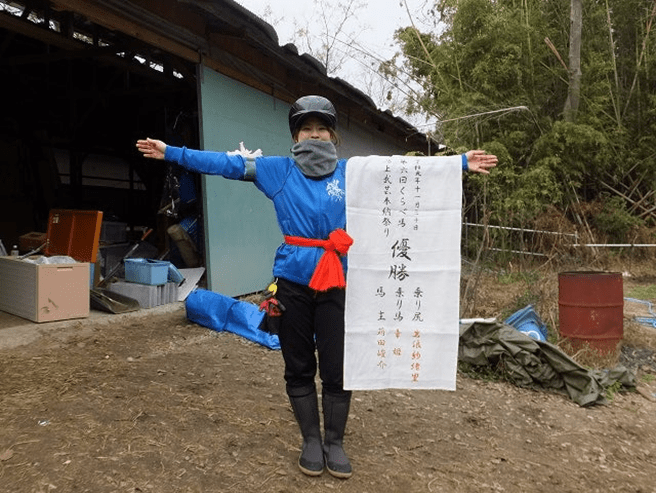
Magistrate: “The champion is Saori Iwanami of Settsu Province. Her horsemanship was splendid—truly admirable. Accordingly, Ōmi jōfu cloth is hereby awarded.”
Champion: “I humbly accept with deepest gratitude.”
The champion performs a victory run with the awarded Ōmi jōfu draped over the left shoulder.
The 6th Kurabe-uma Successfully Concluded
Results Consecutive-win single bet: 2–5 Winning tickets: 2 recipients
After each race, once victory and defeat are determined at the finish line, the winner proceeds at a walk before the magistrate to receive formal acknowledgment. The defeated rider dismounts and returns to the stable area.
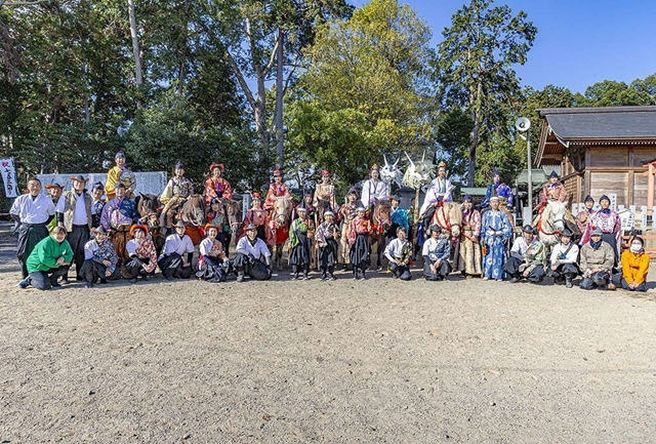
2019 Mikarino-no-Mori Kamo Shrine Mounted Martial Arts Dedication Festival – Group Photograph
Champion of the 6th Kurabe-uma: Saori Iwanami Winning horse: Akahime Horse owner: Shunsuke Karita
Photographs provided by: Yoshio Hayashi With cooperation from: Ōmi Jōfu Traditional Industry Hall
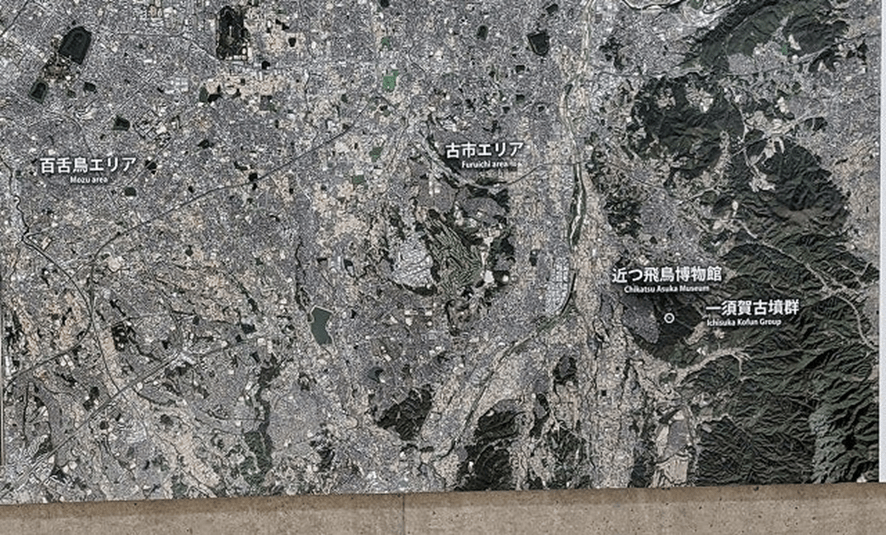
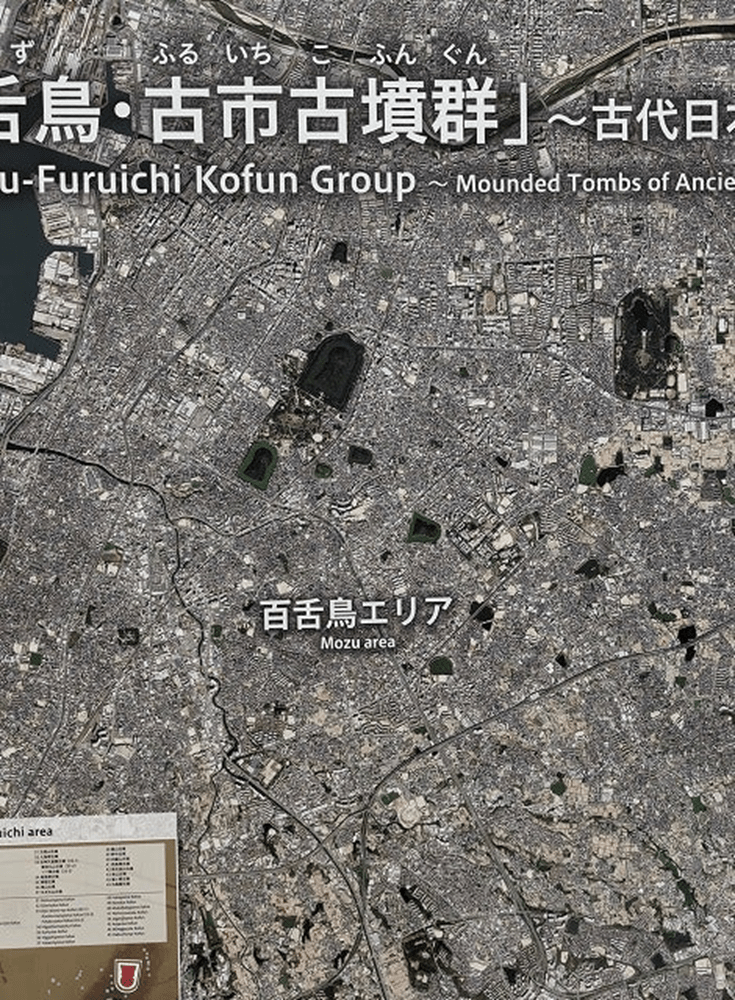
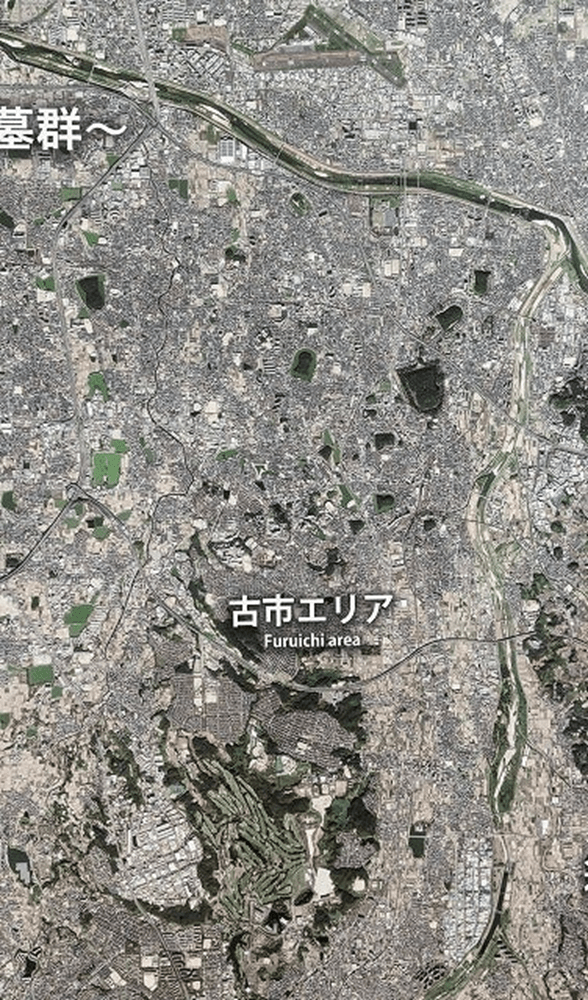
On July 6, 2019, the Mozu–Furuichi Kofun Group was designated as a UNESCO World Heritage Site. This occurred four months after the publication of my book, Japanese Native Horses: Past, Present, and Future. Taking this opportunity, I defined my research theme as “Viewing East Asia and the Wa State through Horses since the Third Century.” Since then, I have conducted on-site research, attended special exhibitions, and collected exhibition catalogues.
Here, I would like to introduce one aspect of that work.
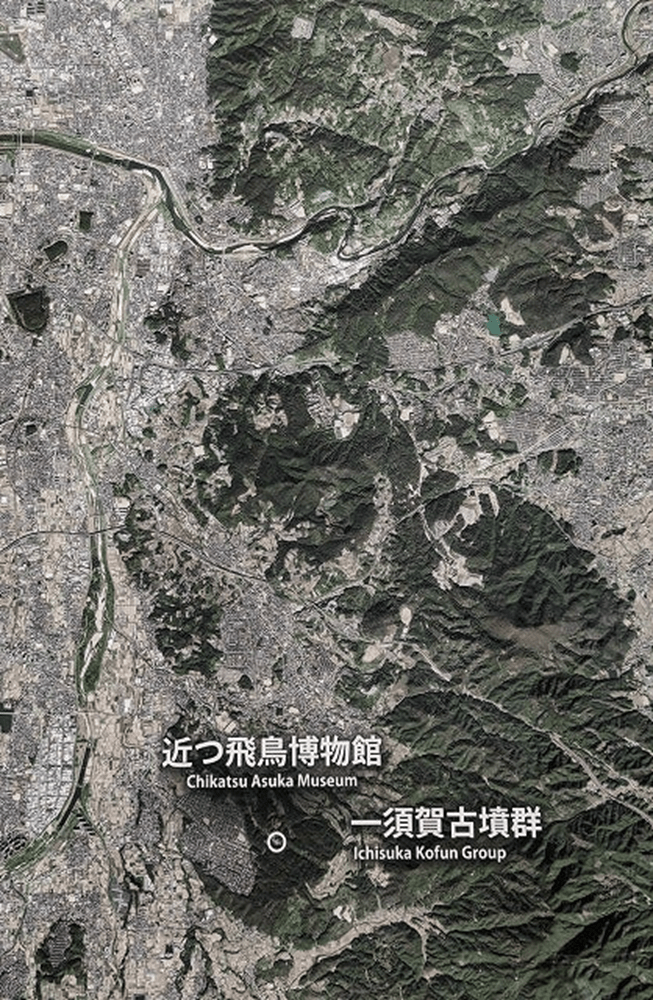
Since October 2010, I have received generous support from Mr. Minoru Nojima, Director of the Shijōnawate City Museum of History and Folklore. I previously conducted an interview at the Osaka Prefectural Chikatsu Asuka Museum in June 2012. As the exhibition content has since become considerably richer, I present a selection of exhibits here anew.
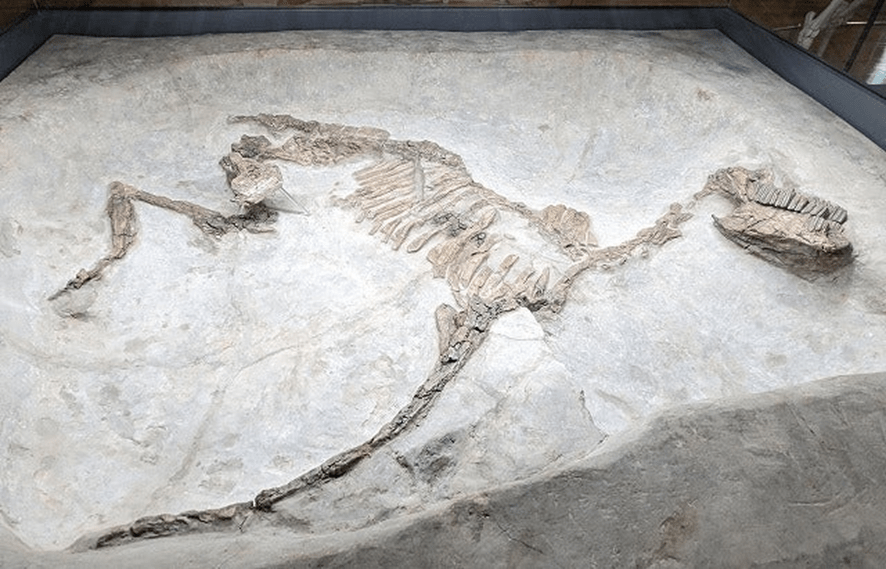
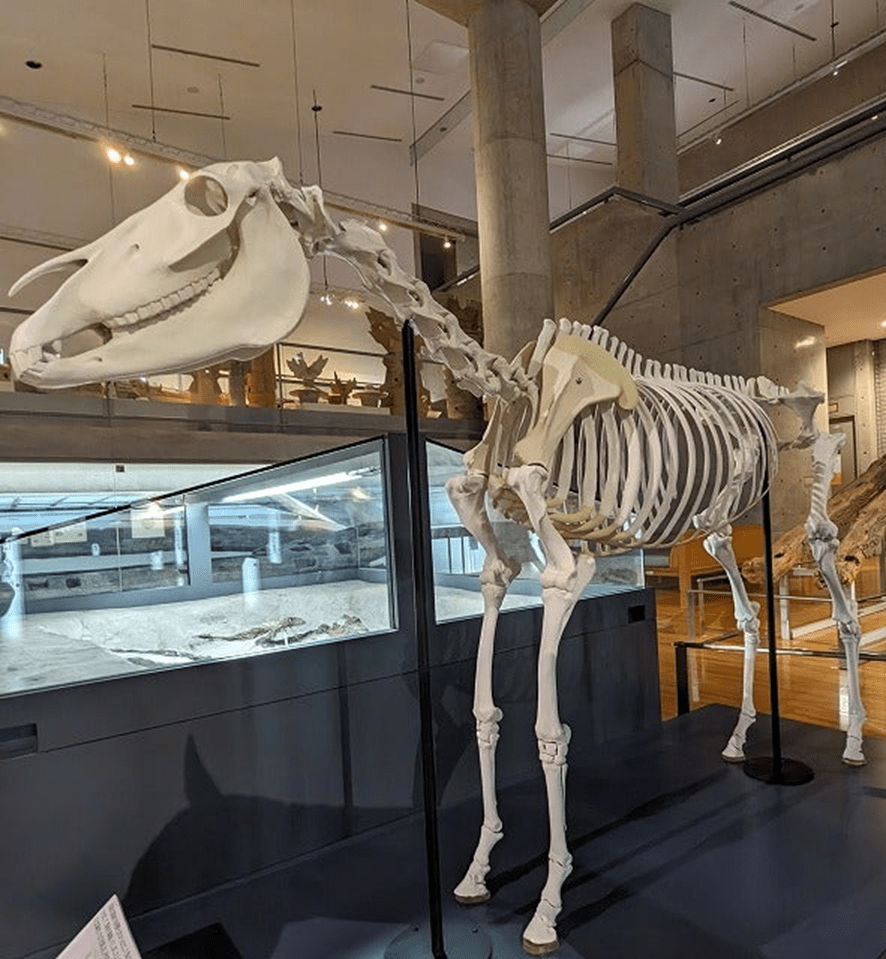
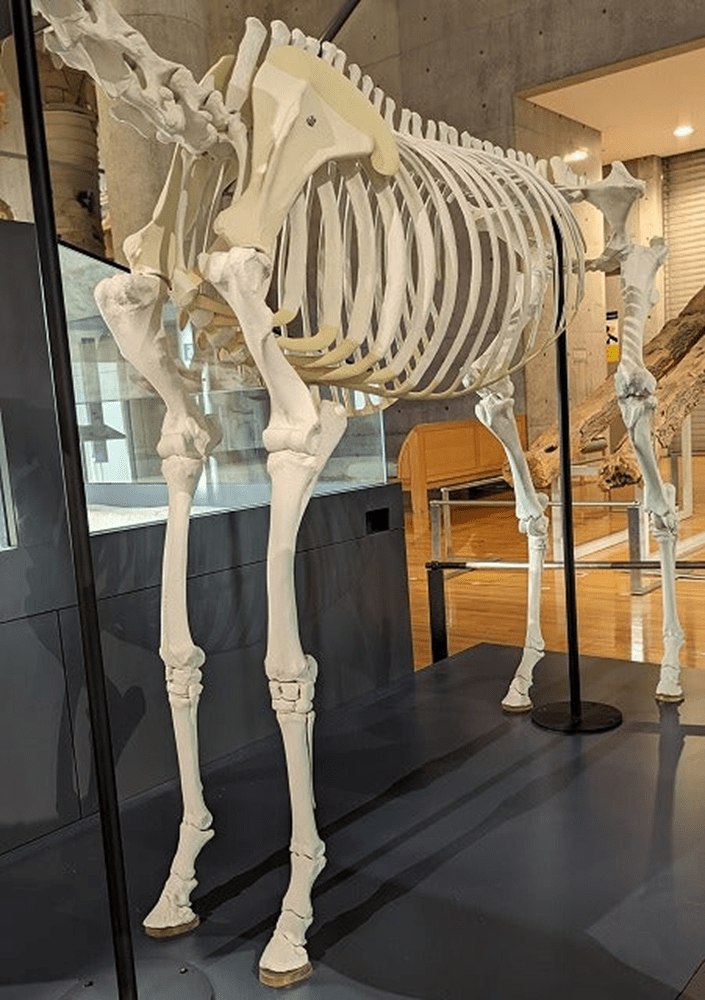
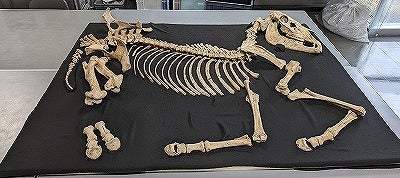
Complete Horse Skeleton Excavated from the Shitomiya-Kita Site
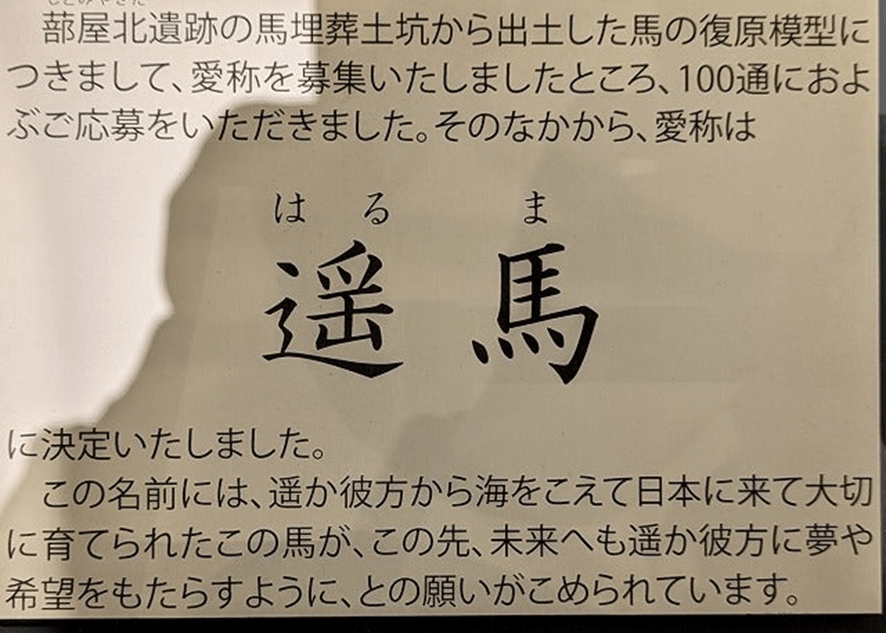
Skeleton: Haruma
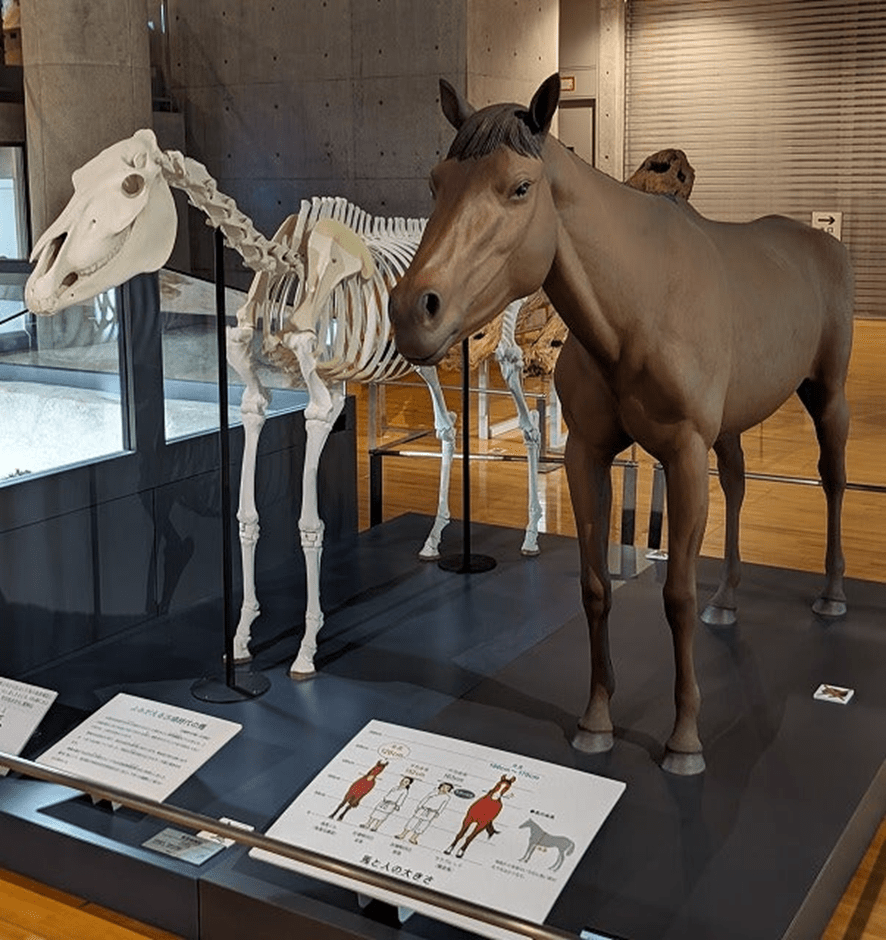
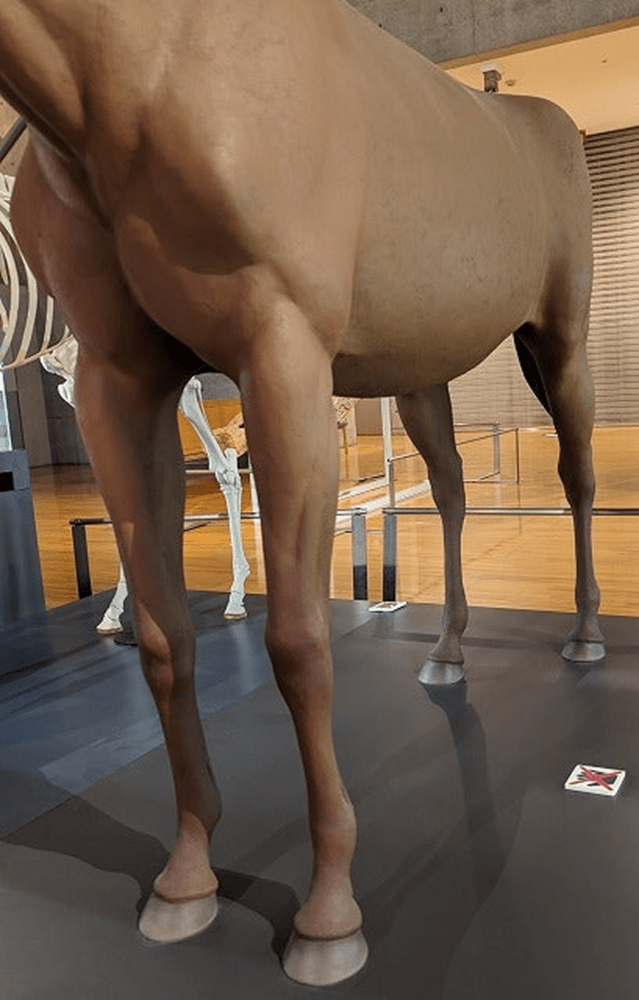
Reconstruction
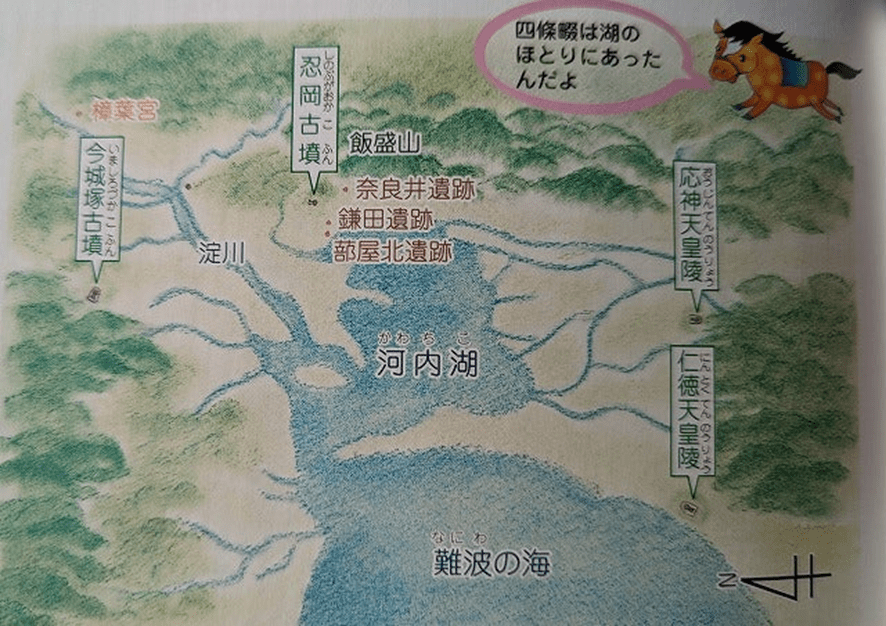
Depicting a pastoral scene in Shijōnawate during the fifth century
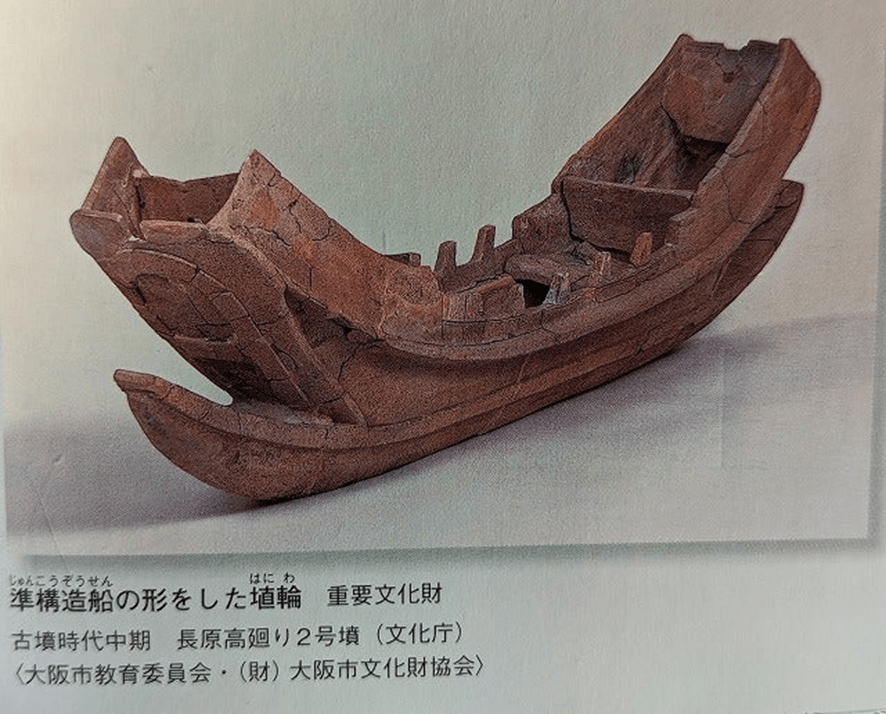
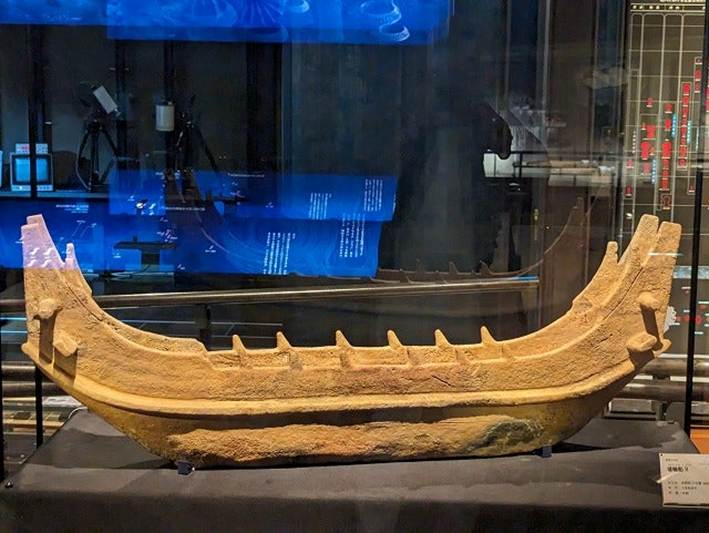
Semi-Structured Boat Haniwa
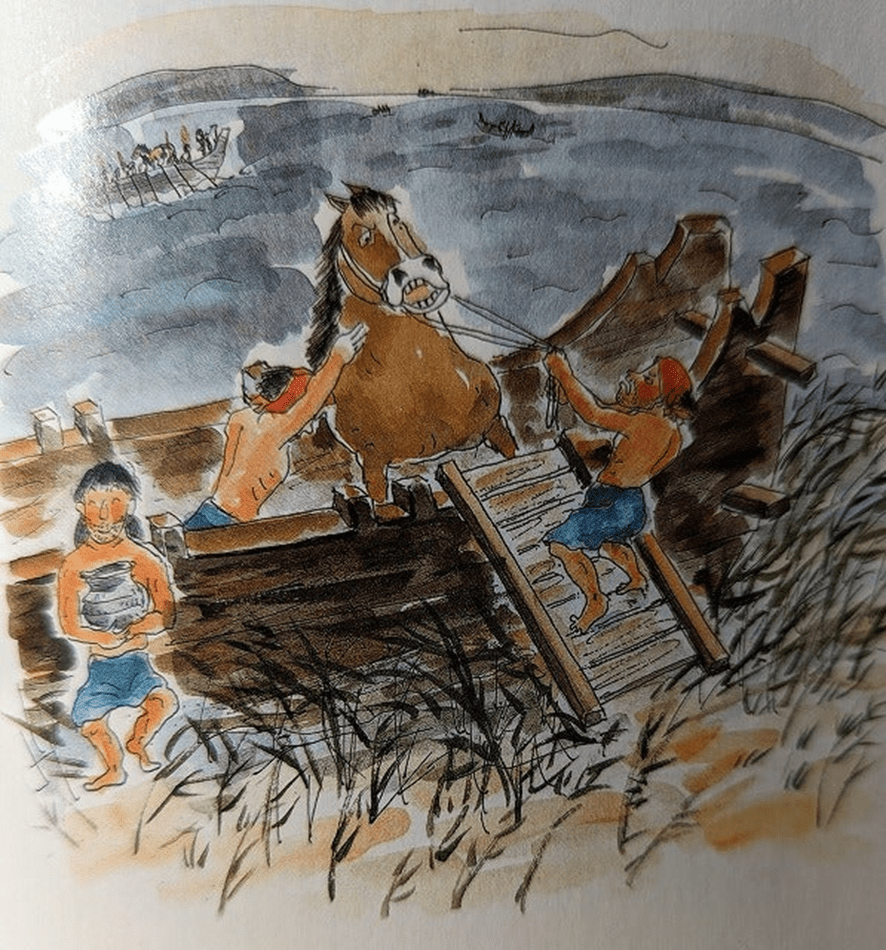
Depiction of unloading horses from a semi-structured boat
Narai Site
The oldest known bezoar (gastric calculus) in Japan, excavated from the Narai Site.
Prompted by the exhibition “Bezoars” by Charlotte Dumas, held at Maison Hermès Le Forum in Ginza in 2020 with support from the Hermès Foundation, it was revealed that a spherical stone artifact excavated in 1979 beside a horse burial at the Narai Site was in fact a bezoar from a Kofun-period horse.
The formation of nutrient-rich bezoars in horses from the Narai Site suggests that immigrants to the Sarara (Shijōnawate area) pasture may have fed horses grains such as barley. Even today, Japanese native horses intended for riding are often supplemented with rice bran in addition to standard feed. Considering this, it is reasonable to assume that horses were fed grains in addition to pasture grass in ancient times to strengthen them for riding.
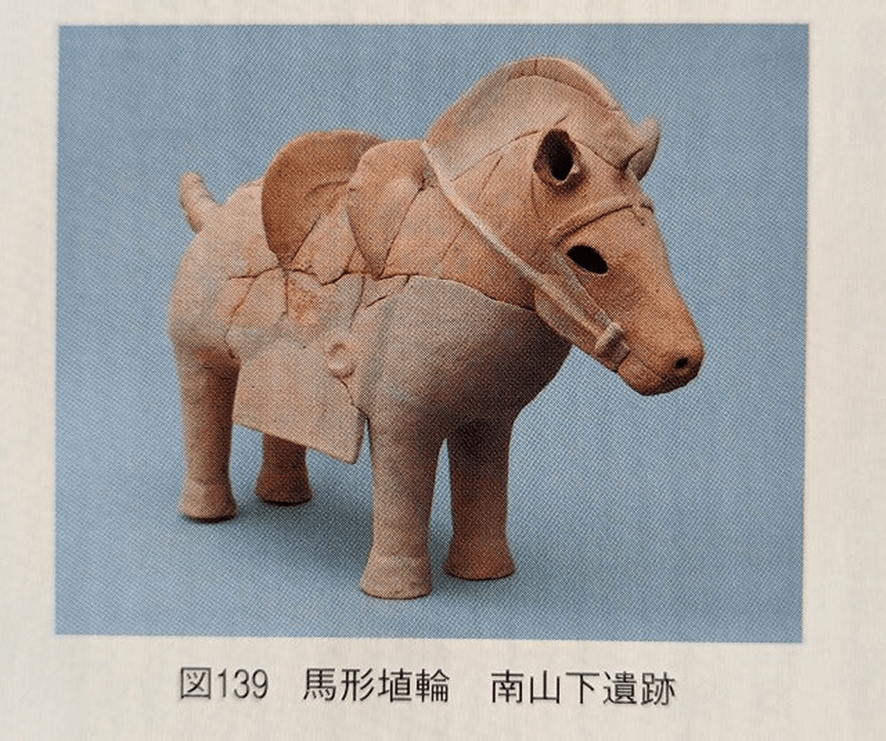
Horse-Equipped Haniwa
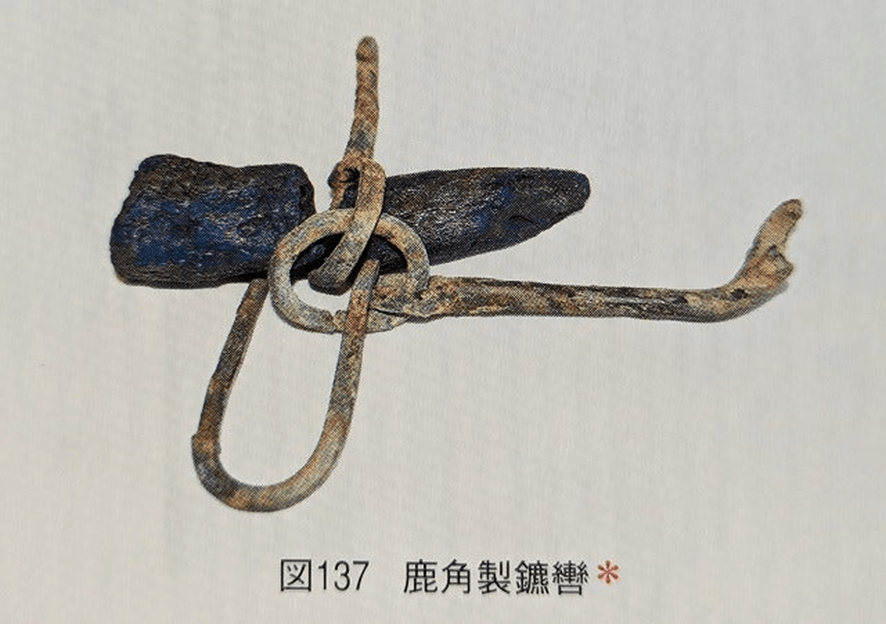
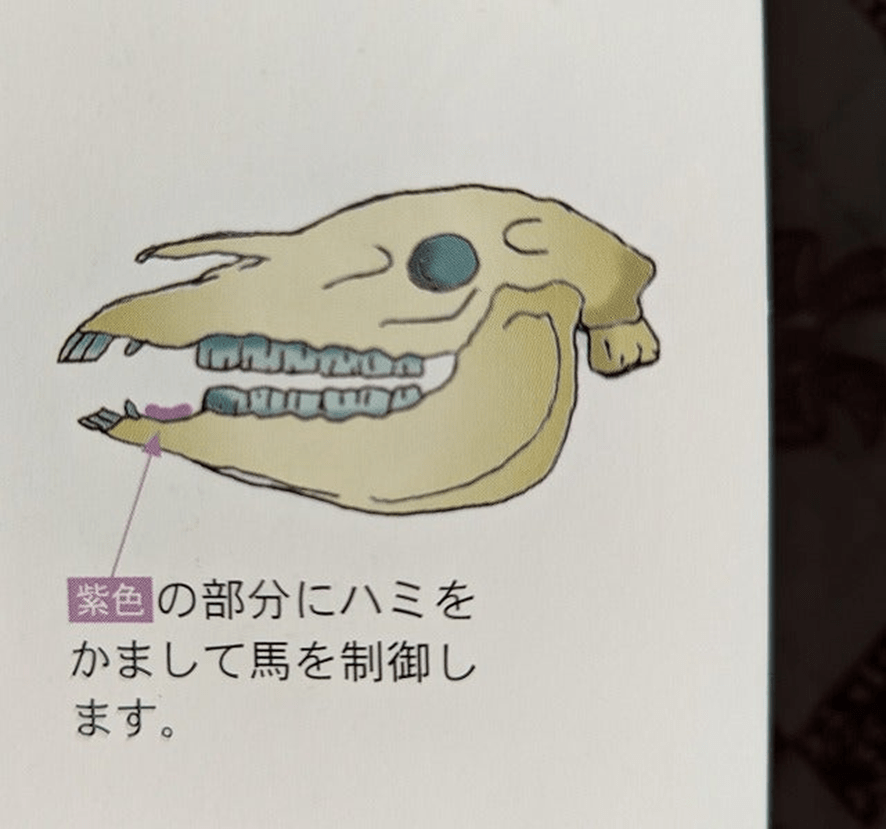
Bit
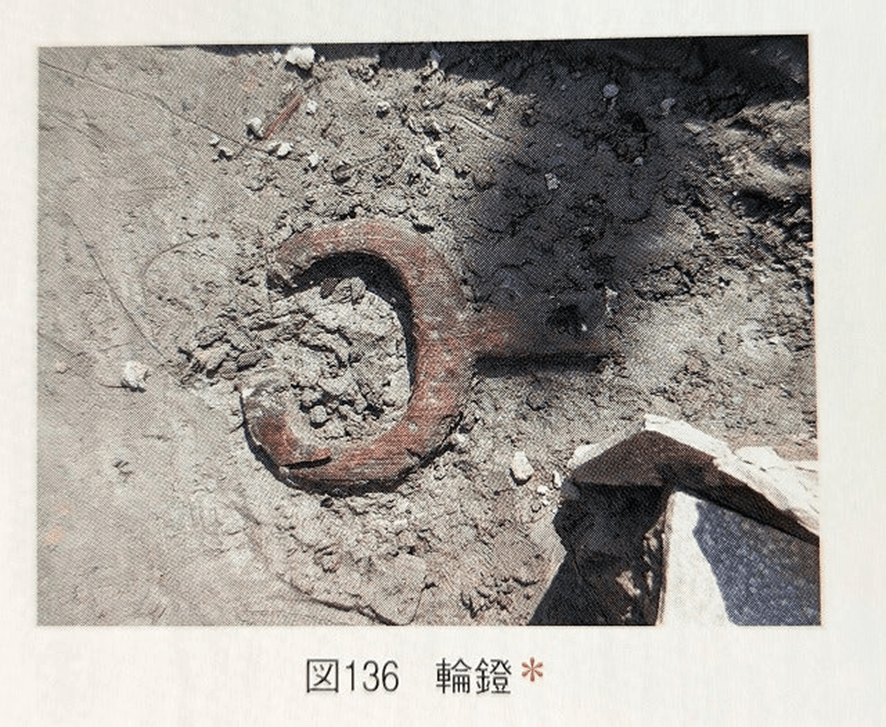
Stirrup
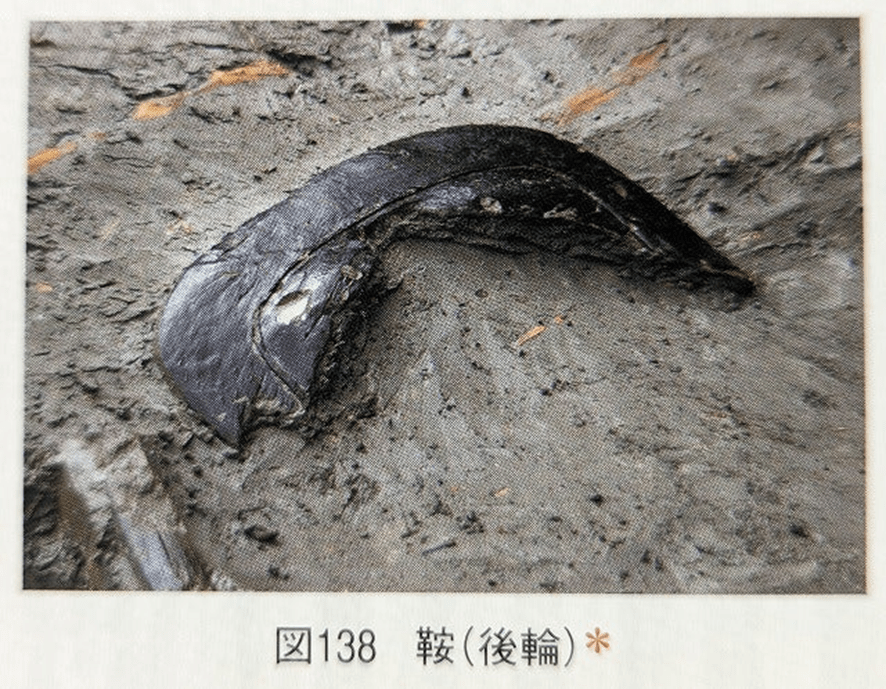
Saddle (rear cantle)
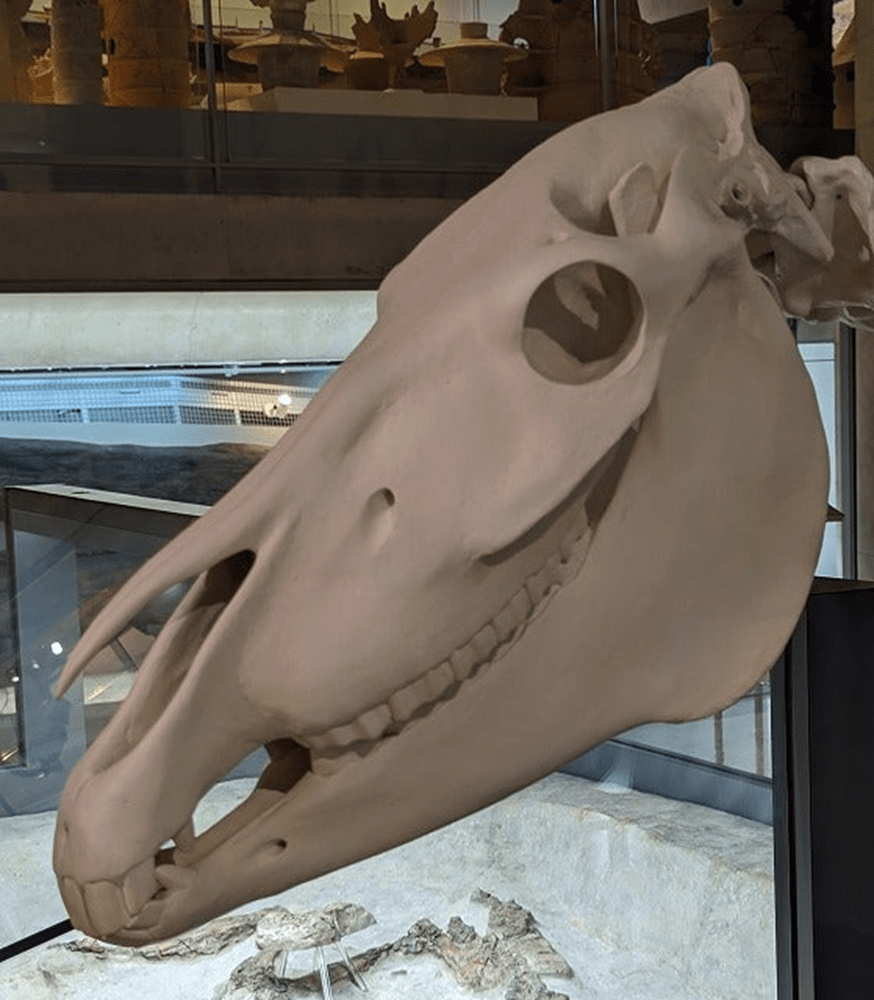
Jawbone
Withers height: approximately 125 centimeters (measured from the tibia to the ground)
When considering the Sarara pasture, it may be said that this was not merely a grazing ground but a training pasture where horses gathered from various regions were prepared for delivery to the Yamato polity.
(For reference, Cape Toi, home to the Misaki horses, covers approximately 550 hectares and supports around 100 horses. It is the only location in Japan where horses form 15–20 harems and are kept under year-round free grazing.)
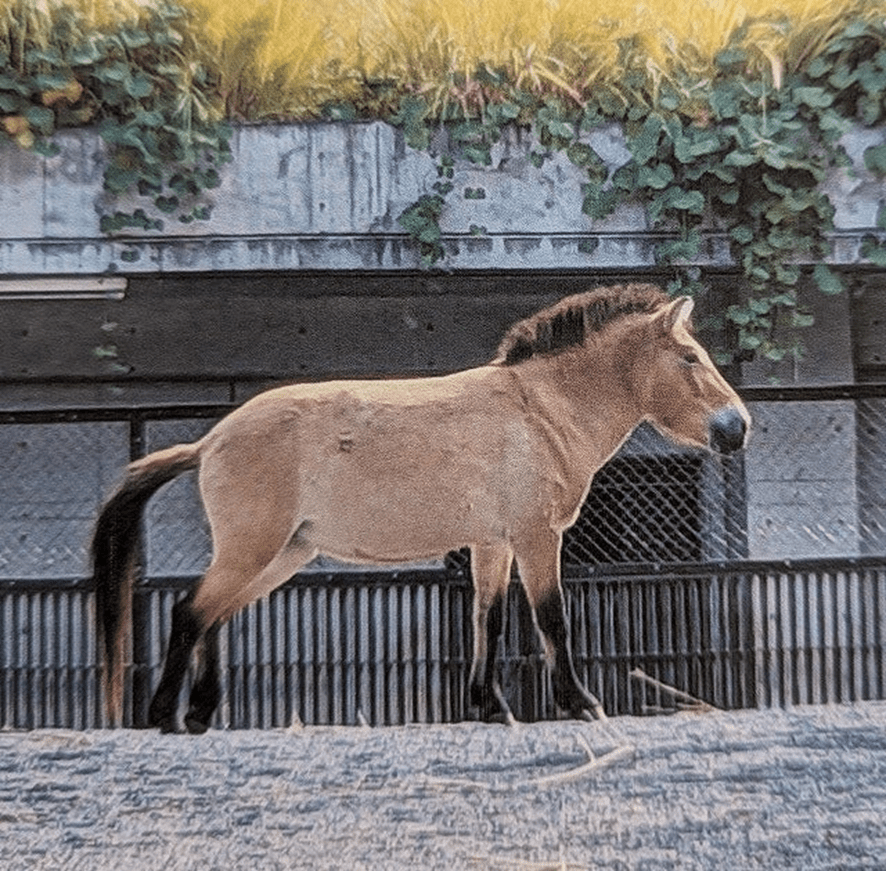
The catalogue of the special exhibition Kana, held at the Kyushu National Museum from January 24 to March 19, 2023, includes a column titled “Pastures on the Western Foothills of Mount Ikoma,” which states that the horse excavated from the Shitomiya-Kita Site was medium-sized and descended from Mongolian horses. However, this is incorrect, as Mongolian horses have 66 chromosomes, whereas Japanese native horses have 64.
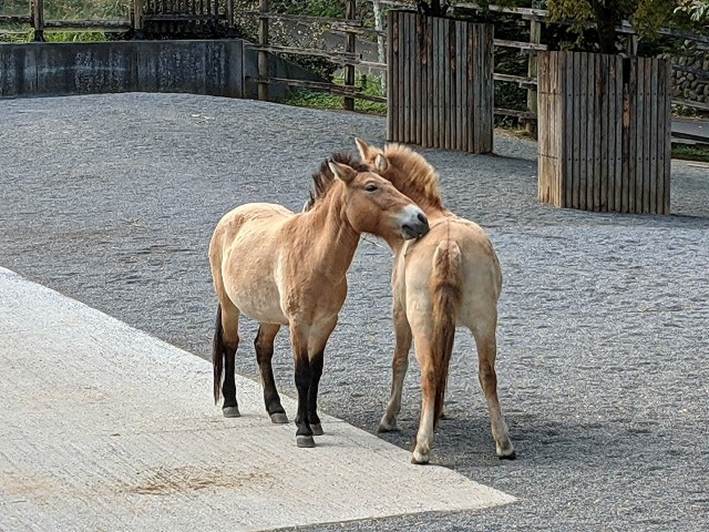
Mongolian Horse
Misaki Horse
Field Research Conducted At: Shijōnawate City Museum of History and Folklore Osaka Prefectural Chikatsu Asuka Museum Tama Zoological Park, Tokyo
References: History of Shijōnawate City, Volume 5 (Archaeology) Publications of the Shijōnawate City Museum of History and Folklore Special Exhibition: Kana, Kyushu National Museum, column “Pastures on the Western Foothills of Mount Ikoma,” by Ryo Okadera The Genetic Background of Native Horses, by Akira Tosaki Landscape Archaeology of Pastures: Early Kofun-Period Horse Production and Its Surroundings – Horse Medicine and Treatment: Rediscovery of Bezoars Excavated from the Narai Site, Shijōnawate City, by Minoru Nojima
With the cooperation of: Mr. Minoru Nojima, Director, Shijōnawate City Museum of History and Folklore
On November 18, during a feeding experience at the Yatsugatake Long Riding Horse Club in Kobuchizawa, Hokuto City, Yamanashi Prefecture, a four-year-old girl suffered a partial amputation of her right middle finger. Because detailed reporting of the accident has not been made public, the exact causes are unknown, but this could have been prevented if the feeding had been conducted with trained horses under proper staff guidance.
Feeling the warmth of a horse and taking the first step toward having an interest in horses can be a valuable experience. Many people are attracted by their large, gentle, loving eyes. However, horses remain animals, and no matter how well trained they are, unpredictable things can happen. Therefore, one must always consider the worst-case scenario. For children under six years old, feeding experiences are safer when done using tools.
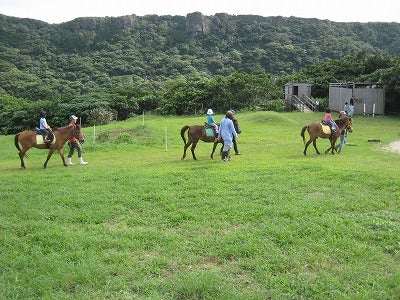
Yonaguni Island: “Free Riding Experience for Island Residents,” held every Sunday, April 28, 2013 (This program is no longer conducted.)
Author feeding horses
Five-year-old grandchild feeding horses
Sixteen years ago, while attending lectures at Aichi Gakuin University and using the library, I encountered the phrase “Japanese native horses are in danger of extinction.”
Experts have written that:
Japanese native horses are living cultural assets that tell the story of Japan’s history with the horse (former director of Ueno Zoo, Teruyuki Komiya).
They are proof of the symbiotic development of horses and humans in Japan’s cultural and historical soil (Professor Nobukazu Takisaka, Tokyo University of Agriculture).
I agree with these assessments.
In July 2012, the Japan Equine Federation issued a request to zoo directors, urging them to cooperate in exhibiting and protecting Japanese native horses.
Below is the transition of the number of native horses by breed from fiscal 2008 to 2023:
1. Hokkaido Native Horse 2008: 1,254 heads 2012: 1,354 heads (+100) 2023: 1,143 heads (-211 from 2012) Although numbers once increased, they have sharply declined due to aging producers. However, they have not fallen below 1,000 heads.
Because they are capable of a distinctive lateral gait—where the left foreleg and left hind leg move together, and the right foreleg and right hind leg move together, resembling the restrained, dignified jog of a samurai in period dramas wearing kamishimo inside a castle with both hands held at the hips—traditional danzuke (pack carrying) is performed as appropriate.
Lateral Gait
The condition/state of danzuke (pack carrying). According to one account, the horse is said to have carried a load of 300 kilograms over a distance of 10 kilometers.
A video clip of a Hokkaido Native Horse running in a lateral gait.
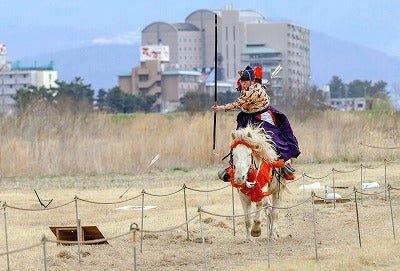
They are used for trekking, horse therapy, and haseyumi (mounted archery in which arrows are shot from a galloping horse).
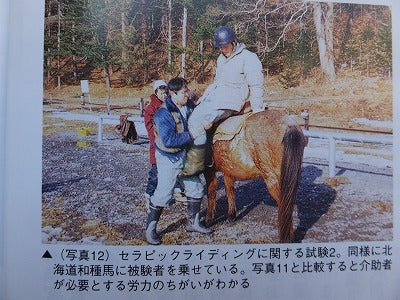
Horse therapy: Because they are shorter in height than Thoroughbred-type horses, caregivers feel more at ease, the physical burden on assistants is reduced, and safety is better maintained.
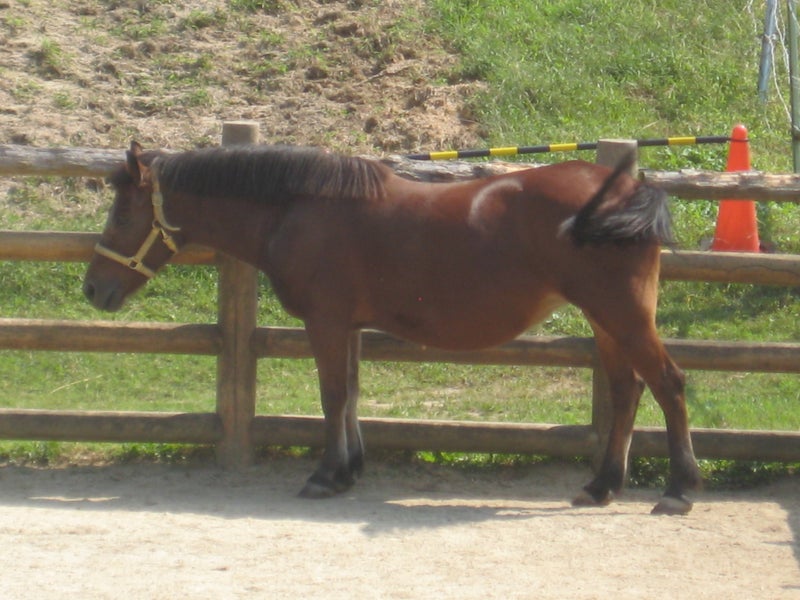
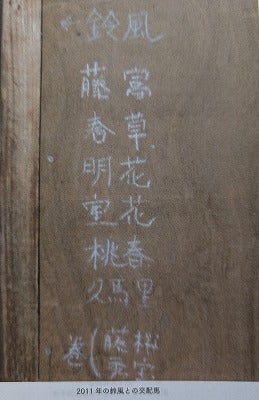
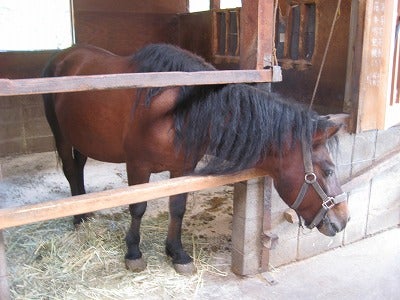
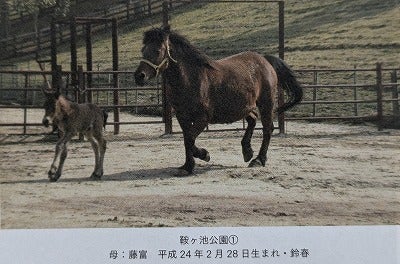
Photos show that a stallion named “Suzukaze” was used for father-daughter breeding, which led to a foal with congenital deformities, revealing challenges with inbreeding. Efforts were made to introduce new stallions, but no foals were born in 2023.
Breeding stallion: Suzukaze. A mare at a park in Aichi Prefecture that was covered by Suzukaze gave birth on February 28, 2012, to a colt (male foal).
The park director at the time noticed abnormalities in the foal (Suzuharu) and, on September 17 of the same year, asked a representative and a veterinarian from the Kiso Horse Preservation Society to come and examine it. However, without even touching the foal, they stated that it had “congenital right hindlimb flexural deformity.” From this, it is clear that the cause was inbreeding.
In fiscal year 2022, a new breeding stallion was introduced. It is not known how many mares were covered, but in fiscal year 2023 not a single foal was born (based on interviews).
Under these circumstances, where inbreeding has progressed, it would be difficult to produce riding horses that are truly suitable for trekking.
When I attended a horse therapist training course twelve years ago, one of the instructors was a graduate of the Nagoya University School of Medicine. The couple operated a therapeutic facility in a mountainous area of Kyoto Prefecture and were engaged in therapy for people with severe intractable diseases using two Kiso horses.
They explained that they chose Kiso horses because, for caregivers and assistants, the horses have a gentle and obedient temperament, and because they use a diagonal gait (shatai-ho—when the right foreleg moves forward, it is followed by the left hind leg). This gait, they said, subtly stimulates the caregiver’s nervous system more effectively than the lateral gait of the Hokkaido native horse.
After attending the therapy for six years, one child was able to speak for the first time.
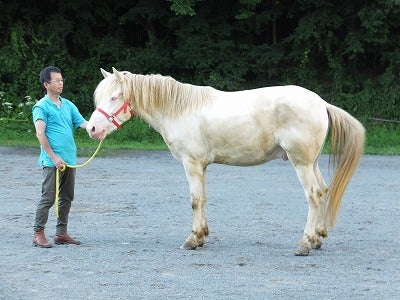
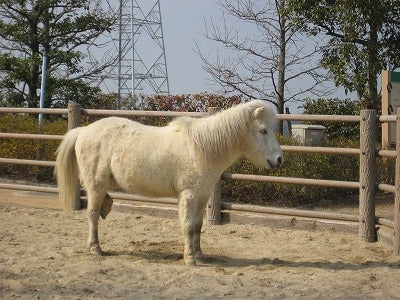
3. Noma Horse An adult male stands about 100 cm tall.
2008: 81 heads 2012: 60 heads 2023: 52 heads.
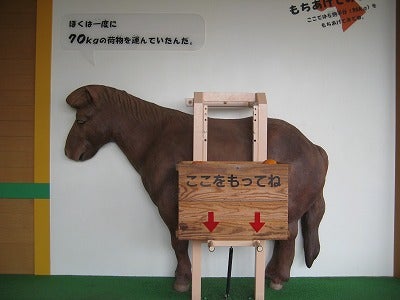
As of 2020, Noma horses in Ehime Prefecture are preserved at two locations: 50 horses at Noma Uma Highland and 2 horses at Tobe Zoo. These are divided into a core population for breeding and preservation (the breeding group) and another group consisting of horses that have finished breeding, geldings, and elderly horses. The latter group, because of their particularly gentle temperament, is tamed and trained and is mainly utilized for children’s riding experiences and therapeutic riding. Because of their small height, riding is limited to elementary school children weighing up to 30 kilograms.
Looking to the future, diversification of keeping locations is required. In order to avoid the risk of extinction, it is necessary to further promote transfers or loans to other zoos and similar institutions, which are already being implemented.
Next, it is necessary to establish a secondary population to support the breeding core population. Although forming such a secondary population is expected to be financially challenging, it should be considered as a future task, including entrusting care to institutions with a public or public-interest character.
Furthermore, promoting a gene bank for horses is important. The Tokachi Station of the National Livestock Breeding Center is already preserving genetic resources, including live animals and frozen semen, for six breeds of Japanese native horses: the Hokkaido native horse, Kiso horse, Taishu horse, Tokara horse, Miyako horse, and Yonaguni horse. Mr. Yoshihiro Kubo, section chief at the Tokachi Station of the National Livestock Breeding Center, has also conducted on-site surveys regarding the production and preservation of frozen semen for Noma horses, and positive results are anticipated in the future.
Tsutomu Hashiguchi (“Horses of Japan: The Past, Present, and Future of Native Horses”)
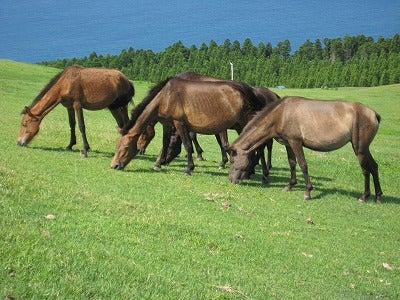
4. Misaki Horse (National Natural Monument) 2008: 115 heads 2012: 87 heads 2023: 92 heads; 20 foals were born, with 13 surviving as of December 16, 2024.
They are feeding in a harem group.
From “Father–Daughter Mating and Its Avoidance Mechanisms in Misaki Horses”
Yujiro Kaseda and Ken Nozawa May 9, 1996
Journal of Animal Science of Japan, Vol. 67, No. 11, pp. 996–1002, 1996
Abstract
Based on the results of a 16-year behavioral study and paternity determination of Misaki horses living in a feral state, this study analyzed the occurrence of father–daughter mating and the mechanisms by which it is avoided, focusing on 12 breeding stallions and their 51 daughters. Of the 176 breeding seasons during which both the 12 stallions and their 51 daughters were reproductively capable, in 82 seasons the two parties spent the season in different areas. In other words, by leaving their natal area before reaching reproductive age and spending reproductively active seasons in regions different from those of their fathers, the daughters physically avoided contact with their fathers, resulting in avoidance of father–daughter mating.
In the remaining 94 breeding seasons in which the stallions and their daughters occupied the same home range, not a single case was observed in which they formed a stable mating relationship. Thus, this study shows that the formation of mating relationships between fathers and daughters was avoided through dispersal, whereby female offspring leave their natal group before sexual maturity.
Among 124 cases in which father–offspring relationships were confirmed, two foals were born from two father–daughter pairs. In both cases, the daughters had been born and raised in groups led by stallions other than their fathers and later, after reaching sexual maturity, formed harem groups with their fathers. On the other hand, there were no cases in which a female offspring that had once left her natal group returned after sexual maturity and formed a stable mating relationship with the stallion of that natal group (the stallion with whom she had spent her early life).
These results support the hypothesis reported for wild and semi-wild horses that “experience of spending early life in the same group leads to avoidance of inbreeding or a reduction in sexual behavior.”
Fiscal year 2008: 115 horses
Fiscal year 2012: 87 horses (Down 28 compared with fiscal year 2008)
This decrease was due to the culling of 12 horses in 2011 as a result of equine infectious anemia.
Fiscal year 2023: 92 horses (Up 5 compared with fiscal year 2012)
In fiscal year 2023, 20 foals were born. As of December 16, 2024, 13 foals remain alive (6 males and 7 females). This number appears to be roughly the same each year.
Cape Toi covers an area of 550 hectares.
In the early Edo period, a domain-run ranch was established by the Takanabe Domain, and horse breeding was carried out through year-round grazing and natural reproduction.
During the era of the Takanabe Domain, only horses with bay, black, or dark bay coats were accepted, and horses of other coat colors were culled. Today, however, all horses born at Cape Toi are counted as “Misaki horses,” regardless of coat color.
Because of its chestnut coat, it was culled (photographed by the author on July 30, 2011).
At present, the population consists of 15 to 20 harem groups, along with males that do not hold harems. Each harem group is composed of one breeding stallion, approximately four mares, and one foal. In the morning, they graze on the hillside grass, and as the sunlight becomes intense, they move into the thickets. The lead is taken by the oldest mare, while the breeding stallion brings up the rear, as if watching over the group.
The harem stallion
They move into the thickets in search of shade.
The lush, vibrant pasture owes much to horse manure. It is also because members of the “Misaki Horse Pasture Cooperative” carry out controlled burning every January without fail, to remove poisonous plants and manage the grasslands. At Cape Toi, there exists a “natural museum without buildings” that sustains the grassland ecosystem.
Yu Akita Ecotourism Promotion Office, Kushima City Hall
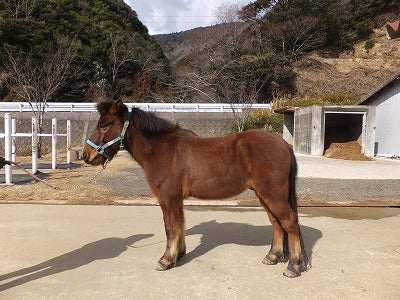
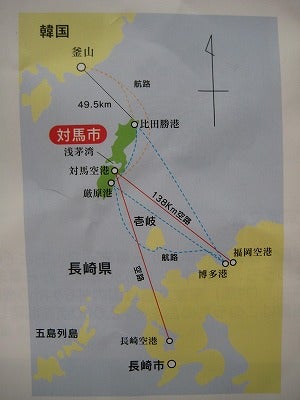
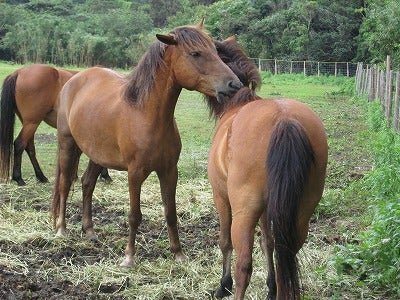
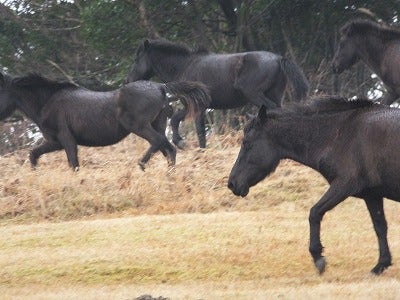
The Tsushima horse is designated as a Natural Monument of Tsushima City. There is the Hatsuuma Festival (held every year on the second Sunday of October), which features Umatobase—a horse race held annually at the Meho Rodam Equestrian Park. However, because awareness of the “Taishu horse” has not spread widely among local residents, a male instructor transports a horse on a truck and conducts outreach classes at elementary and junior high schools.
In Tsushima, pasture grass does not grow well, so the cost of feed places a heavy financial burden.
Although the number of tourists from South Korea is increasing, they do not seem to have much interest in horses.
In Gentle Horses That Supported Island Life (by Minoru Toyota and Tomoko Yoshihara, in Horses of Japan: The Past, Present, and Future of Native Horses), it is stated that “In 2020, two foals were born. Going forward, the plan is to produce four to five foals per year, with the goal of reaching 50 horses on the island in five years (by 2025).” When this policy was conveyed to an instructor, the response was that “this is desk-top theory and the reality is far more challenging.”
Fiscal year 2020: 39 horses Fiscal year 2021: 41 horses Fiscal year 2022: 45 horses
Looking only at the numbers, production appears to be progressing smoothly. However, in fiscal year 2023, the total was 44 horses, a decrease of one from the previous year, and it is understandable that the instructor replied that things do not proceed as neatly as they do on paper.
Grooming of Taishu horses
6: Tokara horse
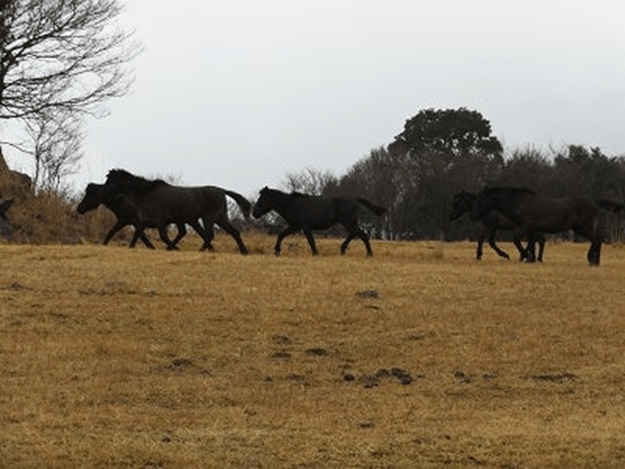
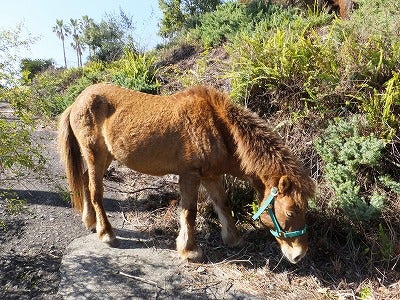
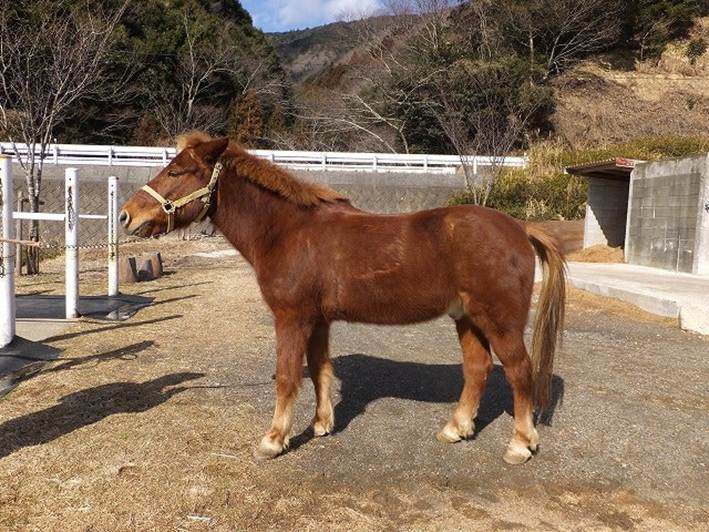
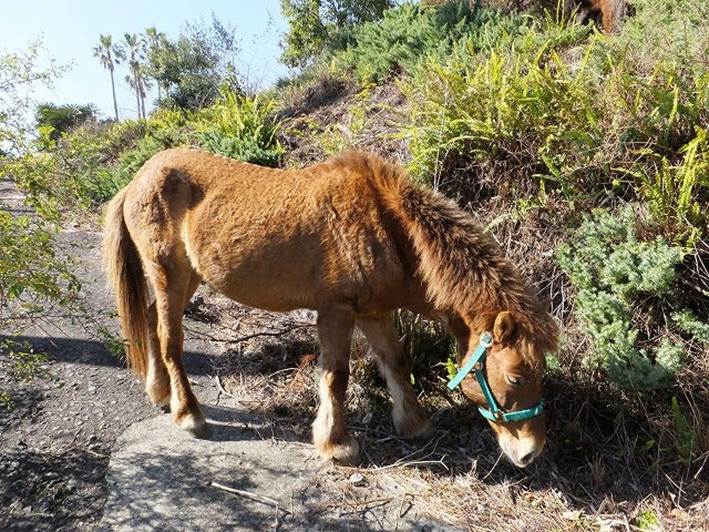
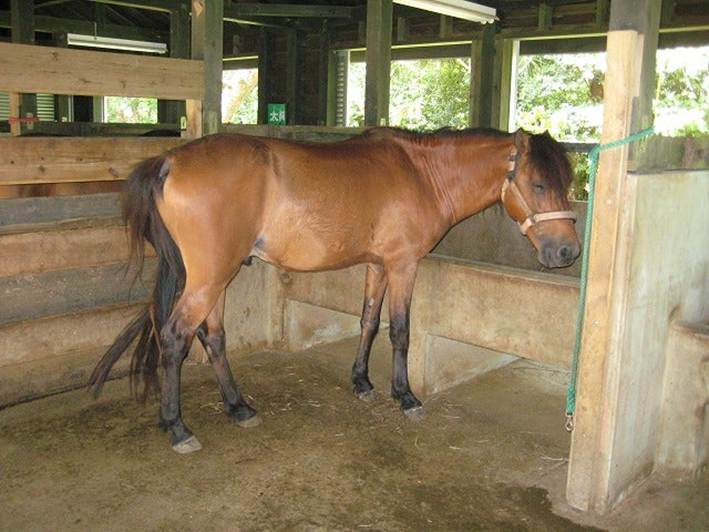
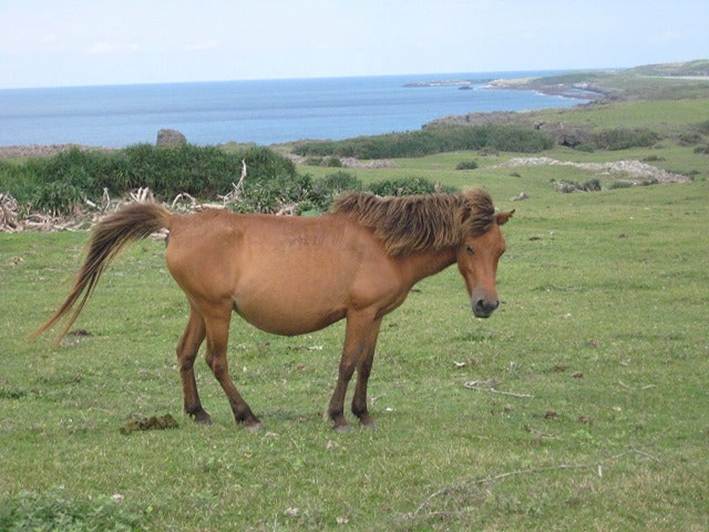
Horses at the Iriki Farm of Kagoshima University, Satsumasendai City, Kagoshima Prefecture. (When they detect humans, they all flee at once.)
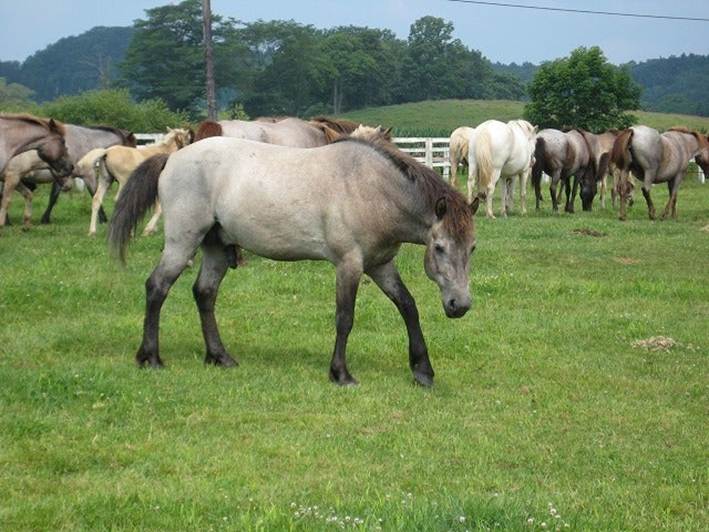
Horses at Kaimon Sanroku Nature Park, Ibusuki City, Kagoshima Prefecture. (Ignoring humans.)
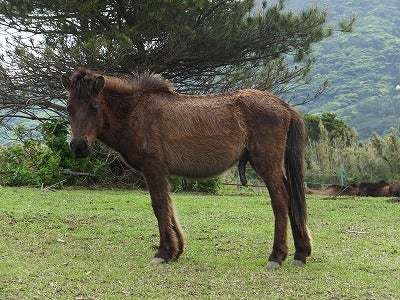
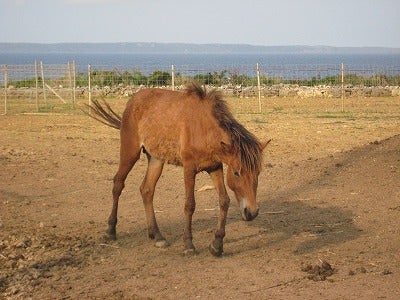
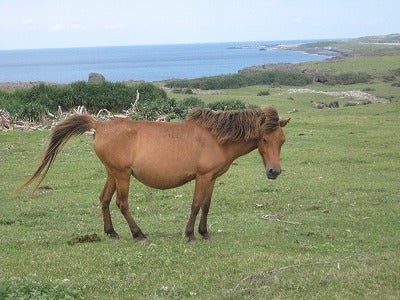
Horses on Nakanoshima, Toshima Village, Tokara Islands. (They come closer when a camera is pointed at them.)
Fiscal year 2008: 115 horses
Fiscal year 2012: 114 horses (Down 1 compared with fiscal year 2008)
Fiscal year 2023: 90 horses (Down 24 compared with fiscal year 2012)
Breakdown
Kagoshima University Iriki Farm: 17 horses Year-round grazing; semi-feral
Kaimon Sanroku Nature Park: 56 horses (20 males, 26 females) 13 foals were born, and 2 were transferred to Kagoshima University Iriki Farm (Managed by the Iwasaki Group, hotel division. Grazed from 8:00 a.m. to 5:00 p.m., but gathered in stables outside those hours.)
Nakanoshima: 17 horses (6 males, 11 females), year-round grazing 3 foals were born; inbreeding has progressed considerably One horse is scheduled to be transferred from Kagoshima University Iriki Farm next year (Designated as a Natural Monument of Kagoshima Prefecture and managed by Toshima Village.)
Kagoshima University’s Iriki Farm is primarily a cattle research facility, and Tokara horses are kept there for the purposes of species conservation and pasture management.
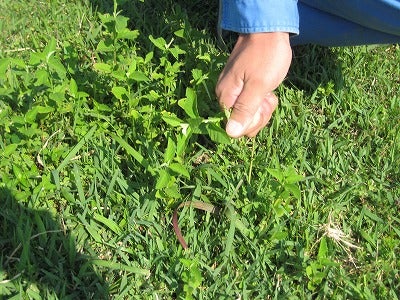
There are around 20 paddocks. The horses are allowed to graze on the pasture grass left uneaten by the cattle, and their manure becomes high-quality compost, resulting in lush, green pasture growth the following year.
The horses eat the pasture grass left uneaten by cattle.
Differences in the mouth structure of horses and cattle.
In Tokara Horses: Living in Solitude (by Arata Okamoto, in Horses of Japan: The Past, Present, and Future of Native Horses), it is written that: “In recent years, Tokara horses that have set out on new journeys have adapted to different environments and begun to walk forward with vitality. This is thanks to those who extended a helping hand in their training. At the same time, the significance of maintaining Tokara horses is gradually being understood. As a result, the Tokara Horse Preservation Society has begun to receive requests from people who wish to keep, utilize, or increase Tokara horses.”
However, when an inquiry was made to the staff of Kaimon Sanroku Nature Park (Iwasaki Group), the response was, “We have never heard of such a situation.”
At that time, the secretariat of the Preservation Society was housed within the Faculty of Agriculture at Kagoshima University, but it was transferred to the Faculty of Veterinary Medicine last year.
7: Miyako horse (owned by Miyakojima City)
Fiscal year 2008: 31 horses
Fiscal year 2012: 35 horses (Up 4 compared with fiscal year 2008)
Fiscal year 2023: 48 horses (Up 13 compared with fiscal year 2012)
There has been no increase or decrease since fiscal year 2017.
It is stated that: “The secretariat of the Miyako Horse Preservation Society was transferred from the Livestock Division of the Miyakojima City mayor’s office to the Cultural Properties Division of the Board of Education. Support from Okinawa Prefecture, the Japan Equestrian Federation, and the Japan Racing Association was also strengthened. In March 2020, a preservation and utilization plan was created under the new framework. All horses were to be treated as Natural Monuments of Okinawa Prefecture, and for species preservation the goal was set to increase the population to 100 horses by fiscal year 2030. In addition, the society aimed to become a juridical entity. (Omitted) A Miyako Horse interaction plaza was also planned within the prefectural Miyako Park, which is scheduled to be developed nearby.”
(Yukio Nagahama, Horses That Supported the Ryukyu Kingdom, in Horses of Japan: The Past, Present, and Future of Native Horses)
Under the current situation, in which maintaining a population of 48 horses over the past seven years has been all that can be managed, it is difficult to imagine increasing the number to 100 within six years. Furthermore, regarding the statement “a Miyako Horse interaction plaza was also planned within the prefectural Miyako Park to be developed,” a telephone interview with the Cultural Properties Division revealed the comment that “it was merely planned.” There is a sense that the proposal is somewhat overly ambitious.
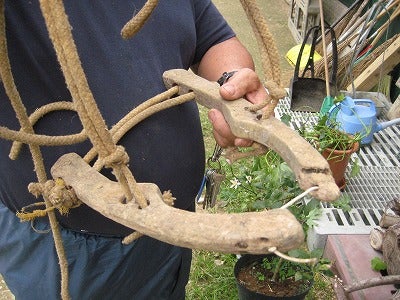
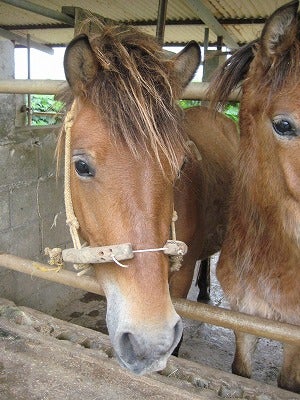
Umugui: a type of bridle traditionally used in Okinawa, which allows the horse to be controlled with a single rein.
The breeding stallion at Nikatori Farm, with a height of approximately 122 centimeters. I was allowed to go trekking on April 23, 2013. The person who prepared everything for us was Mr. Akihiro Nikatori.
Perhaps because my weight was 45 kilograms, the horse ran comfortably. (This activity is no longer conducted.)
Of the 35 horses in fiscal year 2012, 20 were entrusted by the city to Mr. Akihiro Nikatori, the representative of Nikatori Farm, for care and management. At that time, the entrusted care fee paid by the city was 5,000 yen per horse per month, with a foal birth incentive of 100,000 yen. He lamented that it was utterly impossible to continue keeping horses under such conditions. Despite repeated negotiations with the city to raise the entrusted care fee, these efforts were unsuccessful.
However, after the transfer of the Preservation Society’s secretariat and following the year in which the Japan Racing Association became involved, negotiations for a fee increase were resumed. As a result, the fee was raised, and an annual amount of 500,000 to 800,000 yen per horse came to be paid.
Because this extremely low entrusted care fee had been a serious problem, a December 2018 issue of Weekly SPA! reported, with photographs, that some caretakers had kept horses in poor conditions and allowed them to die from neglect without proper care. This report spread on social media and drew strong public criticism.
All that can be done is to wait and see how many horses the population will increase to by fiscal year 2030.
8: Yonaguni horse
Yonaguni horses at Kita Farm.
Fiscal year 2008: 85 horses
Fiscal year 2012: 130 horses (Up 45 compared with fiscal year 2008)
Fiscal year 2023: 110 horses (Down 20 compared with fiscal year 2012)
The population peaked at 141 horses in fiscal year 2011. Although there have been fluctuations since then, the number has been maintained at 110 or more.
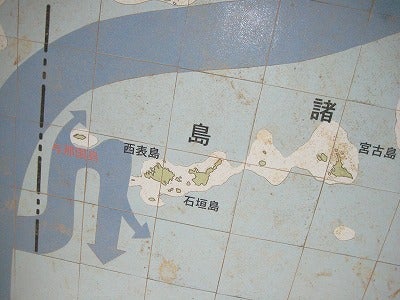
On a small island with a circumference of 27 kilometers, they are kept at Kita Farm and Higashizaki (Agarizaki) Farm. (At Minami Farm, crossbred horses had been grazed year-round, but it was closed in recent years due to the installation of a Self-Defense Forces radar base.)
When I visited on April 26, 2013, the island had fisheries, rice paddies, fields, and forests, and the richness of its natural environment was deeply soothing.
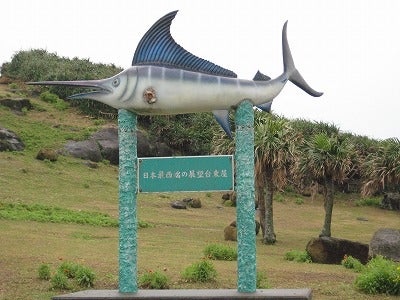
Every year, a world championship tournament for marlin fishing was held.
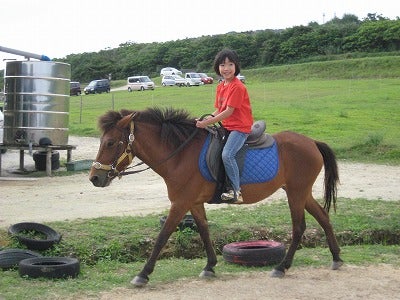
Yonaguni Horse Riding Experience A girl who became able to ride alone from the age of three; height approximately 122 centimeters.
At the time, while heading toward the seaside with Mr. Asakura, the instructor who was the farm manager then, I was told, “You may go ahead,” and I remember galloping off with a great sense of exhilaration (my weight was 45 kilograms).
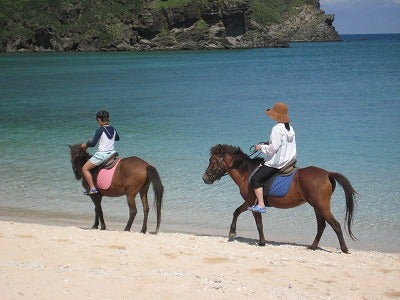
Beach riding
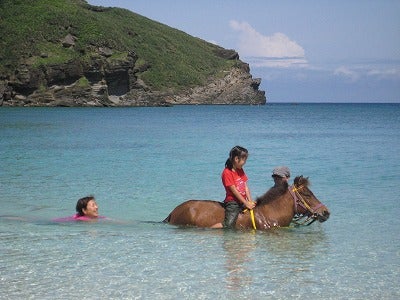
Playing in the sea on horseback
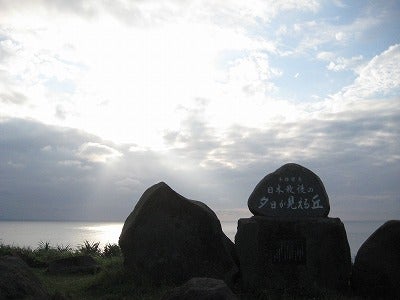
The hill where Japan’s last sunset can be seen
At present, it is impossible to speak of the path that has led to the conservation and active utilization of the Yonaguni horse without acknowledging the role of Mr. Masaki Kuno. Prompted by a newspaper article in 1982 that reported the Yonaguni horse facing the risk of extinction, he relocated to Yonaguni Island. In 1992, he established the Yonaguni Horse Interaction Park.
In October 2017, together with representatives from Okinawa Main Island, Kume Island, and Ishigaki Island, he founded the General Incorporated Association for the Conservation and Utilization of the Yonaguni Horse.
Mr. Kuno is a person of exceptional character and vision, and the very existence of the Yonaguni horse today stands as a testament to his efforts.
Currently, the Izunokuni Horse Park in Izunokuni City, Shizuoka Prefecture, and the Shimanto Horse Park in Kochi City, Kochi Prefecture, have joined the association.
Due to repeated incursions into Japan’s territorial waters and airspace by China, numerous Japan Self-Defense Forces bases and radar facilities have been constructed in Miyakojima City and Yonaguni Town. As a result, it has been reported that some local assembly members view population growth in this region as a positive development.
Regrettably, even since the end of the Second World War, this area has continually been placed on the front line of Japan’s security challenges.
Summary
Fiscal Year 2008: Total of 1,860 horses
Fiscal Year 2012: Total of 1,958 horses, an increase of 98 compared with fiscal year 2008
Fiscal Year 2023: Total of 1,707 horses, a decrease of 251 compared with fiscal year 2012
In all three fiscal years, Hokkaido native horses accounted for approximately 67 percent of the total.
This pattern has remained unchanged since 1985, when the Public Interest Incorporated Association, Japan Equestrian Association first presented data on trends in the population of Japanese native horses.
References
Horses of Japan: Past, Present, and Future of Native Horses, 5 October 2021, University of Tokyo Press (General Incorporated Association).
Public Interest Incorporated Association Japan Equestrian Association, Trends in the Number of Japanese Native Horses.
Father–Daughter Mating and Its Avoidance Mechanisms in Misaki Horses
Yujiro Kaseda and Ken Nozawa, Journal of the Japanese Society of Animal Science, Volume 67, Number 11, pages 996–1002, 1996.
In Yamanashi Prefecture, there is a ranch operated by an individual who breeds, gentles, trains, and actively utilizes Kiso-line Japanese native horses that are not registered with the Public Interest Incorporated Association Japan Equestrian Association.
This individual is Mr. Yukio Kikuchi, Representative of Koyodai Kiso Horse Ranch. He has devoted himself exclusively to Japanese horses, conducting research into equestrian techniques, tack, and mounted archery methods, and has remained active on the front lines for approximately forty years.
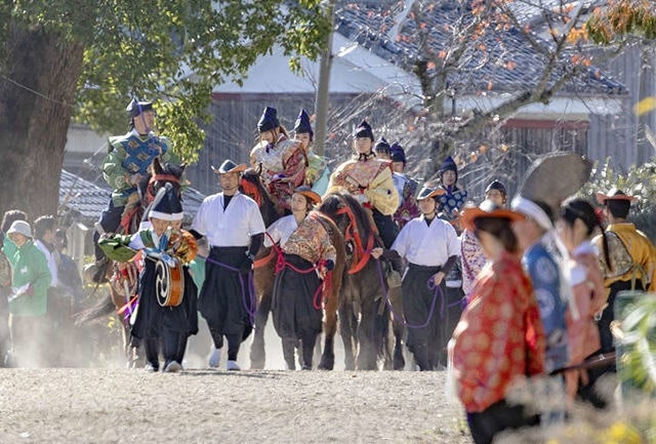
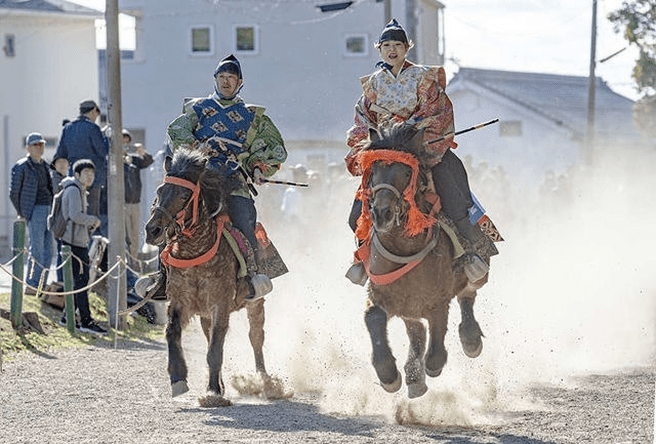
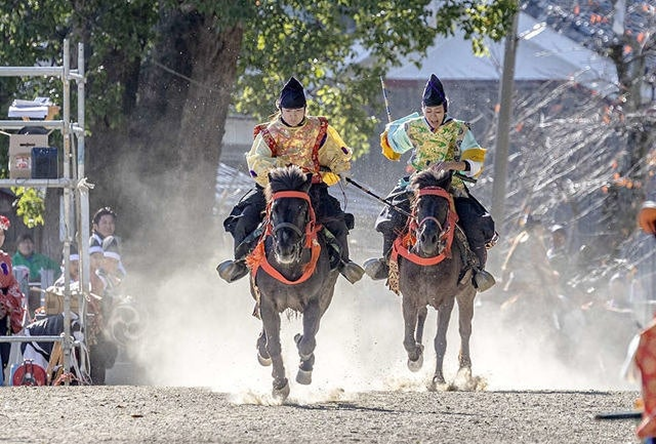
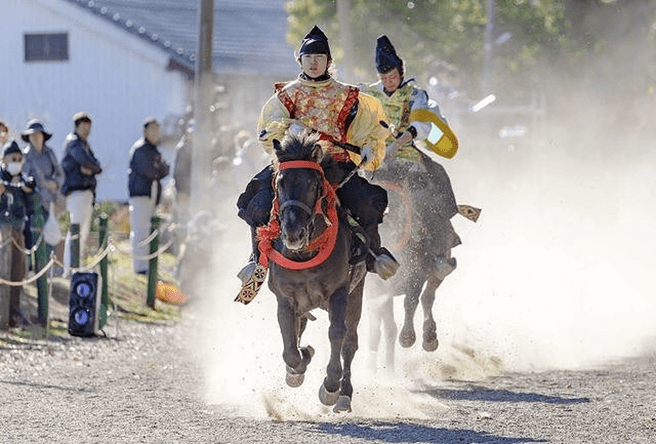
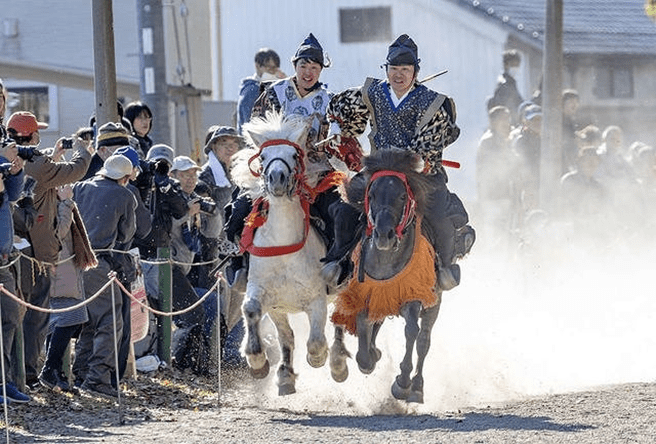
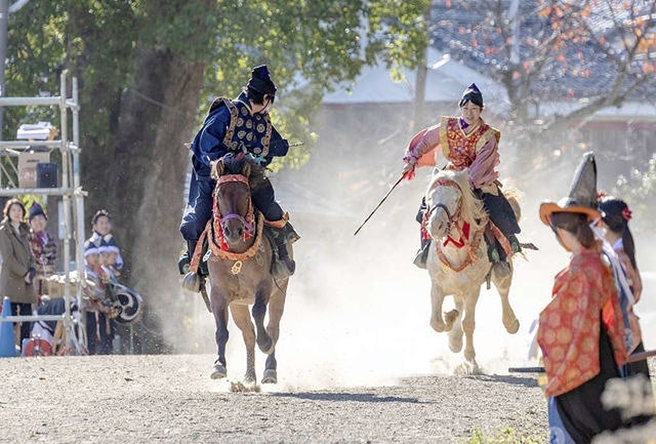
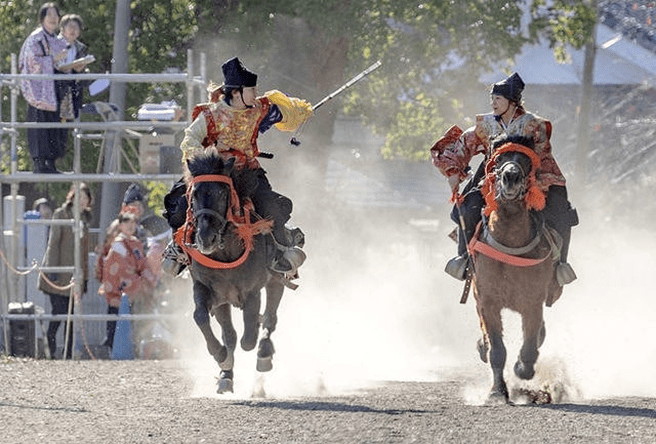
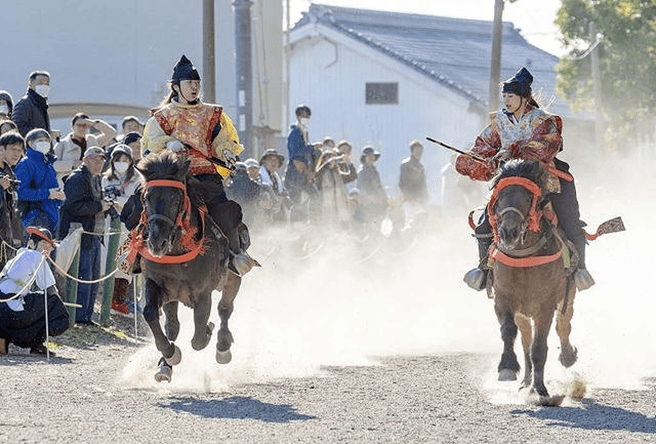
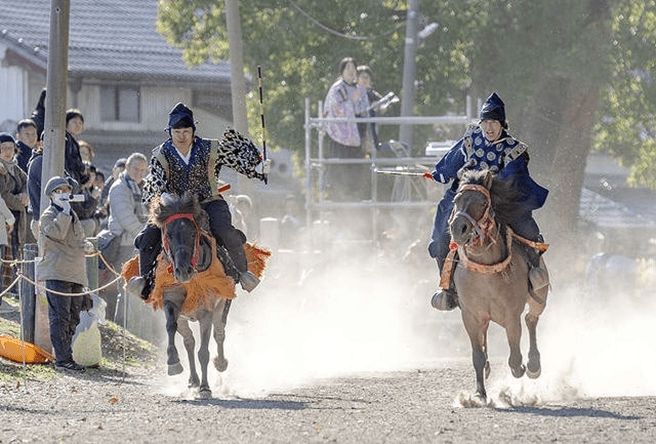
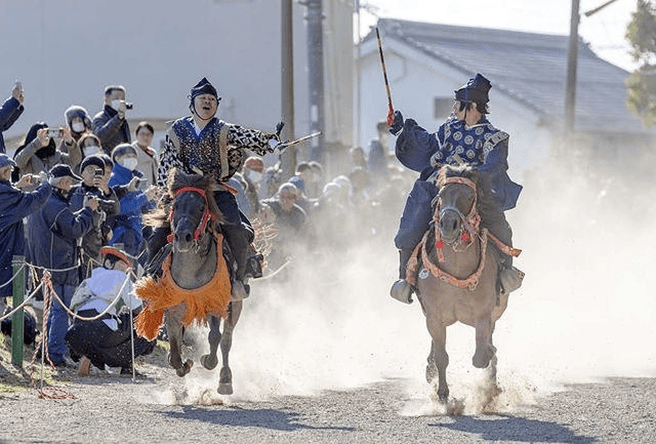
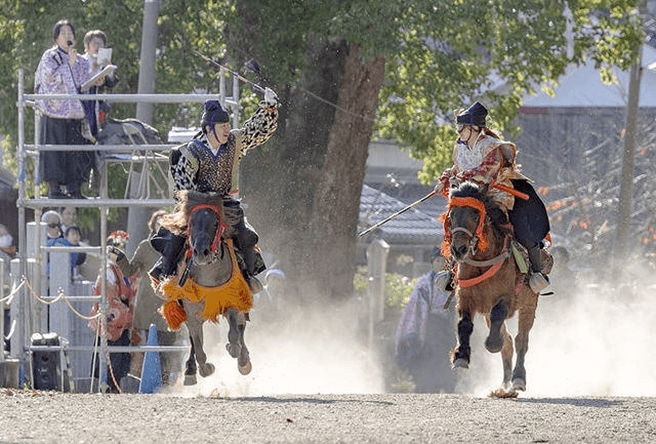
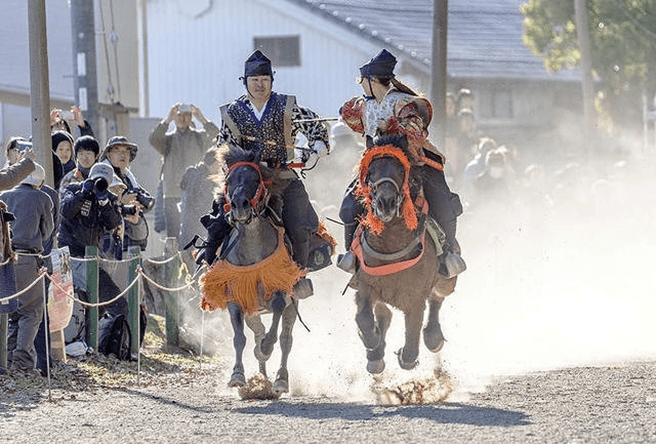
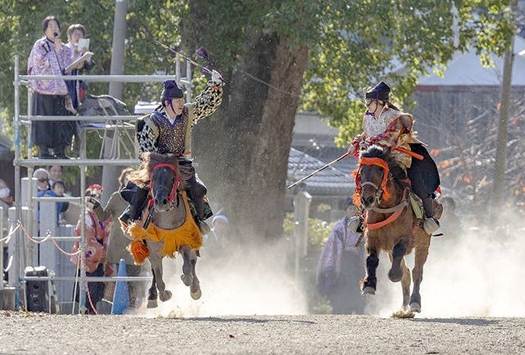
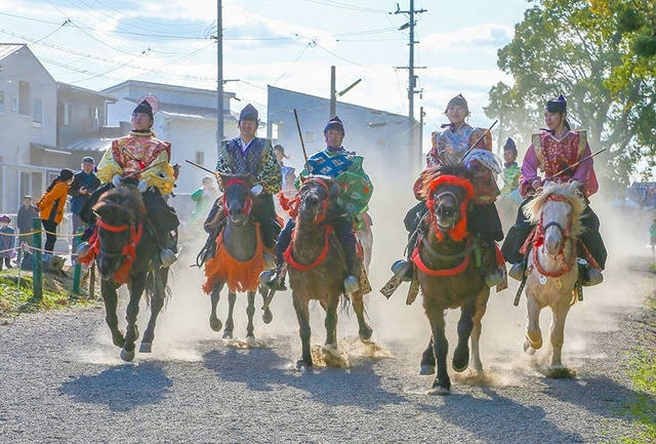
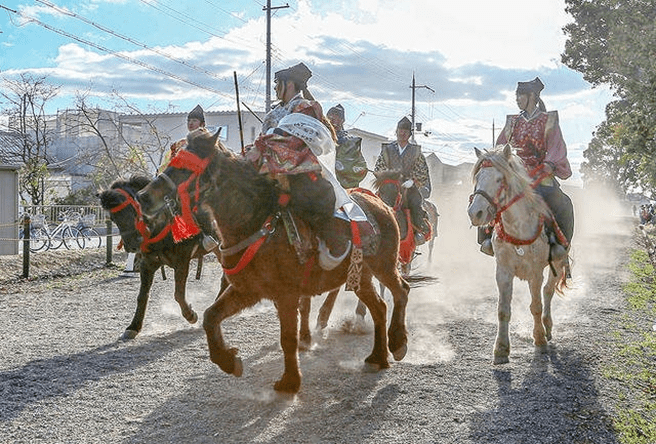
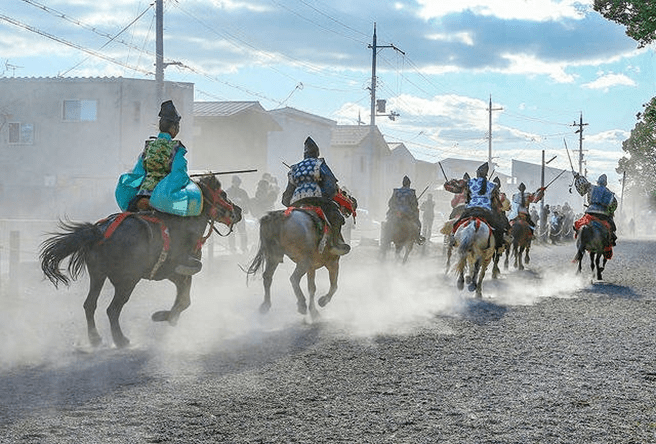
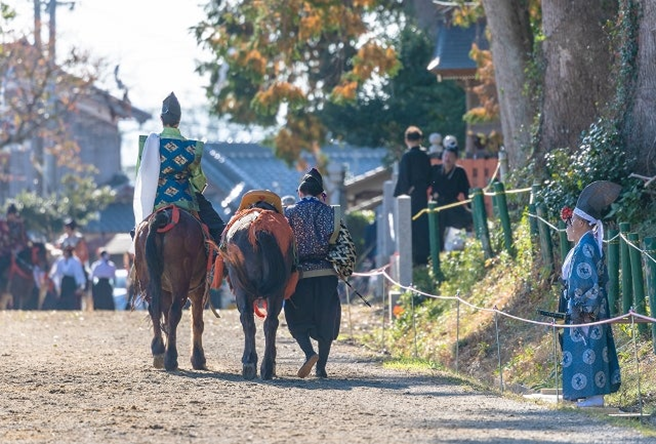
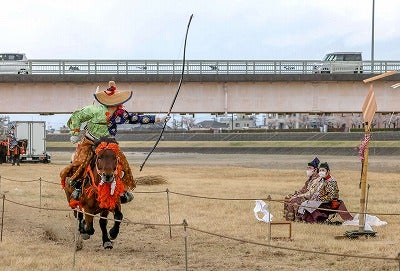
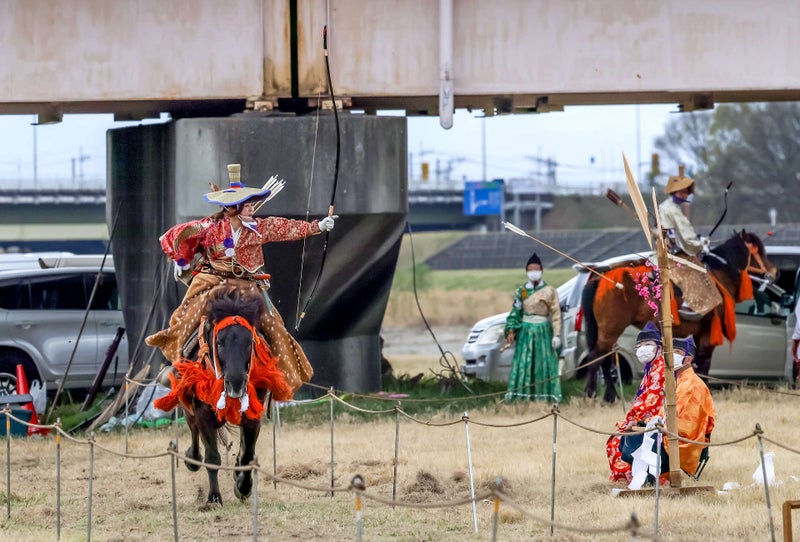
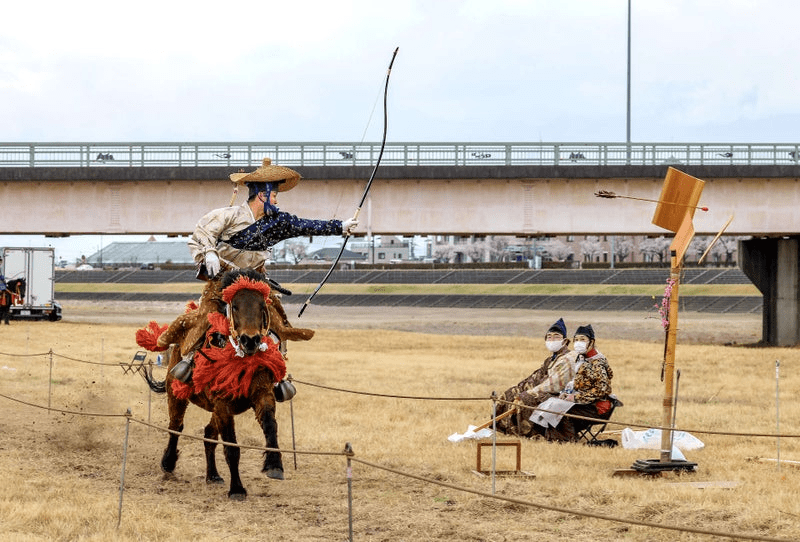
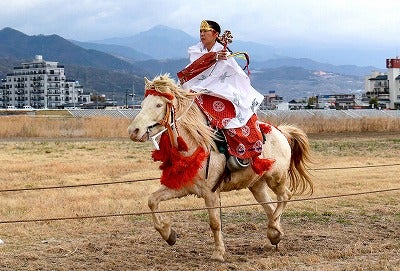
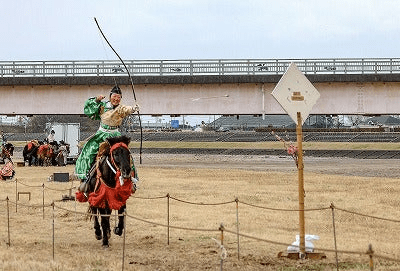
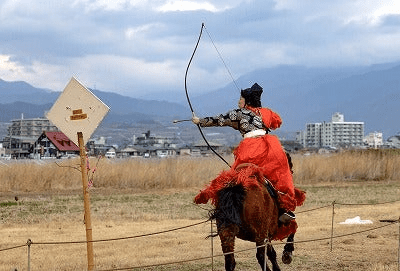
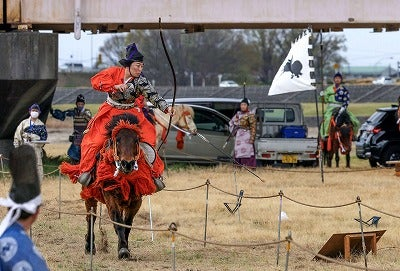
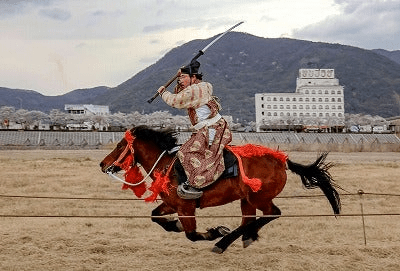
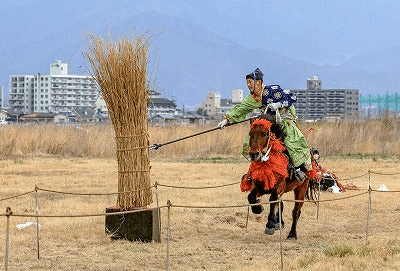
This section introduces the Isawa Hachiman Kai-Koma Style Yabusame Ritual held at Isawa Hachiman Shrine, located in Isawa Town, Fuefuki City, Yamanashi Prefecture.
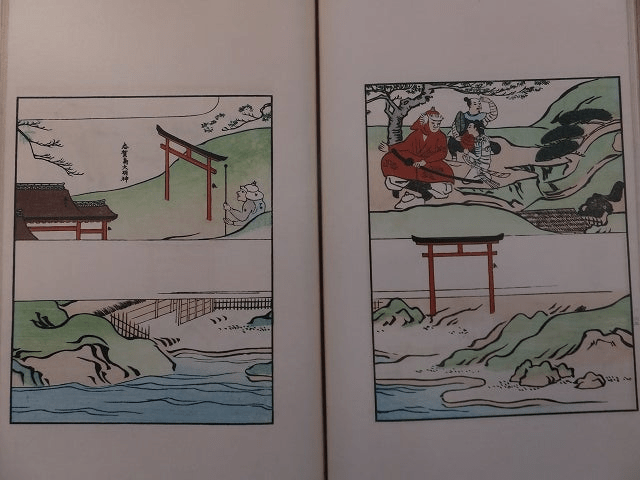
Based on the Mōko Shūrai Ekotoba (Illustrated Scrolls of the Mongol Invasions), held at the Iwase Bunko Library in Nishio City.
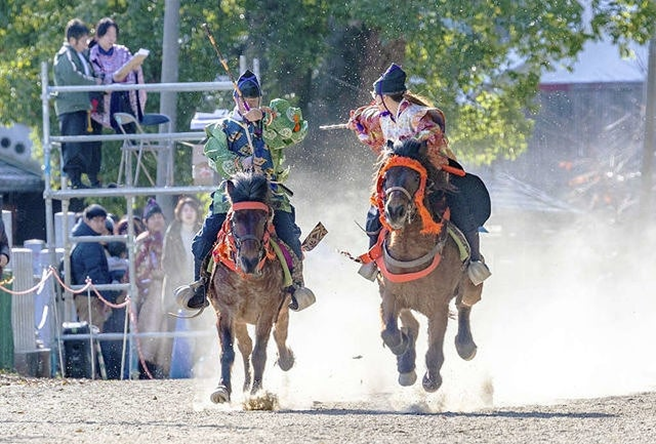
The horse tack used is very close to that depicted in the scrolls. Riding is performed using long-tongue stirrups (shitanaga abumi), employing a style in which the rider does not sit fully in the saddle except at a walk. Instead, the rider maintains a standing, light-seat position; for ease of understanding, one may imagine the riding posture of a modern horse-racing jockey.
Yabusame (Mounted Archery): First Sacred Rite Archer
Yabusame (Mounted Archery): Second Sacred Rite Archer
Yabusame (Mounted Archery): Third Sacred Rite Archer
Bajō Bugei (Mounted Martial Arts): Yundesita (Lowering the Bow Hand)
Bajō Bugei (Mounted Martial Arts): Nagamaki
Bajō Bugei (Mounted Martial Arts): Spear
Such skills are made possible only through diligent, daily training.
With the cooperation of: Koyodai Kiso Horse Ranch Koshu Traditional Japanese Equestrian Arts Research Association
Photographs provided by: Mr. Yoshio Hayashi
At the Paris 2024 Olympic Games, Japan won the bronze medal in the team eventing show jumping competition. This marked the first time in ninety-two years that Japan had won an Olympic medal in equestrian sports. It was also the first medal achieved in a team event, with the four riders having an average age of forty-one.
This joyful achievement followed the gold medal won by Second Lieutenant Takeichi Nishi, an officer of the Imperial Japanese Army Cavalry, in the show jumping competition at the 1932 Los Angeles Olympic Games. His beloved horse, Uranus, was a French-born Anglo-Norman chestnut, standing 181 centimeters tall.
In 1945, having been promoted to lieutenant colonel, Takeichi Nishi was dispatched to Iwo Jima as commander of the 26th Tank Regiment to defend the Japanese mainland. He was killed in action on March 22 amid relentless attacks by United States forces. He was forty-five years old at the time of his death.
At the 2024 Arima Kinen (Nakayama Racecourse, 2,500 meters), Regaleira, a three-year-old bay filly, claimed victory, marking the first win by a horse of this profile in sixty-four years.
Her average speed was 59 kilometers per hour, a feat not seen since Star Roch in 1960.
I watched the live broadcast on television, and just before the finish line, by the narrowest of margins, decided by the subtle rise and fall of the horses’ heads, the goddess of victory smiled upon Regaleira. As she is still only three years old, her future promises to be most exciting.
Amid the controversy that shook the horse racing world over the unauthorized possession of communication devices, jockey Nanako Fujita, aged twenty-seven, who holds the record for the most career wins by a female jockey with 166 victories, submitted an application for the cancellation of her jockey’s license. The application was accepted by the Japan Racing Association, and she retired on October 11. Her jockey career spanned approximately eight and a half years.
Prohibition on Bringing Communication Devices
As a measure to prevent race-fixing, jockeys registered with the Japan Racing Association are required, from the evening before a race meeting (by 9:00 p.m.), to deposit personal belongings in lockers at the racecourse or training center facilities and remain in designated “adjustment rooms,” where contact with the outside world is prohibited.
What a bitter and deeply regrettable outcome.
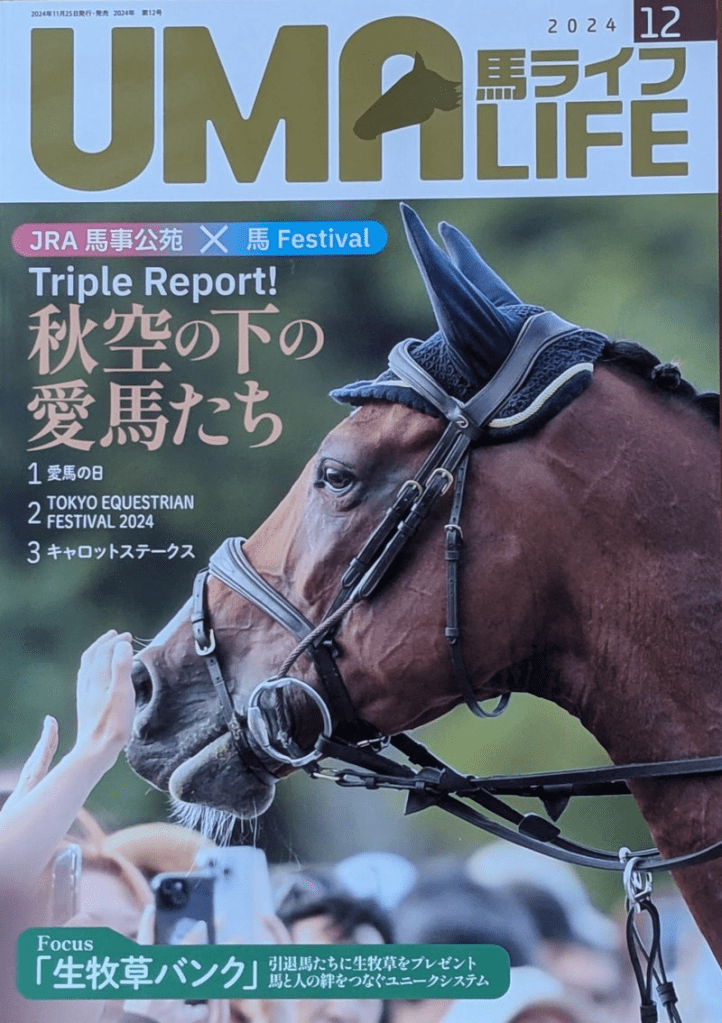
This is a personal reflection, but I began attending a riding club thirty-eight years ago and naturally became a regular reader of Horse Riding Life. Three years later, although it was only a local equestrian competition, the results of an event in which I competed were published in the magazine. Seeing my own name in print made me very happy. Riding clubs from all over Japan were introduced in its pages, and my dream was to ride at least once at a riding club in Kobuchizawa, Hokuto City, Yamanashi Prefecture.
As the equestrian population declined, the magazine changed its name to Horse Life. Today, it is no longer displayed in the sports magazine section of bookstores. Depending on the municipality, even libraries no longer carry it in their magazine corners.
Even when placing a reservation at a bookstore, it takes about five days before the issue arrives. Perhaps the thinness of the magazine itself speaks to the times. It feels lonely.
I sincerely hope that the coming year will be a good and fulfilling one for each and every one of you.
Special Exhibition Commemorating the 45th Anniversary of Municipal Incorporation and the 30th Anniversary of the Museum’s Opening. The Neighing of Horses and the Light of Kingship — Emperor Keitai and the Horse Breeders of Kawachi — From the exhibition catalogue of the Shijōnawate City Museum of History and Folklore
Preface
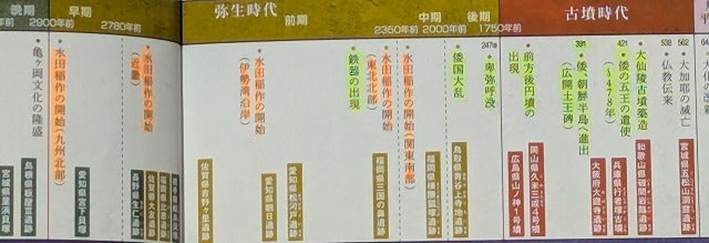
Recent research has shown that the Jōmon period began approximately 3,000 years earlier than previously thought, starting around 16,000 years ago. As a result, the beginning of wet-rice paddy cultivation in Japan during the Yayoi period, which had long been considered to coincide with the introduction of iron tools, is now understood to have occurred about 500 years earlier. By contrast, the dating of the appearance of iron implements remains unchanged, continuing to be placed in the early fourth century BCE.
From the exhibition catalogue of the special exhibition Ancient DNA: The Journey of the Japanese People, National Museum of Nature and Science, Tokyo, held from Saturday, 15 March 2025 to Sunday, 15 June 2025)
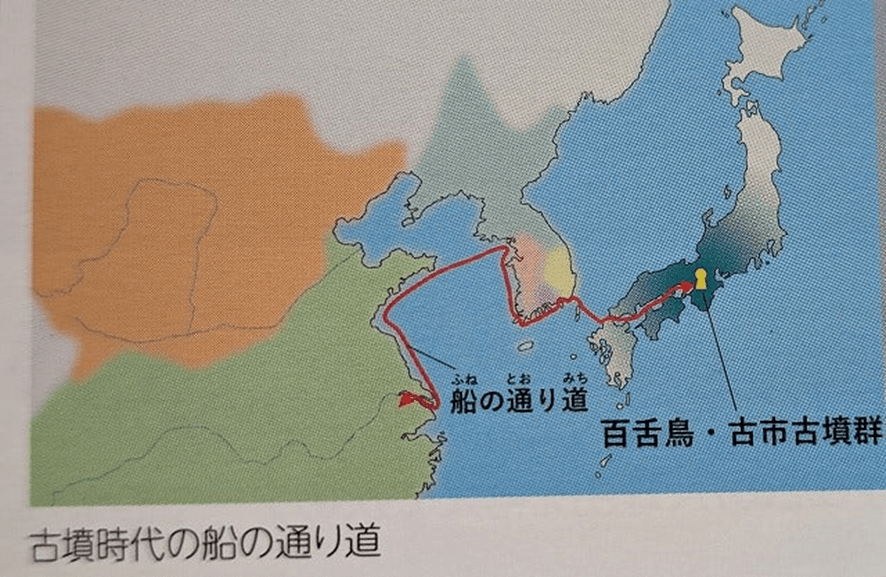
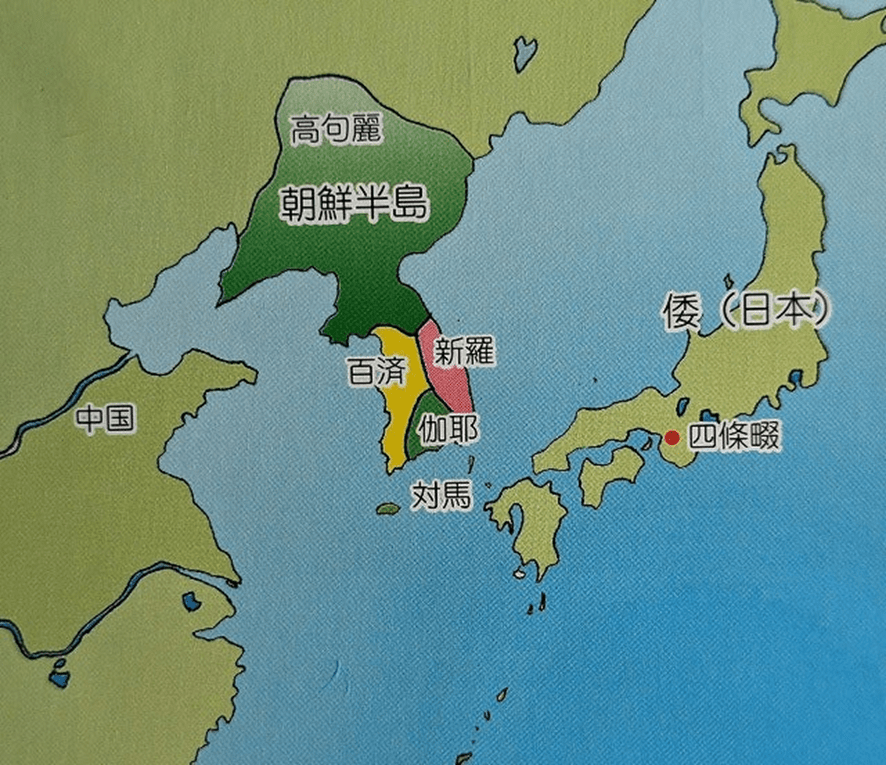
In my earlier work, The Japanese Native Horse: Past, Present, and Future, in the section “1: The Origins of Horses in Japan,” I argued that horses were first introduced from the Korean Peninsula to Japan during the latter half of the fourth century to the fifth century of the Kofun period. According to this view, they traveled by semi-structured vessels via northern Kyushu before reaching Kawachi (present-day Shijōnawate City, Osaka Prefecture).
Haniwa of a Semi-Structured Vessel Displayed at the Miyazaki Prefectural Saitobaru Archaeological Museum. Photograph by the author
In the paper “What Is a Native Horse?” by Seiji Kondō, Professor Emeritus of Hokkaido University (published in Horses of Japan: Past, Present, and Future, 5 October 2021, University of Tokyo Press), it is noted that although a study published in 2016 claimed that horse teeth had been excavated from third-century sites, this assertion was subsequently refuted through meticulous investigation and interviews (Suzuki, 2019). I consider it a personal honour that my evaluation was cited in this context.
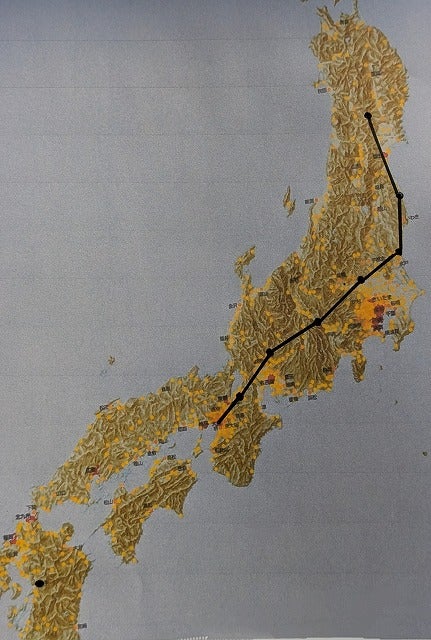
That said, certain articles and records were insufficiently addressed in my earlier work. Moreover, new findings from DNA analysis, archaeology, and newspaper reports have since emerged. While no horse-related artefacts have been identified at fourth-century kofun or archaeological sites, discoveries related to horses begin to increase rapidly from the latter half of the fourth century onward. In order to understand why this shift occurred, I will undertake a new, detailed examination of the theory of the eastward transmission of horses in Japan, presented as a series.
Author’s Hypothetical Reconstruction (Kawachi to present-day Ōshū City, Iwate Prefecture)
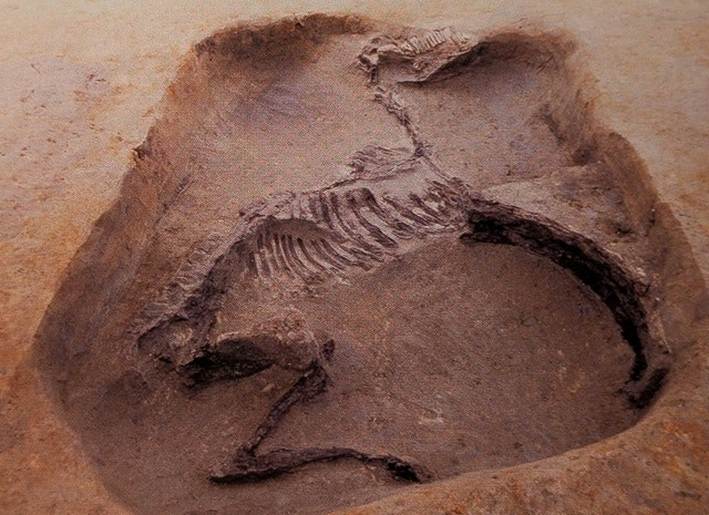
1: The Presence of Complete Horse Skeletons at Archaeological Sites, Including the Tobiya-kita Site in Shijōnawate City, Osaka Prefecture (5th Century)
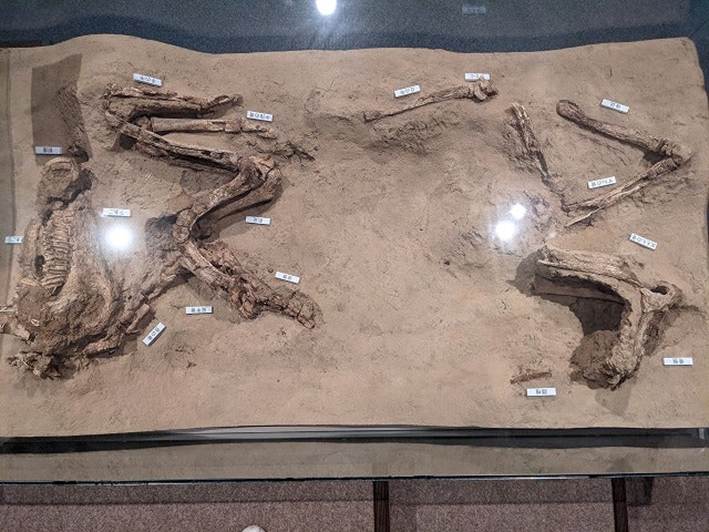
(1) Complete Horse Skeleton from the Tobiya-kita Site, Shijōnawate City, Osaka Prefecture
Withers height: approximately 127 cm Age: 5–6 years Sex: undetermined
From the 24th Special Exhibition (Fiscal Year 2009) Horses Traveled by Boat — From the Horse-Breeding Settlement of the Tobiya-kita Site
Exhibition catalogue, Shijōnawate City Museum of History and Folklore, 2009
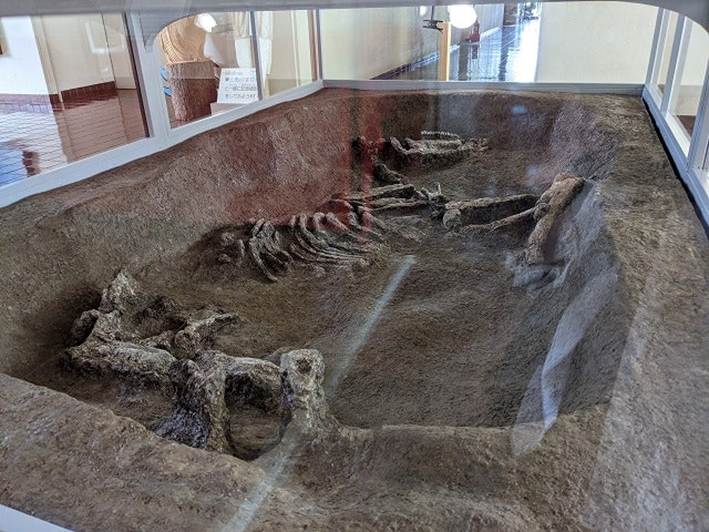
(2) Kusaka Site, Higashiōsaka City, Osaka Prefecture
An archaeological site spanning the Jōmon period through the Kofun period. Excavated from a soil layer approximately 1 metre thick containing Jōmon pottery, Haji ware, Sue ware, and related materials.
Withers height: 125–127 cm Age: approximately 12 years Sex: male
Cultural Properties Protection Division, Board of Education, Osaka Prefecture
Photograph by the author
(3) Kamishirochō Site, Kumamoto City, Kumamoto Prefecture
Withers height: approximately 125 cm Age: around 12 years Sex: male
Kumamoto City Archaeological Museum
Photograph by the author
(4) Miyagaito Site, Iida City, Nagano Prefecture
Withers height: unknown Age: unknown Sex: female
Iida City Kamisato Archaeological Museum. Photograph by the author
2: Paper titled “The Genetic Background of Native Horses.”
By Teruaki Tosaki 5 October 2021 University of Tokyo Press (General Incorporated Association)
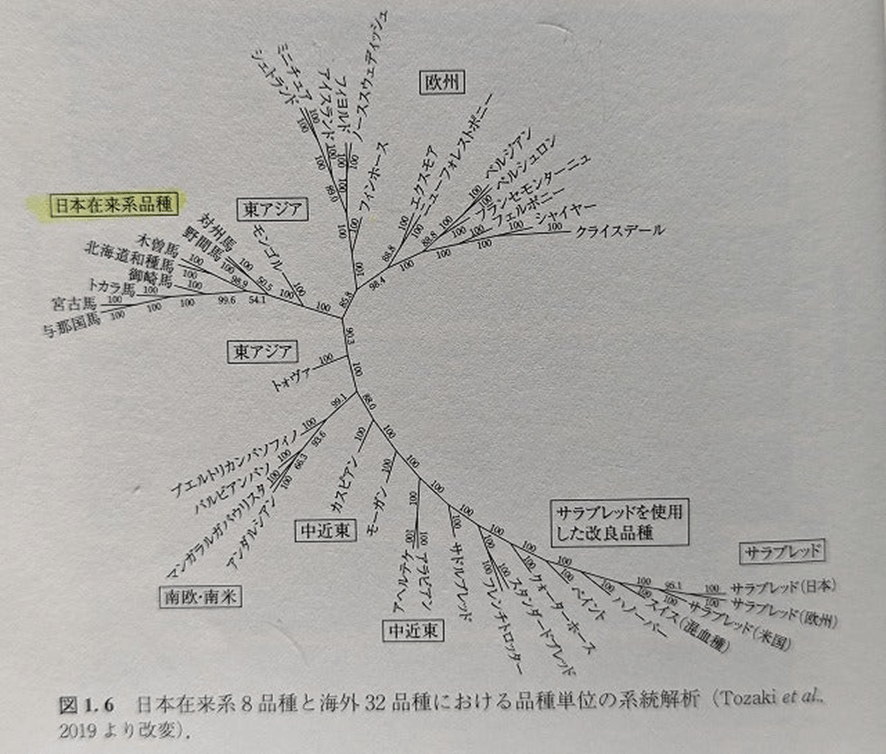
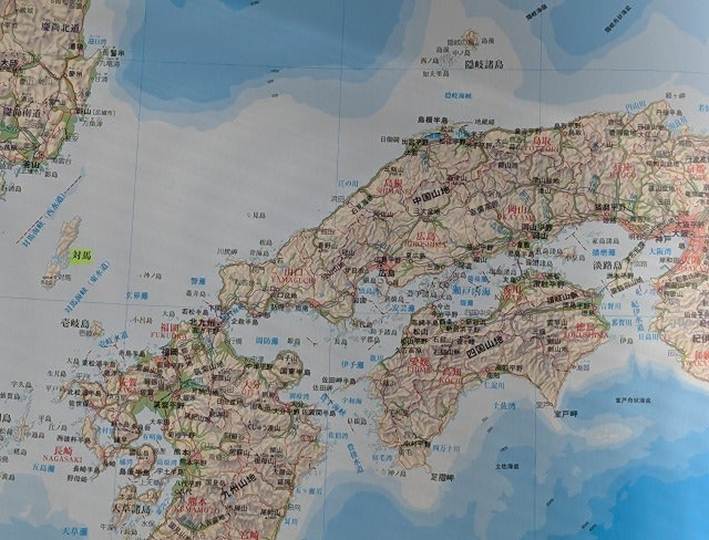
Based on DNA analysis, horses were introduced from the Korean Peninsula via Tsushima and northern Kyushu before reaching Kawachi.
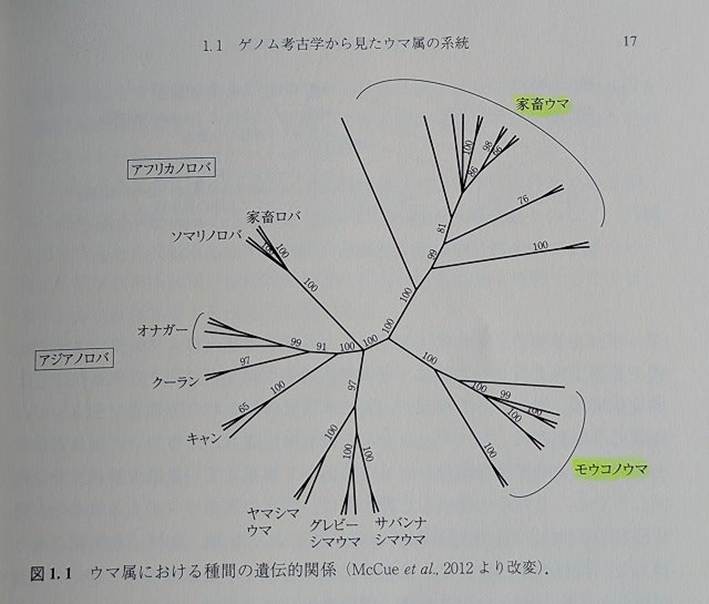
Genetic Relationships among Species within the Genus Equus
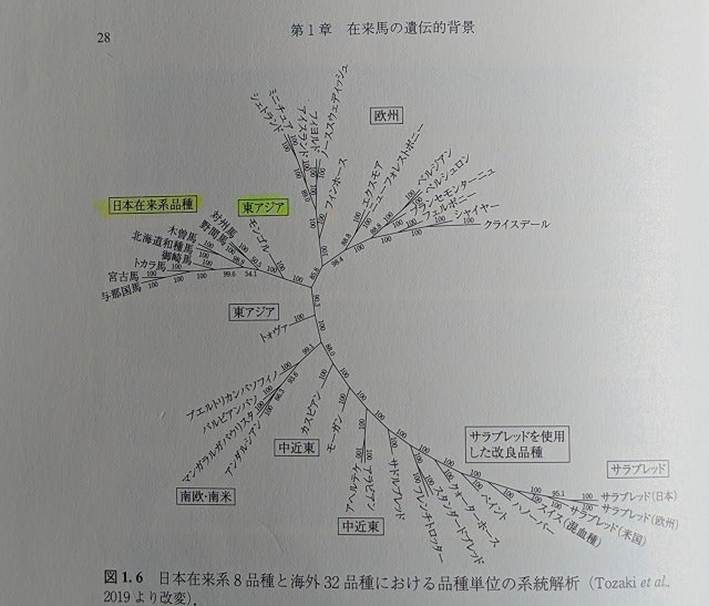
Breed-level phylogenetic analysis of eight Japanese native horse breeds and thirty-two overseas breeds
Chromosome number of the Mongolian horse: 66 Chromosome number of Japanese native horses: 64
Mongolian Horse. Tama Zoological Park. Photograph by the author
A: Hokkaido Native Horse (Hokkaido Washu)
Hokkaido University Shizunai Experimental Farm. Photograph by the author
B: Kiso Horse
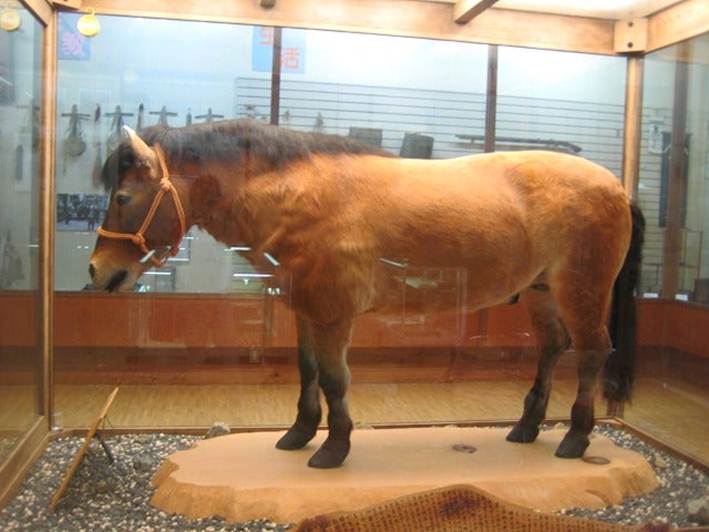
As inbreeding has progressed among present-day Kiso horses, the specimen “Daisan Haruyama-go” from the Kaida Highlands Local History Museum is presented here instead.
Daisan Haruyama-go was born to Shimmei-go (age 12), acquired on 8 April 1951 from Take-mizuwake Shrine in Kōshoku City, Nagano Prefecture, as the sire, and Kashiyama-go (age 21), a purebred Kiso lineage horse, as the dam. The horse was bay in colour.
By the summer of 1953, Daisan Haruyama-go was recognised for both the quality of its lineage and its excellent physical conformation (withers height: 132 cm) and was considered a candidate for use as a breeding stallion. Until around December 1974, the horse had never suffered from illness. However, it subsequently fell ill and became weakened due to physical exhaustion, entering a temporary critical condition.
On 14 January 1975, at the age of 25, Daisan Haruyama-go left Kaida Village, the homeland of the Kiso horse, dragging its heavy steps as it departed, accompanied by many villagers who came to see it off.
On 8 April 1980, the horse was returned to Kaida Village as a taxidermied specimen and is now exhibited at the local history museum.
(From Together with the Kiso Horse, by Masaki Itō, Kaida Village Kiso Horse Preservation Society, 10 June 2000)
Kaida Highlands Local History Museum. Photograph by the author
C: Noma Horse
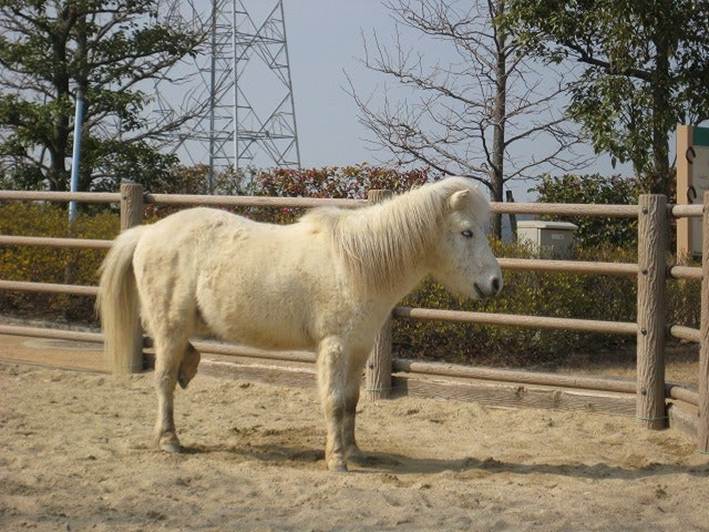
Noma Horse Highland, Imabari City, Ehime Prefecture. Photograph by the author
D: Tsushima Horse (Taishū Horse)
Mebo Rodeo Horse Park, Tsushima City, Nagasaki Prefecture. Photograph by the author
E: Misaki Horse
During the Edo period, this area was designated as a grazing ground by the Akizuki family of the Takanabe Domain. At that time, only horses of bay, black, and blue roan colouring were recognised as Misaki horses.
However, during a visit on 2 October 2022, I was informed that it has since been decided that all horses born at Cape Toi are to be designated as Misaki horses, regardless of coat colour. Any horse born there is not classified as surplus or discarded, irrespective of its colouring.
Because of its chestnut coat, the horse was described as a surplus horse when I visited for an interview on 30 July 2011.
Cape Toi, Kushima City, Miyazaki Prefecture. Photograph by the author
F: Tokara Horse
Kaimon Sanroku Nature Park, Ibusuki City, Kagoshima Prefecture. Photograph by the author
G: Miyako Horse
Nikatori Ranch, Miyako City, Okinawa Prefecture. Photograph by the author
H: Yonaguni Horse
Yonaguni Island, Okinawa Prefecture. Kita Ranch. Photograph by the author
3: Iron knife excavated from the Nintoku Emperor’s Mausoleum
(from the morning edition of the Chunichi Shimbun, 20 June 2025)
On 19 June, Sakai City, Kokugakuin University, and other institutions announced that an iron knife housed in a gilt-bronze sheath, known as a kondō-sōtōshi, along with fragments of armour, had been identified as grave goods from the Daisen Kofun (Sakai City, 5th century). The tomb is managed by the Imperial Household Agency as the “Nintoku Mausoleum” and is the largest keyhole-shaped burial mound in Japan. These items represent the only grave goods from the Daisen Kofun that have been confirmed as actual artefacts. The findings emerged from a joint research project conducted using newly discovered materials obtained by Kokugakuin University.
The knife was found broken into two pieces, with a combined length of approximately 10.5 centimetres. As the handle portion is missing, the original length is estimated to have been around 15 centimetres.
References
Shijōnawate City Museum of History and Folklore The Neighing of Horses and the Light of Kingship Horses Traveled by Boat
National Museum of Nature and Science, Tokyo Special Exhibition: Ancient DNA — The Journey of the Japanese People 15 March 2025 to 15 June 2025
“What Is a Native Horse” by Seiji Kondō 5 October 2021 University of Tokyo Press
“The Genetic Background of Native Horses” by Teruaki Tosaki 5 October 2021 University of Tokyo Press
Together with the Kiso Horse by Masaki Itō Kaida Village Kiso Horse Preservation Society 10 June 2000
Chunichi Shimbun, morning edition 20 June 2025
Author’s work: The Japanese Native Horse — Past, Present, and Future March 2019
This will be the final instalment for this year.
I sincerely wish everyone a healthy and fulfilling year ahead.
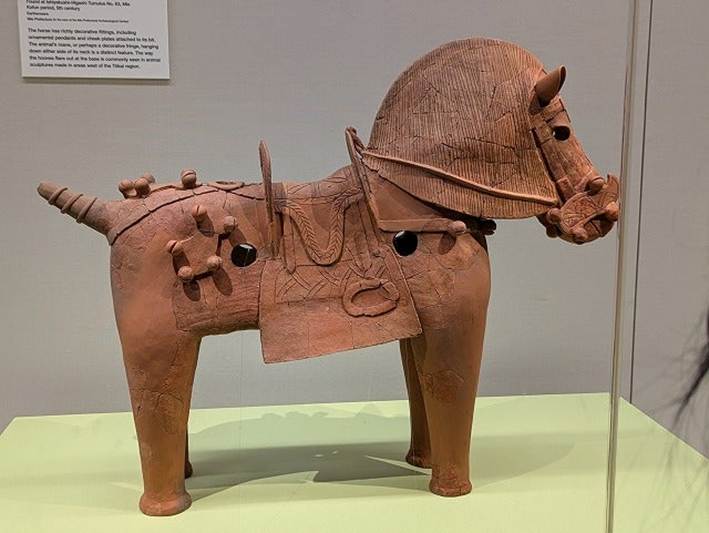
Ishiyakushi East Kofun Group, Suzuka City, Mie Prefecture Horse-shaped Haniwa. Special Exhibition “Haniwa,” Tokyo National Museum. Photograph by the author


























 Heheen