Sumio Suzuki
On Saturday, October 26, I participated in the Kyoto Jidai Matsuri. From Koyodai Kiso Horse Ranch (Narusawa Village, Minamitsuru District, Yamanashi Prefecture), two Hokkaido native horses and one Kiso-line Japanese native horse took part. In addition, two Hokkaido native horses came from “Japan’s Horses – Mikarino-no-Mori Ranch” (Kamo Town, Ōmihachiman City, Shiga Prefecture). A total of five horses paraded through the thousand-year-old city of Kyoto, ridden by representatives portraying five Muromachi-period clans: the ninth shogun, Ashikaga Yoshihisa, as well as the Ise, Yamana, Hosokawa, and Nikaidō clans.
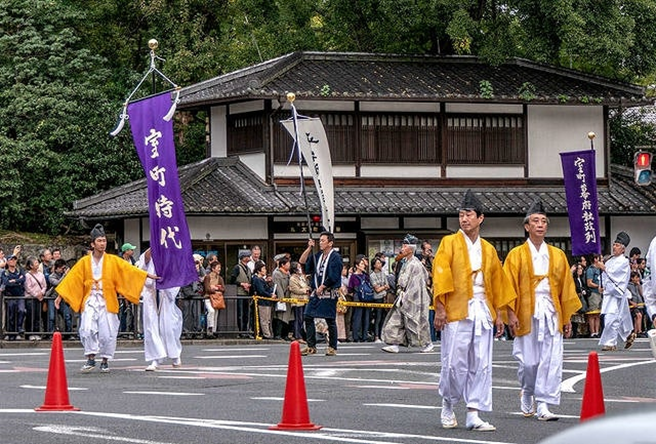
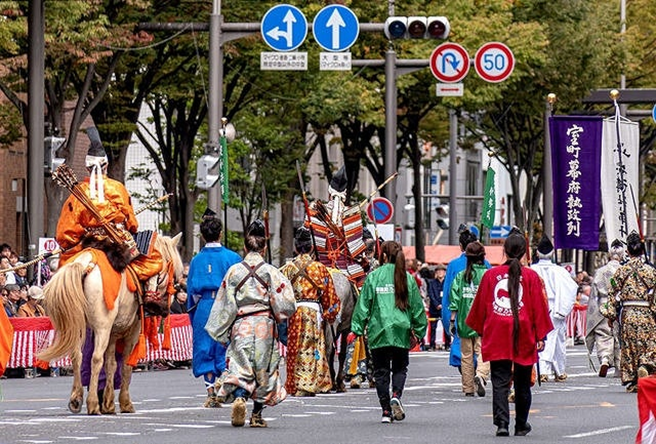
The Ninth Shogun: Ashikaga Yoshihisa
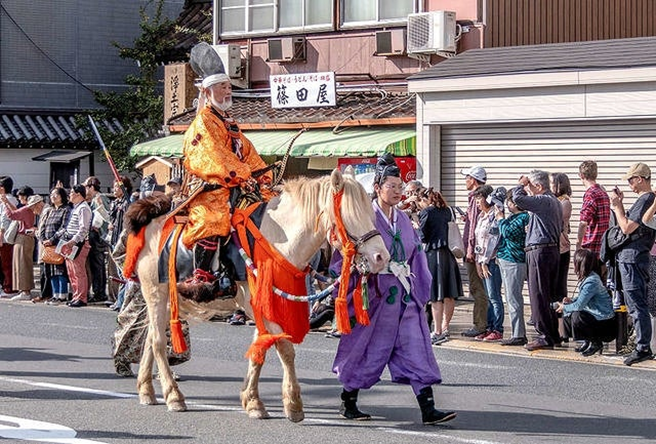
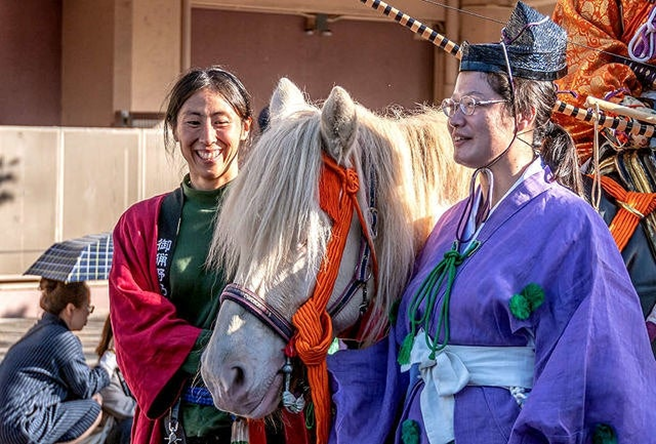
The Ise Clan
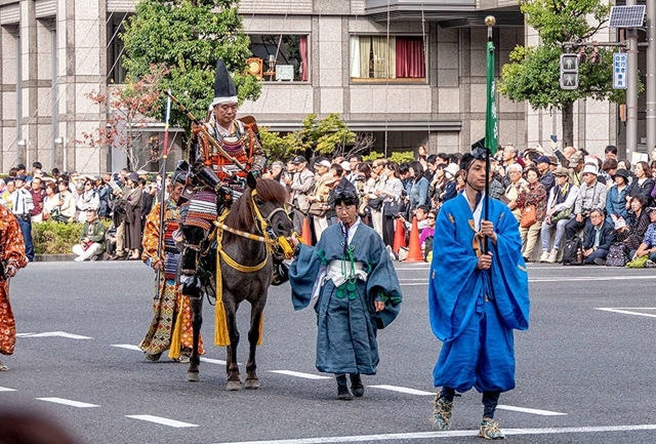
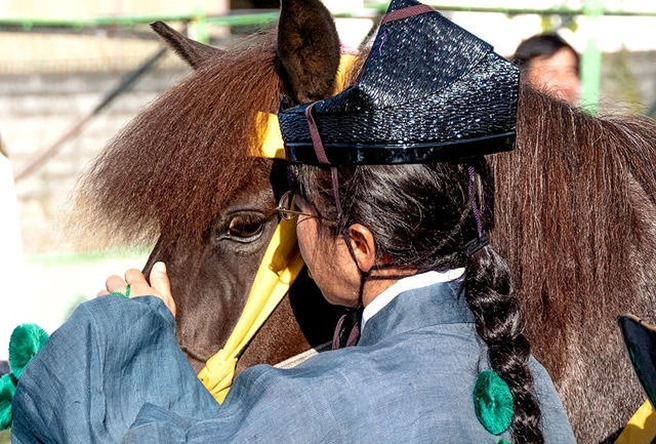
The Hosokawa Clan
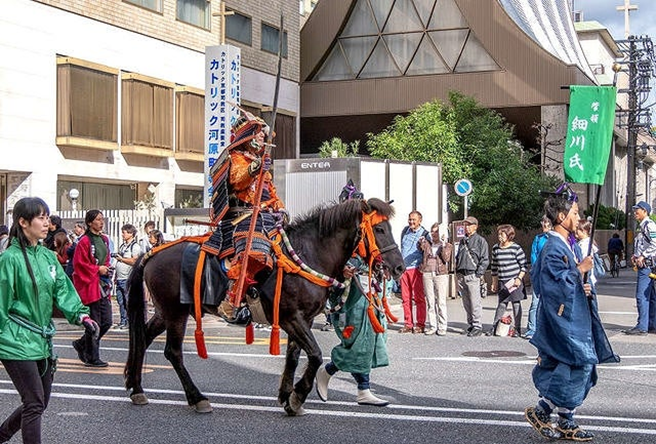
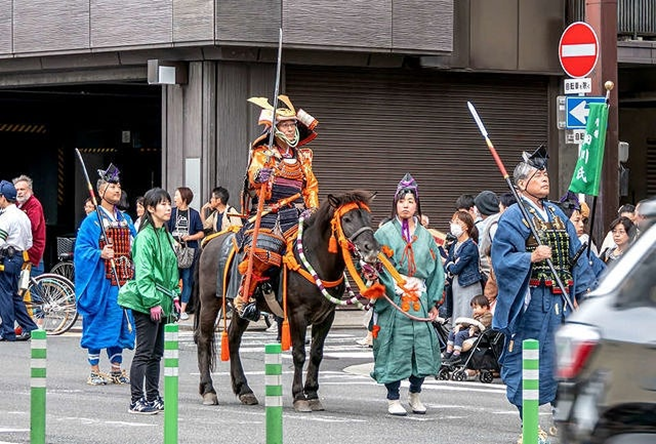
The Yamana Clan
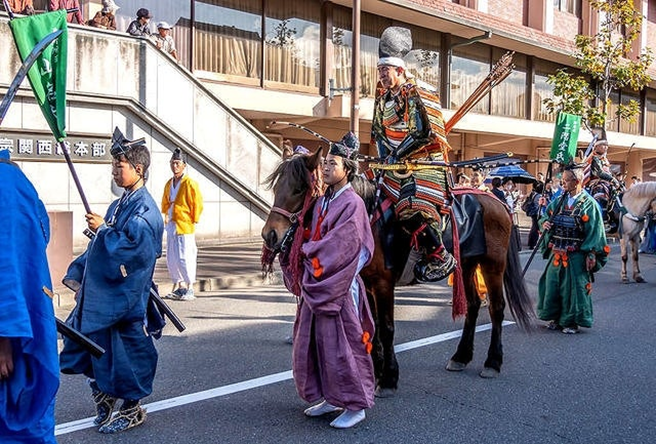
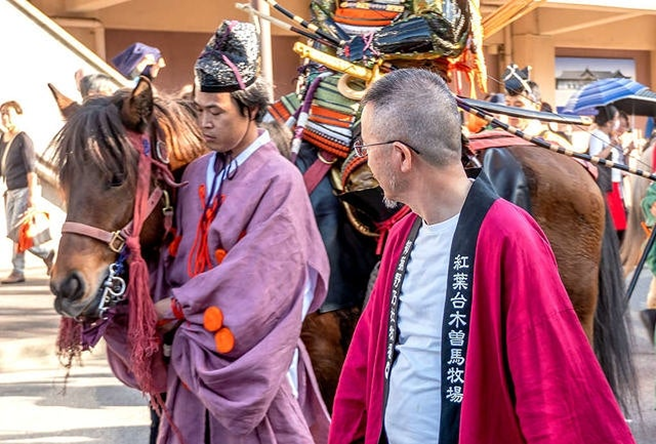
The Nikaidō Clan
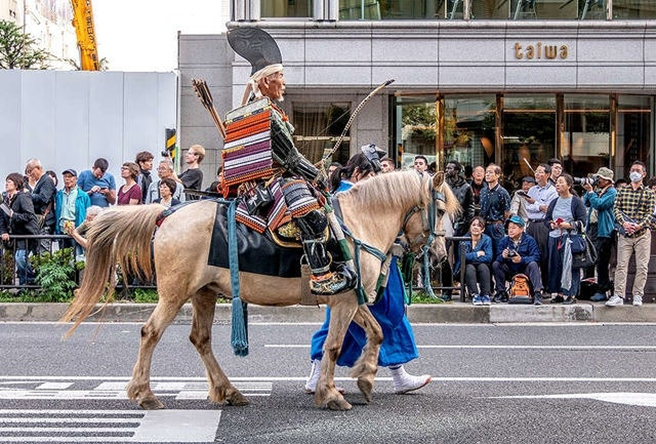
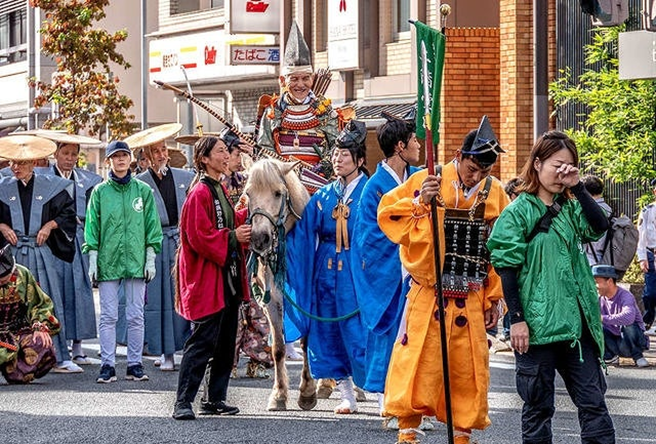
Parade procession
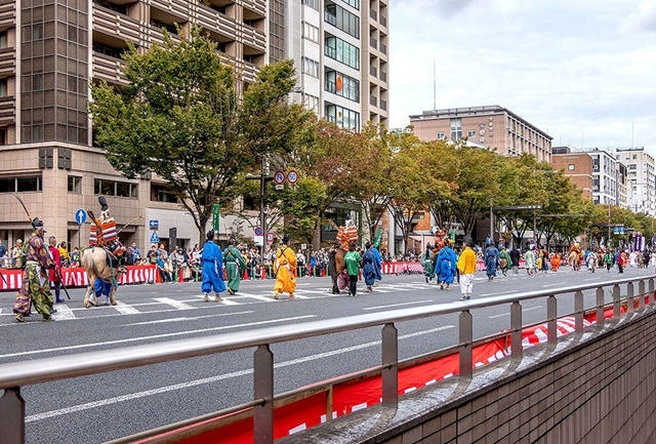
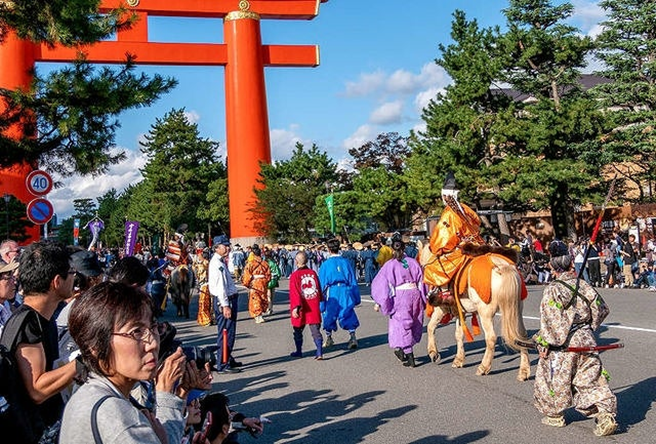
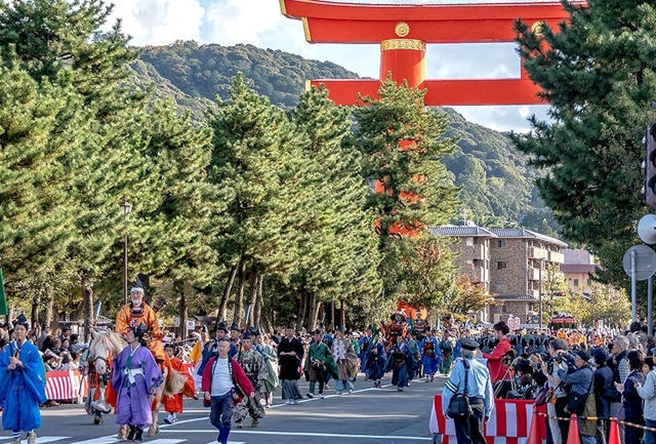
Below is a concise explanation of Heian Shrine and the Jidai Matsuri, based on the pamphlet purchased (500 yen).
Kyoto was founded approximately 1,200 years ago when Emperor Kanmu, the 50th emperor, transferred the capital from Nagaoka-kyō to this site in Enryaku 13 (794). From then until the early Meiji period, Kyoto flourished for more than a millennium as the imperial capital and the political, economic, and cultural center of Japan, laying the foundation for the prosperity it enjoys today. In Meiji 28 (1895), Heian Shrine was established to enshrine Emperor Kanmu. Later, in Shōwa 15 (1940), Emperor Kōmei, the 121st emperor, was also enshrined.
The shrine buildings are modeled after the Daigokuden, the central hall of the Chōdō-in of ancient Heian-kyō, where the most important state ceremonies were held. Their grand and magnificent beauty, together with the surrounding gardens, has earned worldwide renown. Visitors from Japan and abroad, in all four seasons, inevitably make their way to this site, with annual attendance said to exceed ten million, beginning with New Year’s visits.
The principal festival of Heian Shrine is held on April 15 and is designated an imperial festival. In contrast, the autumn festival celebrated as a civic event is the Jidai Matsuri. Established at the time of the shrine’s founding, it is held every year on October 22 to commemorate the relocation of the capital to Heian-kyō. Organized by the Heian Kōsha, an association formed by worshippers from across the city, it is a grand procession festival. Beginning with the Heian period and continuing through the Meiji Restoration, more than 1,000 men and women wear period costumes or armor and parade in a graceful procession stretching approximately two kilometers. The sight is like an unfolding picture scroll, resplendent and magnificent.
In the divine procession, the spirits of the shrine’s enshrined deities, Emperor Kanmu and Emperor Kōmei, are carried in sacred palanquins (hōren). Through this, the deities are invited to witness the prosperity of Kyoto, while citizens experience great joy through communion with their divine virtue.
Kyoto is divided into eleven wards, containing more than 190 elementary school districts. Each procession group in the Jidai Matsuri is assigned responsibility to specific districts, and the entire city participates in rotation. Festival expenses are funded primarily through contributions collected from households. This system has been maintained as a long-standing tradition for over 120 years.
Participation in the Jidai Matsuri has long been regarded by Kyoto citizens as both an act of gratitude toward their ancestors and a source of honor. This sentiment is clearly expressed in the solemn procession of participants wearing kamishimo attire at the end of each group. Including attendants, the total number of participants reaches approximately 2,000, along with more than 70 horses and cattle. With a total length exceeding two kilometers, the scale of the procession is likely unparalleled in Japan.
Initially, the festival was an official municipal event under the direct supervision of the mayor of Kyoto, with all honorary city officials participating in formal attire. Today, responsibility has been transferred to the leadership of the Heian Kōsha, but the spirit remains unchanged. Honorary magistrates leading the procession still include the Governor of Kyoto Prefecture, the Mayor of Kyoto City, the chairs and vice-chairs of the prefectural and city assemblies, the chair of the Jidai Matsuri Support Association, and the president of the Chamber of Commerce.
Until Shōwa 36 (1961), the procession route included Shijō Street and Kawaramachi Street in central Kyoto. Due to traffic conditions, the route has since been changed to Ōike Street.
Particularly noteworthy are the costumes and equipment used in the procession. Their vast number reflects decades of careful research and verification by leading authorities in the field. These items are regarded as invaluable resources for the study of customs and textile arts and hold significant academic importance.
Order of the Procession
- Honorary Magistrates: Governor, Mayor, Chairs and Vice-Chairs of Prefectural and City Assemblies, President of the Chamber of Commerce, Chair of the Jidai Matsuri Support Association; Jidai Matsuri Flag; Chief Magistrate
- Meiji Restoration Period: Imperial Loyalist Units and Restoration Patriots
- Edo Period: Tokugawa Castle Envoys to Kyoto; Edo-period Women’s Procession
- Azuchi–Momoyama Period: Toyotomi’s Court Visit Procession; Oda’s Entry into Kyoto
- Muromachi Period: Muromachi Shogunate Administrative Procession; Muromachi Urban Life Procession
- Yoshino Period: Kusunoki Masashige’s Procession to Kyoto; Medieval Women; Ōharame and Katsurame
- Kamakura Period: Jōnan Yabusame Procession
- Fujiwara Period: Fujiwara Courtiers’ Court Visit; Heian-period Women
- Enryaku Period: Military Officials’ March; Civil Officials’ Court Visit
- Divine Procession: Sacred Offerings Association; Foreguard; Divine Palanquin Procession; Chief Attendant; Procession Attendants; Shirakawa Women; Flower Offering Procession; Archers’ Group
Note: Emperor Meiji never formally declared the transfer of the capital to Edo.
October 30, 2019
Sumio Suzuki
 Heheen
コメントを残す