Sumio Suzuki
Every year on May 5, Kurabe-uma (traditional horse racing), which traces its origins back to 1093 (the 7th year of the Kanji era), is conducted in accordance with ancient rites at Kamigamo Shrine in Kyoto. (For details, see my book Japanese Native Horses: Past, Present, and Future, Item 15: “Challenging Japan’s Ancient Horse Racing Traditions with Native Horses.”)
Within the shrine grounds, a hedge-lined track approximately 217 meters in length is prepared, along which two horses race side by side. This hedge is called a rachi. The expression “rachi ga aku” (literally, “the rachi opens,” meaning a situation is resolved) is said to originate from this event: once the Kurabe-uma concludes and the rachi is dismantled, preparations begin for the Aoi Festival on May 15.
The Kurabe-uma we perform at Mikarino-no-Mori Kamo Shrine is based on the above-mentioned ancient racing tradition. Drawing on publications by the Horse Museum and other sources, we have arranged the movements to eliminate unnecessary gestures, and the event is offered annually at this shrine in accordance with the regulations of the Japan Kurabe-uma Competition Association (Chairman: Yukio Kikuchi, Representative of Koyodai Kiso Horse Ranch).

Opening Proclamation and Flowing Banner
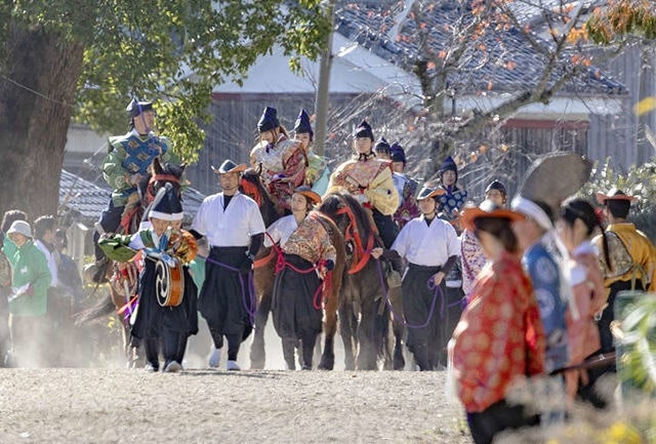

Chanting “We hereby dedicate the Kurabe-uma,” the start of the event is announced.
A child beats a drum to present the horses to the audience. Each horse wears a numbered saddlecloth from 1 to 8, attached behind the saddle. Free betting slips are distributed, and spectators are invited to predict the winning horse in a series of seven head-to-head match races involving eight horses. Five spectators who correctly predict the winning horse using a consecutive-win single-bet format receive two kilograms of Ōmi rice as a prize.
The rider is referred to as the norijiri, and the horse as the noriuma.
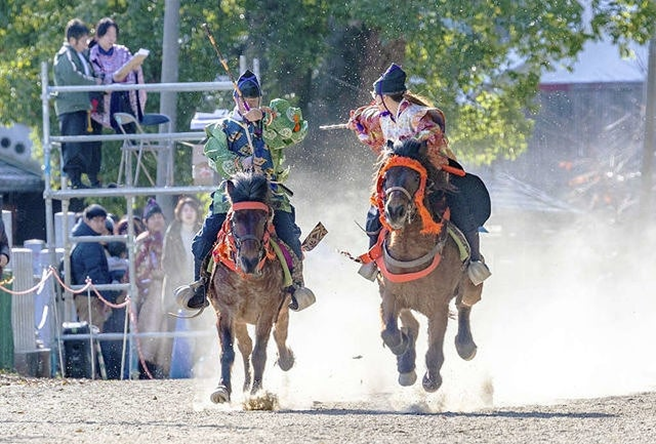
Preliminary Round 1
Facing the goal 170 meters ahead, the left side is called Sahō and carries a scarlet tasseled whip. The right side is Uhō and carries a purple tasseled whip. The start signal is given by two beats of a drum. Both riders shout “Oh! Oh! Oh!” three times and, making eye contact, begin the race. The rider who crosses the finish line first is the winner.
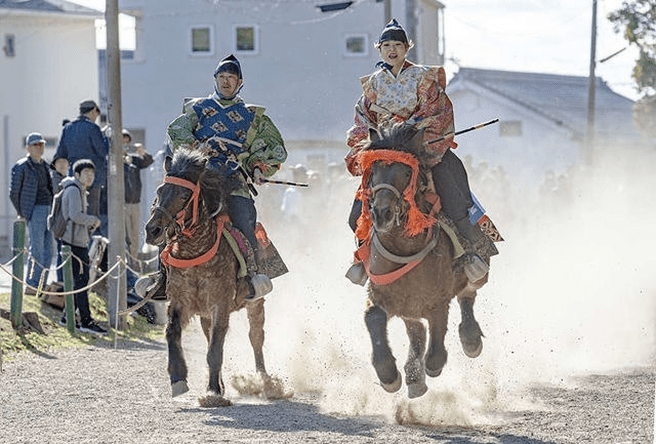
Winner: Uhō (Rider on the right)
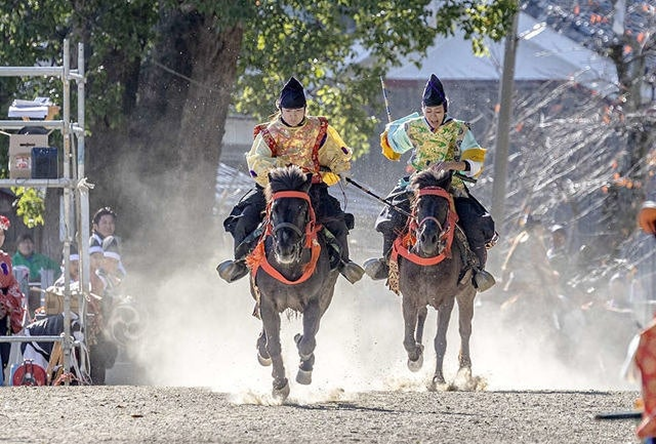
Preliminary Round 2
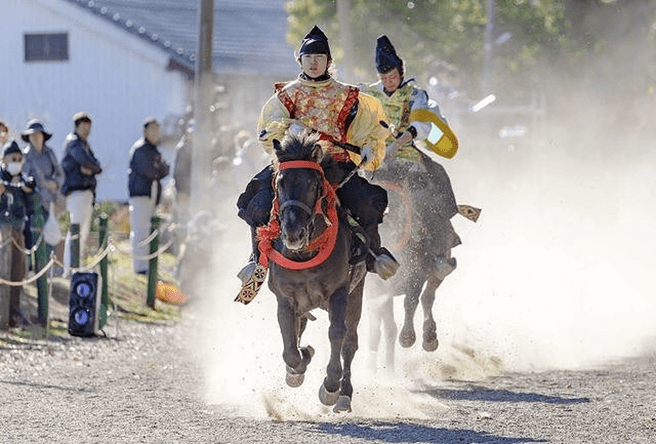
Winner: Sahō (Rider on the left)

Preliminary Round 3
An engaging race in which both riders checked each other with their whips, neither yielding ground.
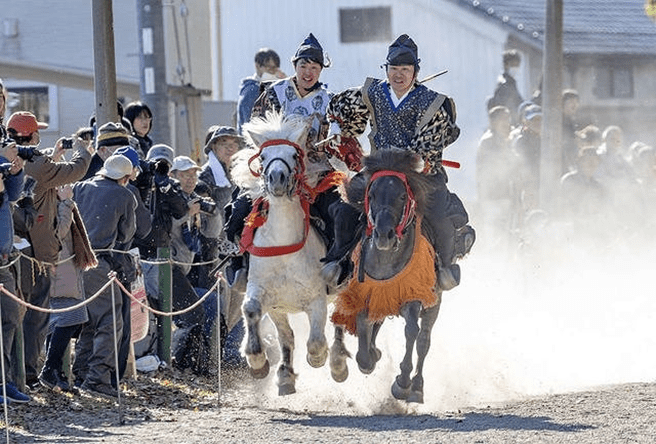
Winner: Uhō, by a narrow margin
Preliminary Round 4
At the start, Uhō unintentionally blocked Sahō’s path, causing Sahō to fall completely behind.
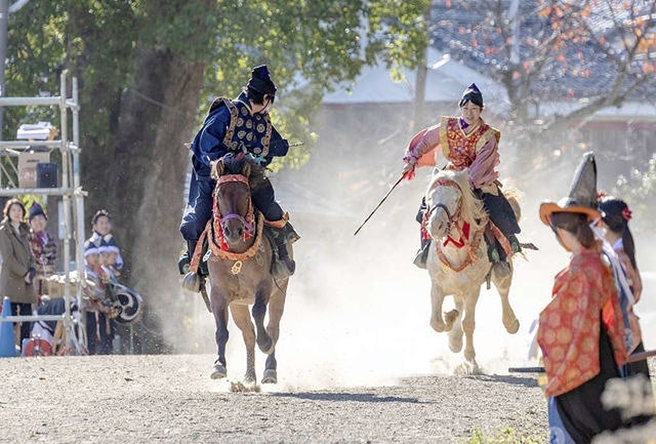
Winner: Uhō
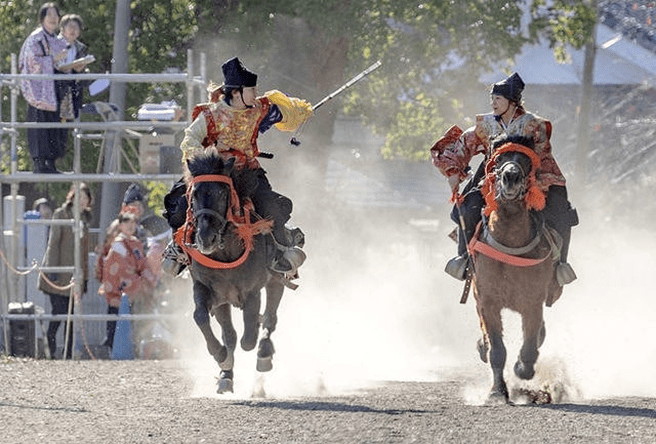
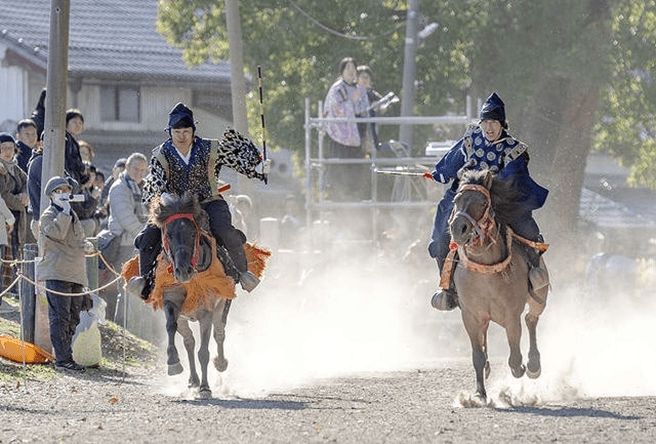
Semifinal Round 1
Both riders achieved a strong start. Using Uhō’s riding strategy, he guided his horse to the left immediately after the dash, checking Sahō.
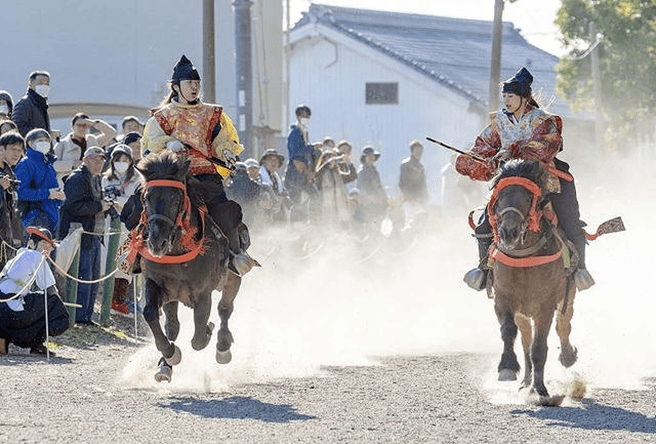
Winner: Sahō, who was undeterred by the interference and surged forward at tremendous speed.
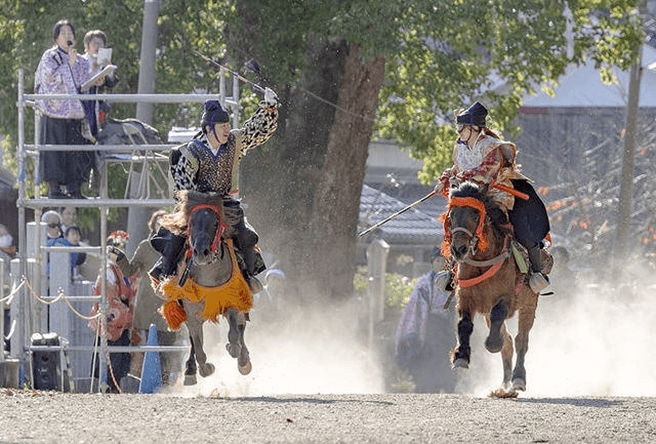
Semifinal Round 2
A contest between two male riders. Once again, Uhō employed a strategy of moving left immediately after the start and attempting to hold the lead.
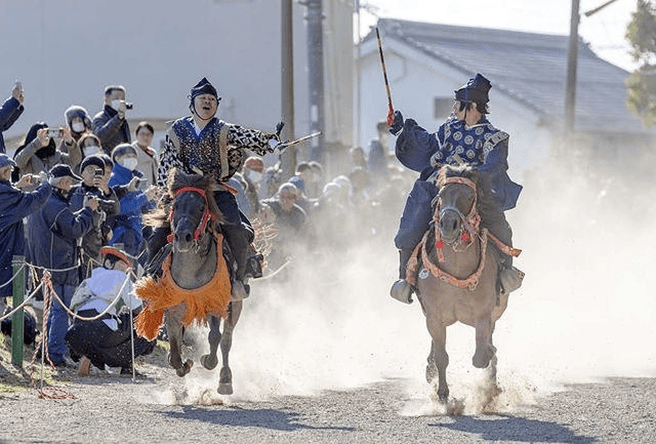
Although this photograph appears to show Sahō overtaking, Uhō’s rider displayed remarkable determination and won by a slight margin just before the finish.
Final
A magnificent dead heat from start to finish, befitting the final two remaining competitors. Uhō’s rider once again guided the horse toward the left, as in the semifinals.
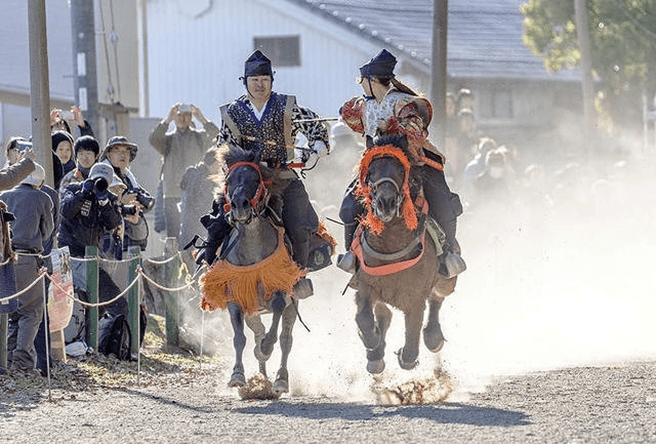
However, Sahō’s rider responded with a fierce dash.
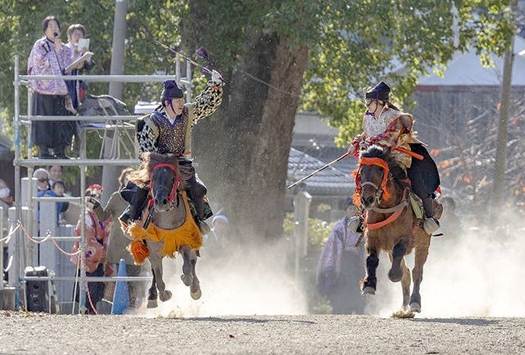
Final
A magnificent dead heat from the start, befitting the two riders who remained until the end.
As in the semifinal, the rider on the right guided the horse toward the left side of the course.

Magistrate:
“The champion is Saori Iwanami of Settsu Province. Her horsemanship was splendid—truly admirable. Accordingly, Ōmi jōfu cloth is hereby awarded.”
Champion:
“I humbly accept with deepest gratitude.”
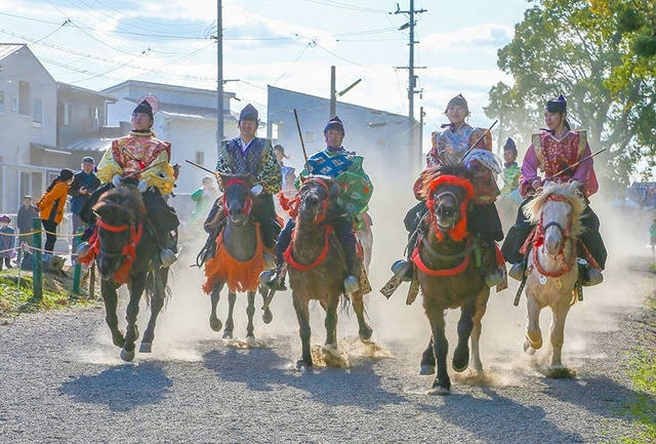
The champion performs a victory run with the awarded Ōmi jōfu draped over the left shoulder.
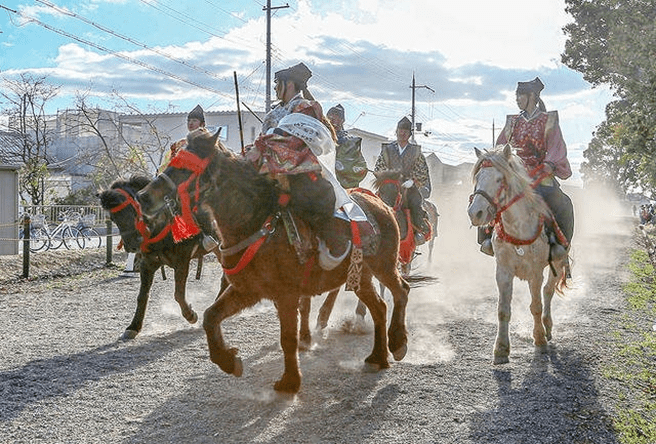
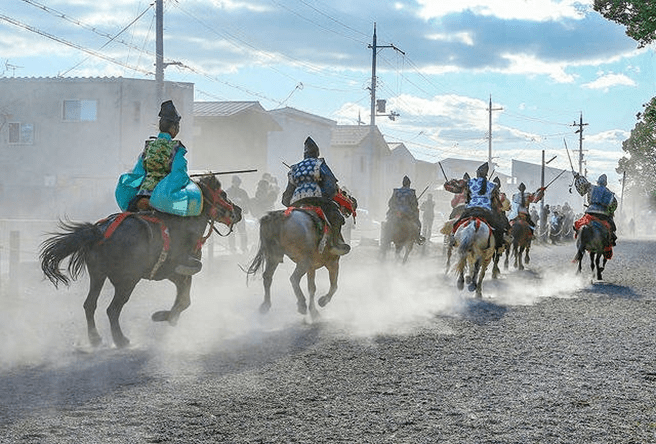
The 6th Kurabe-uma Successfully Concluded
Results
Consecutive-win single bet: 2–5
Winning tickets: 2 recipients
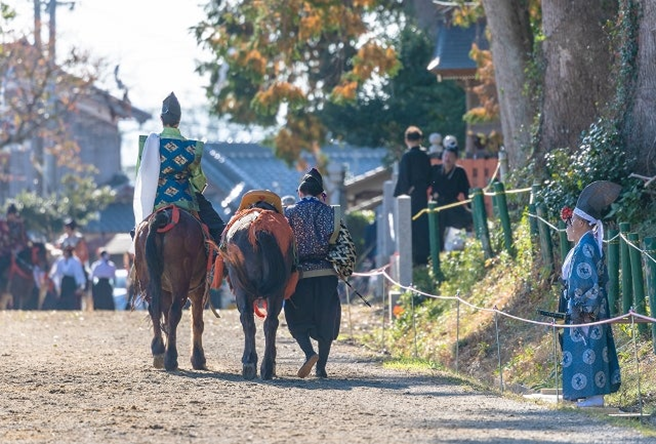
After each race, once victory and defeat are determined at the finish line, the winner proceeds at a walk before the magistrate to receive formal acknowledgment. The defeated rider dismounts and returns to the stable area.
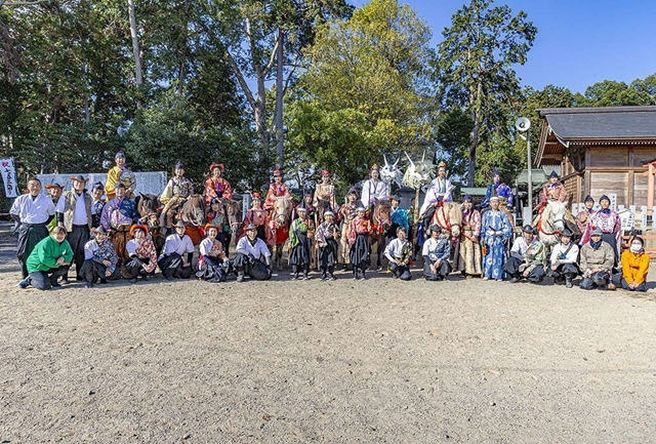
2019 Mikarino-no-Mori Kamo Shrine
Mounted Martial Arts Dedication Festival – Group Photograph
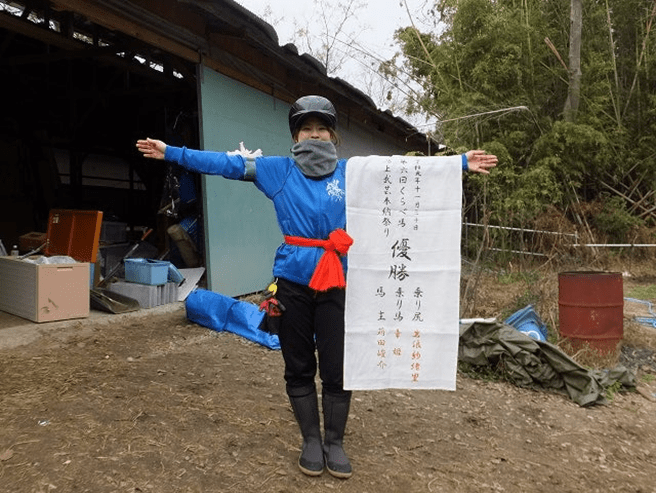
Champion of the 6th Kurabe-uma:
Saori Iwanami
Winning horse: Akahime
Horse owner: Shunsuke Karita
Photographs provided by: Yoshio Hayashi
With cooperation from: Ōmi Jōfu Traditional Industry Hall
December 24, 2019
Sumio Suzuki
 Heheen
コメントを残す